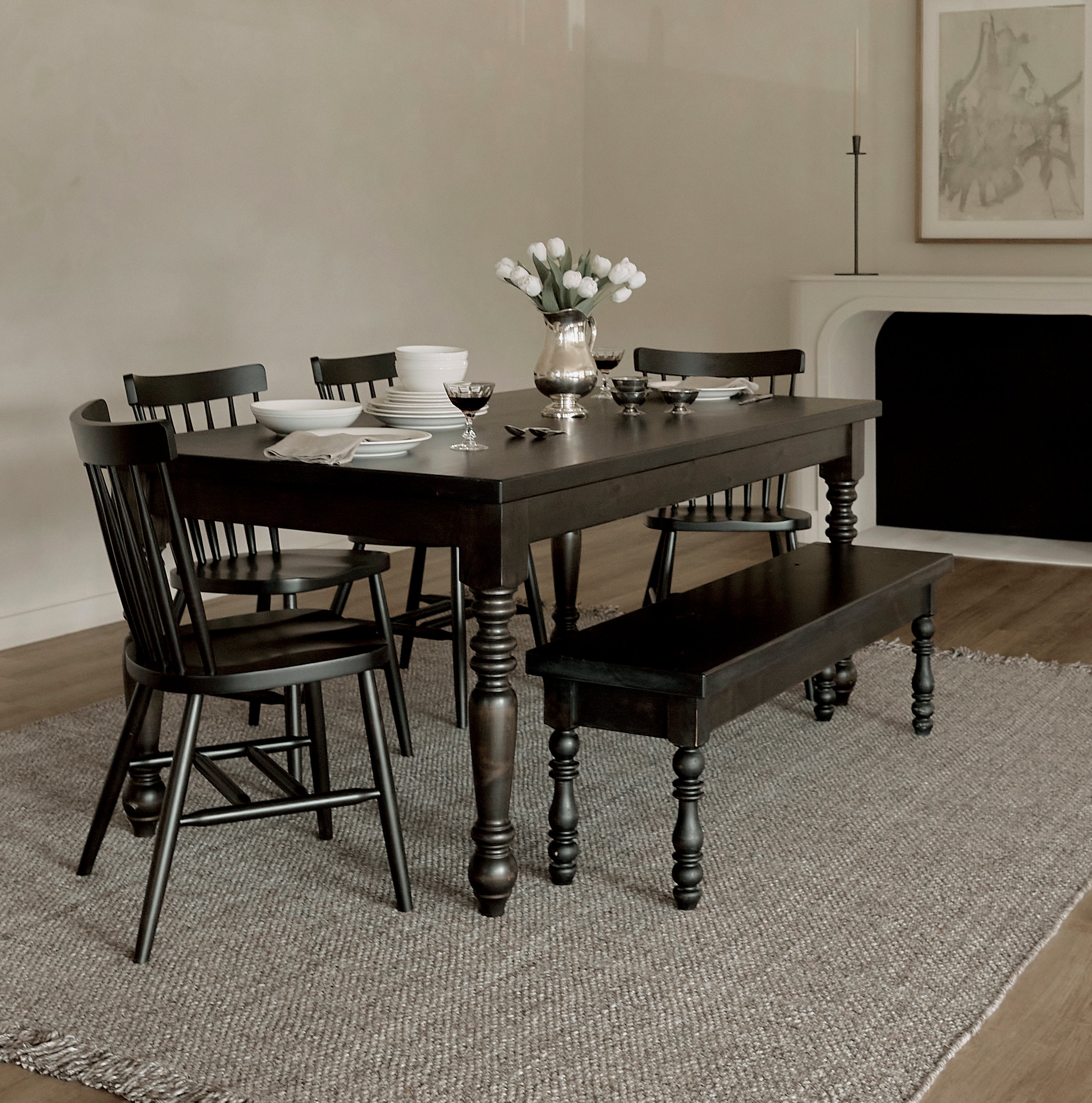
Dining chairs are where the dining room becomes personal. They decide whether a weekday meal feels easy, whether guests linger after dinner, and whether the table you chose with care feels complete in the room.
They are also more consequential than they first appear. A chair can be beautiful on its own and still be wrong for the table, too large for the room, or uncomfortable for the way your family gathers. The right choice balances proportion, comfort, material, and daily life then leaves enough room for people to move naturally around the table.
James & James offers handcrafted dining chairs in solid wood and upholstered styles, with arm, side, and folding options. Use this guide to narrow the choices before you begin comparing individual designs.
Start with the Way You Actually Gather
Before comparing silhouettes or fabrics, consider what happens around your table on an ordinary week. Is it a quick breakfast spot, the place where children do homework, a room for long Sunday dinners, or the center of frequent entertaining? A chair that suits one kind of household may not suit another.
Choose for the meals that happen most often
If the dining table is used every day, comfort and easy movement deserve real weight in the decision. You may prefer the softness of an upholstered seat, the familiar support of a wood chair, or a mix that gives the room a more collected feeling.
If the table is used less often but becomes the center of holidays and celebrations, consider how the chairs will feel over a longer meal and where extra seating will come from. The right answer is not necessarily the most formal one. It is the one that makes people feel welcome when they sit down. Choose dining chairs for longer dinners if that is your go to meal.
Separate everyday seats from guest seating
Not every chair needs to do the same job. A household may keep a consistent set of everyday chairs around the table and add a pair of complementary chairs when guests arrive. In another room, armchairs at the ends and side chairs along the length may give the table a natural rhythm.
Plan this intentionally. Extra chairs should be comfortable, proportionate, and have a place to live when they are not in use. A dining room feels more settled when the hosting plan does not need to be invented at the door. This is especially true when considering dining chairs for small rooms.
Make Sure the Chairs Fit the Table
The most important design decision is also the most practical: chairs must fit the table in more ways than one. Review our How to Choose Dining Chairs That Fit Your Table guide.
Measure width, depth, and height
Start with the chair’s overall width and depth. Width determines how comfortably people can sit beside one another; depth determines how much room the dining area needs when chairs are pushed in and when someone pulls back from the table.
Seat height matters too. It should feel natural relative to the table top, while arm height matters if you hope to tuck an armchair beneath the table. Do not assume standard proportions are interchangeable. Use the exact specifications for the chair and table you are considering.
For example, the Lynn Upholstered Dining Chair is 21 inches wide, 24.5 inches deep, and 30 inches high, with an 18-inch seat height. Those measurements are useful only as a reference for that chair; they show why a full chair plan matters more than choosing by a product image alone.
Check the table’s base before assigning every seat
A pedestal base can make chair placement more flexible because there are no corner legs at the perimeter. A trestle or four-leg table can create more defined seating zones. Both can be wonderful; they simply ask for different planning.
Put the likely chairs around the table, then look underneath as well as above. Do chair arms clear the table? Do table legs land where someone naturally wants to sit? Can a guest slide their chair in without negotiating a support? These small considerations are what make a dining set feel effortless rather than merely coordinated.
Give the Room Enough Space to Work
A chair needs more space than its footprint. People need to pull it back, stand up, pass behind it, and move between the dining table and the rest of the home.
Map the chairs at full depth
Use the dimensions of your actual or intended chairs to make a simple floor plan. Painter’s tape, boxes, or chairs you already own can help you see the table’s footprint with seating included. Test the dining arrangement with chairs tucked in and pulled out.
Walk the routes that matter: kitchen to table, door to dining area, dining area to living room, or past a sideboard. A table can fit within a room’s open floor area while the completed dining set still feels too tight. The chair plan is what reveals the difference.
Consider the room beyond the table
In a dedicated dining room, you may be able to give chairs more presence. In a breakfast nook or open-concept home, a slimmer profile or a more flexible arrangement may preserve important paths and sightlines.
The goal is not to make the room look sparse. It is to leave enough ease around the table that people do not have to interrupt a meal every time someone passes through. A well-proportioned dining room feels generous because it works, not because it is empty. The space around your dining chairs matters.
Decide Between Wood and Upholstery
This choice influences comfort, maintenance, visual weight, and the overall mood of the room. There is no universal winner. There is a lot to consider when deciding between wood and upholstered dining chairs for your home.
Choose solid wood chairs for warmth and structure
Solid wood chairs bring a natural, enduring presence to a dining room. They can make a strong connection to a wood table, whether you choose a coordinated dining room chair finish or a more considered contrast. Their outlines are often visually clear, which can be especially appealing in a room where the table is already substantial.
Wood chairs may suit a household that values a cleanable, tactile material and a dining room with architectural character. A seat cushion, removable pad, or upholstered host chair can soften the arrangement when you want more comfort without losing that structure.
Choose upholstered chairs for softness and lingering comfort
Upholstered chairs can make a dining area feel more inviting and relaxed. They are often a natural choice for long dinners, open-plan homes, and rooms where the dining table does double duty as a work or conversation space.
Material still matters. James & James lists upholstered chair options alongside wood finishes, and states that its upholstered chairs use performance Crypton Home fabric. Confirm the available upholstery and care instructions on the individual product page before ordering, since those details can vary by design.
The best question is not whether upholstery is more comfortable in theory. It is whether you want the dining room to feel more tailored and tactile, and whether the fabric and maintenance fit the way your household lives.
Choose Armchairs, Side Chairs, or a Mix
Chair type changes both the experience at the table and the way the dining room looks from across the room.
Side chairs are flexible and easy to place
Side chairs are typically armless, which can make them easier to tuck under a table and simpler to use in a close seating plan. They work well along the sides of a rectangular table, around a round table, or as a consistent set where space is a priority.
Their lighter footprint does not mean they have to feel slight. The right side chair can bring real craftsmanship and presence while leaving the room more visually open. Read our guide how to choose dining chairs for a round table.
If you're considering a rectangular chair, our rectangular table dining chair guide is also helpful.
Armchairs can create a generous focal point
Armchairs often feel especially appropriate at the ends of a rectangular or oval table, where they can frame the arrangement. They may also suit a round table when the room and base allow for the added width.
Before choosing them, confirm that the arms fit beneath the table if tucking is important, and account for their width in the full seating plan. Armchairs can make a dining room feel more welcoming; they should not make it difficult to get into a chair or move around the table. Consider armchairs vs. side chairs for your dining table.
A mixed arrangement can feel intentional
Using armchairs at the ends and side chairs elsewhere is a classic approach because it gives the room hierarchy without requiring every chair to be identical. Mixing upholstered and wood chairs can also work when the materials, scale, and colors share a clear visual relationship.
Aim for connection, not perfect matching. A table and chairs can feel beautifully collected when the proportions are harmonious and the contrast is deliberate.
Choose a Style That Belongs with the Table and the Home
The chair should relate to the table, but it does not need to duplicate it. Matching every material and detail can create a formal set; a thoughtful contrast can create a dining room with more depth.
Match visual weight before matching style labels
Look first at proportion. A substantial solid wood table generally needs chairs with enough presence to hold their own. Very delicate chairs can look disconnected beside a broad top and grounded base; overly heavy upholstered chairs can crowd a smaller table or compact room.
Consider the chair back, leg profile, arms, upholstery, and amount of open space in the design. This gives a truer sense of compatibility than broad labels such as modern, farmhouse, or transitional.
Let the finishes relate rather than compete
Wood tones do not need to match exactly. In fact, a slightly different wood or finish can make the room feel warmer and more layered. The key is to make the relationship look intentional: repeat a tone elsewhere, choose related undertones, or use upholstery to bridge the table and chairs.
James & James notes that natural wood variation can mean chair and table finishes are complementary rather than an exact match. This is part of working with real wood, not a reason to avoid pairing pieces. Order finish samples and view them in your own light whenever possible.
Think about what you see from the back
In many homes, chairs are viewed as often from the back as from the front—from the kitchen, entry, or living room. Step into those adjacent spaces and look at the table as a whole. A chair back can provide beautiful rhythm, soften a strong table, or become an important visual detail in an open layout.
Choose for Comfort and Care Over Time
The most lasting choice is one you enjoy using, not one you feel compelled to preserve.
Sit whenever you can—and use dimensions when you cannot
Comfort is personal. Seat shape, back angle, upholstery, and arm position all influence it. If you can sit in a chair, pay attention to whether you naturally settle into it. If you are buying online, use complete product dimensions and ask questions about details that affect your comfort.
Think about the duration of the meals you host. A chair that works for a quick breakfast may be less appealing after a three-hour holiday dinner. Conversely, a deeply upholstered chair can be wonderful but may take more room than a compact dining area can comfortably give.
Care for the materials you choose
Solid wood dining chairs and upholstery both benefit from reasonable, product-specific care. Follow the instructions for the individual chair’s finish and fabric. For wood, avoid harsh or abrasive cleaners and dry the surface after cleaning. For upholstery, confirm the fabric guidance before using a cleaner.
This is not about making the dining room precious. It is about choosing materials whose care expectations suit your life, so the chairs can be used freely and kept well.
A Final Checklist Before You Order
Before deciding, make sure you can answer these questions:
- Do the chairs fit the table’s height, base, and available seating positions?
- Is there enough room to pull them back and move through the dining area?
- Will armchairs tuck beneath the table if needed?
- Do the chairs work with the table when it is extended, if applicable?
- Are wood, upholstery, and finish suitable for the way the household lives?
- Does the arrangement feel balanced from the adjoining rooms?
- Where will extra chairs live between gatherings?
- Have you confirmed the exact dimensions, material, finish, and care details for the products you are considering?
The right dining chairs make a table more than a surface. They make it a place people want to return to. Browse our dining chairs with your table measurements and room plan nearby.
Frequently Asked Questions
How do I know whether dining chairs will fit my table?
Compare the chair’s exact width, depth, seat height, and arm height with the table’s dimensions and base. Test the arrangement with chairs pulled out as well as tucked in, and include the room’s doorways and traffic paths.
Should dining chairs match the table exactly?
No. Chairs should feel intentional with the table in proportion, visual weight, tone, or material, but an exact match is not required. Complementary wood tones or upholstery can create a warmer, more personal room.
Are upholstered dining chairs practical for everyday use?
They can be, provided the fabric and care requirements fit the household. Review the specific upholstery details and cleaning guidance before ordering.
Should I choose armchairs or side chairs?
Side chairs can be easier to fit into a compact arrangement. Armchairs can add comfort and presence, particularly at the ends of a table. The right choice depends on the table’s clearance, the room, and how you want the dining set to feel.