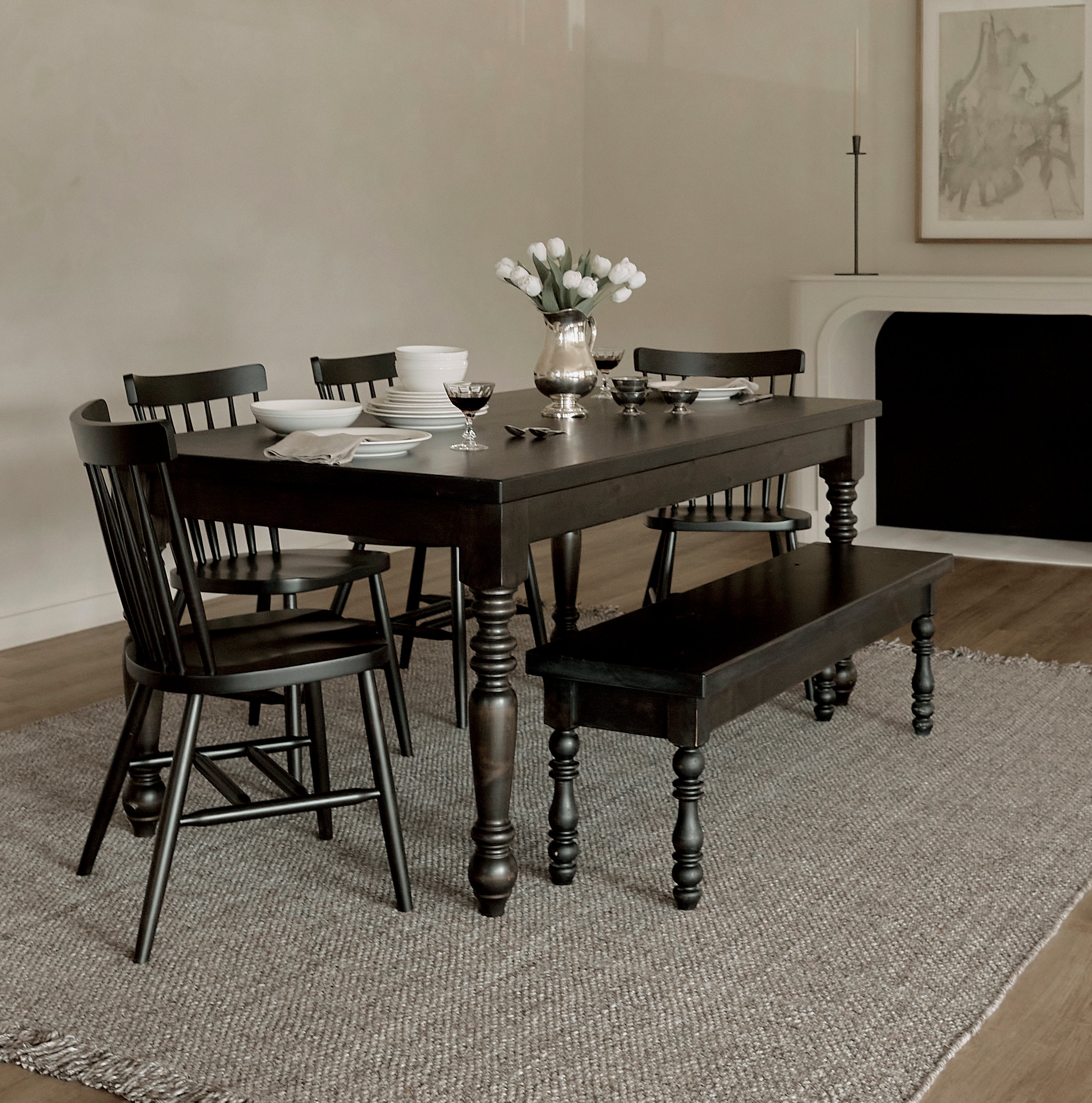
A rectangular dining table gives a room a clear sense of direction. It can follow the length of a dining room, anchor an open-plan area, and make space for a family meal or a table full of guests. The chairs are what make that structure comfortable.
The right chairs should fit along the sides and, where appropriate, at the ends. They should work with the table’s legs or trestle, leave paths around the room, and create an arrangement that looks balanced even when every seat is in use.
Begin by exploring dining chairs, then compare your preferred chairs with the exact length, width, base, and clearance of your table.
Start with the Table’s Usable Length
The table’s overall length is useful, but the usable seating length is the real decision point.
Plan the chairs along the sides first
Most of the seating on a rectangular table happens along its long sides. Measure the width of each chair you are considering, then map the positions with enough room for people to sit without pressing into one another.
Avoid choosing the chair count first and forcing the furniture to meet it. A slim wood side chair and a wide upholstered armchair occupy very different amounts of usable length. The goal is comfortable, natural seating—not the largest possible number of place settings.
Account for the table legs or base
Four-leg and trestle tables have supports that can influence where chairs fit. A chair may work beautifully between legs but feel compromised directly beside one. Study the base and position the seats where people will actually want to sit.
If an expandable rectangular table is part of the plan, check how the base and seating zones change when the leaf is inserted. The expanded top may create more room, but the supports still determine which seats are comfortable.
Decide Whether End Chairs Belong in the Plan
End chairs can make a rectangular dining table feel complete, but they need their own clearance and purpose.
End chairs can frame the table
A matching pair of armchairs at the ends is a classic choice. It gives the room a welcoming focal point and can create a more generous place for long dinners. Wood or upholstered armchairs can both work, depending on the scale of the table and the character of the room.
End chairs are not required. In a compact room, leaving the ends clear may preserve important paths. In a larger room, end seats may be valuable for regular hosting. Choose them because they make the table work better, not because the silhouette seems incomplete without them.
Check the full depth behind each end seat
An end chair needs room to pull back, and it may sit close to a door, sideboard, wall, or route through the home. Mark its full depth and test the path around it. A beautiful armchair that blocks the only way into the dining room is rarely the right choice.
If you use armchairs, compare their arm height with the underside of the table. They may be appropriate even if they do not tuck in, but the room needs to support their full pushed-in footprint.
Choose Side Chairs for Comfort and Flexibility
Side chairs often do much of the daily work around a rectangular table.
Armless chairs can make the side seating easier
Side chairs are usually easier to fit along a table’s long sides because they do not add the width of arms at every seat. They can tuck beneath the top more readily and make it easier to add or move a chair when a guest arrives.
That does not mean all side chairs are small. Compare their exact width, depth, seat height, and back profile before deciding. A generous upholstered side chair may bring more comfort and visual presence than a thin wood chair; it simply needs a room plan that supports it.
Consider how chairs relate to one another
At a rectangular table, the side chairs are often seen as a long, repeated line. Matching them can create a calm rhythm, while a small mix—such as armchairs at the ends with side chairs along the length—can give the room a clear hierarchy.
If you use different chairs, repeat a connection in height, visual weight, wood tone, upholstery, or silhouette.
Plan Chair Depth and Room Circulation
The chair’s depth is just as important as its width, especially along a table that occupies a room’s main axis.
Test the chairs pulled out
Mark the table footprint, then add the chairs at their full depth. Pull them back as though people are sitting down. Now walk the routes around the table: from the kitchen to the dining room, past doors, along a wall, and through any open-concept connection to the living area.
The table can feel pleasantly full during a meal. It should not make the home hard to navigate. Decide which sides need room for passing behind seated guests and which sit in lower-traffic areas.
Look at the whole room, not a single side
One side of a rectangular table may face a wall, while the other faces the primary pathway. That does not mean the chair plan must be symmetrical in every practical respect. It means you should understand how each side is used before selecting chairs that are too deep or too broad for it.
Choose Materials and Styles That Balance the Table
A rectangular table often has a strong linear presence. The chairs can reinforce that structure or soften it.
Wood chairs can create a grounded rhythm
Wood chairs can echo the warmth and natural character of a solid wood rectangular table. Repeating them along the sides creates a clear, enduring rhythm, especially in a room with a more architectural or tailored feel.
The finishes do not need to match exactly. Look for related undertones, visual weight, or a shared material story. Real wood variation can make a complementary pairing feel more considered than a perfect factory match.
Upholstery can add softness to a long table
Upholstered chairs can make a rectangular table feel less formal and more inviting, especially in an open-concept home where the dining area relates to upholstered living-room furniture. Use upholstery at the ends, all around the table, or in a balanced mix depending on the room’s scale.
Verify the material, dimensions, upholstery options, and care guidance for every selected chair. The right fabric should suit both the room’s mood and the way your household uses it.
Plan for Everyday Meals and Larger Gatherings
A rectangular table often serves both a regular seating pattern and a larger hosting plan.
Keep the daily arrangement comfortable
Choose the number of chairs you use most often, then make sure the table and room feel right with those chairs in place. The dining set should not look like it is waiting for a crowd every day if the household is usually small.
Add guest seats intentionally
If you host, decide where extra chairs will go and where they will live between gatherings. They may be used elsewhere in the home, stored nearby, or chosen as complementary occasional seats. They should still fit the table height and room circulation.
If the table expands, map both configurations with all chairs included.
A Simple Pre-Order Checklist
- Do the side chairs fit between the table’s legs or around its trestle?
- Are end chairs needed, and do they have enough full-depth clearance?
- Do chair width and depth allow comfortable seating and room circulation?
- Can armchairs tuck beneath the table if that matters to the layout?
- Do the chairs feel proportionate to the table’s length and visual weight?
- Does the arrangement work for daily use and the guests you realistically host?
- Have you confirmed exact product dimensions, materials, finishes, and care instructions?
When these answers are clear, the chair plan can make a rectangular table feel both ordered and easy to live with. Browse dining chairs with your table dimensions and room routes in hand.
Next, consider How to Choose Comfortable Dining Chairs for Long Dinners.
Frequently Asked Questions
Should I put armchairs at the ends of a rectangular dining table?
They can be an excellent choice when the room has enough clearance and the chair arms work with the table. They are not required; side chairs at every seat can create a lighter, more flexible arrangement.
How many chairs fit along a rectangular table?
It depends on the table’s usable length, base placement, chair width, and the space each person needs. Use the exact dimensions of the chairs you want instead of relying on a general seat count.
Can I mix chairs at a rectangular dining table?
Yes. Armchairs at the ends with side chairs along the sides is a classic approach. Keep a connection in seat height, visual weight, material, tone, or silhouette so the arrangement feels intentional.
How do I choose chairs for an expandable rectangular table?
Plan the closed and expanded configurations separately. Confirm seating zones around the base, chair placement, circulation, and where extra chairs will be kept when the table is closed.