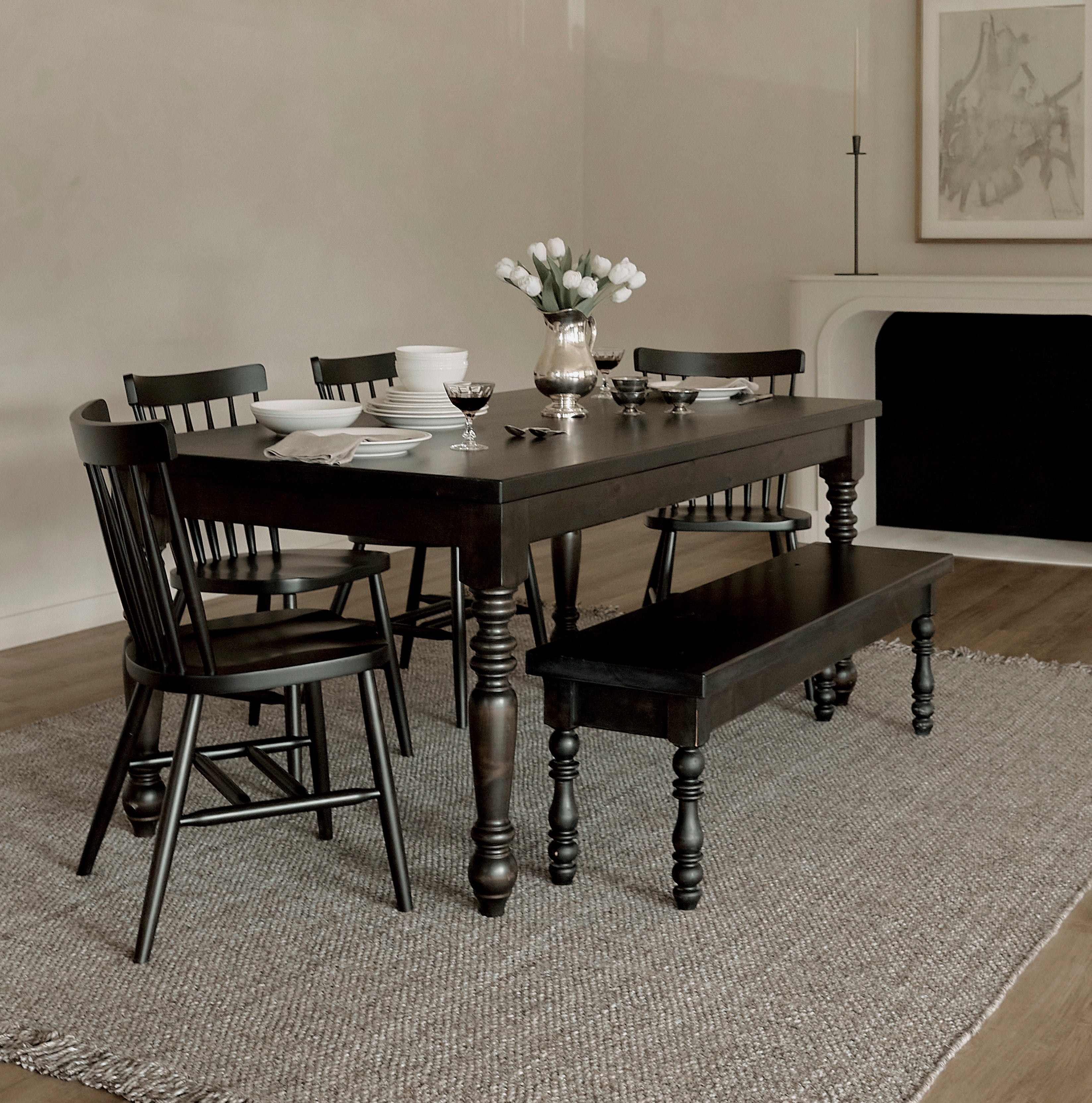



The short answer: White oak is slightly harder, handles spills better and has a calmer, straighter grain, which makes it a strong pick for dining tables. Red oak usually costs less, shows bolder grain and takes darker stains with more contrast, which suits traditional and farmhouse styles. Both are tough enough for high touch surfaces in your home.
Red oak vs. white oak at a glance
| Red oak | White oak | |
|---|---|---|
| Hardness (Janka) | About 1,290 lbf | About 1,360 lbf |
| Water resistance | Open pores; a spill left sitting can soak in | Pores plugged by tyloses; more forgiving of spills |
| Grain | Bold, wavy, cathedral figure | Tighter and straighter; ray fleck when quartersawn |
| Unfinished color | Light brown with a pinkish warmth | Beige, olive or brown; often slightly darker |
| How it takes stain | Deep contrast in mid and dark tones; pink can show through grays | Soft, even color; excels in natural, light and gray tones |
| Cost | Generally lower | Generally higher; quartersawn highest |
| Best fit | Traditional, farmhouse and classic American rooms | Modern, Scandinavian, coastal and transitional rooms |
Is oak a good wood for furniture?
Yes. Oak is one of the most widely used hardwoods in American furniture because it is hard, holds joinery well, takes a finish evenly and is available in good supply. Solid oak can also be sanded and refinished, so a well-built table can last for generations. The real decision for most buyers is not whether to choose oak, but which oak.
Red oak and white oak are not single trees. Each name covers a group of related species. Northern red oak (Quercus rubra) and white oak (Quercus alba) are the best known, and lumber is sorted by shared traits like pore structure and color.
Weighing oak against walnut, cherry or maple? Our guide to the types of wood for furniture covers how each one looks, wears and ages.
What are the downsides of oak furniture?
Oak is not the right fit for every home. Solid oak is heavy, so a large table takes two or more people to move. Like all solid wood, it expands and contracts slightly as indoor humidity changes, and it needs a good finish to resist water rings, heat and long hours of direct sun. Its open grain can feel busy if you want a smooth, uniform look; maple or cherry suit that taste better. And solid oak costs more than pine, veneer or engineered wood.
Is solid oak better than oak veneer?
Before you compare red and white oak, make sure you are comparing solid wood. Many “oak” pieces are oak veneer: a thin layer of real oak glued over plywood, MDF or particleboard. Veneer can look the same on delivery day, but it can only be refinished lightly, a deep scratch or water damage can lift it or expose the core, and particleboard holds screws and joints poorly over time.
Solid oak is oak all the way through. A worn or dented top can be sanded and refinished, loose joints can be reglued, and the piece can be handed down. When you shop, look for “solid oak” or “solid hardwood” in the product details, and check the edges: on solid wood the grain carries over the edge, while on veneer it often stops at a seam. If the listing does not say what the hidden parts are made of, ask.
Every James & James piece is built from solid hardwood at our workshop in Heber Springs, Arkansas.
Which is harder, red oak or white oak?
White oak, but only slightly. It rates about 1,360 on the Janka hardness scale, compared with about 1,290 for red oak. You will not feel that gap at the dinner table.
Red oak’s busier grain also hides small dents and scratches well, which cancels out much of white oak’s edge in daily use. On either wood, the finish does more to protect the surface than the species does.
Is white oak better for a dining table?
For a surface that sees a lot of water, white oak gives you a little more margin. Its pores are naturally filled with growths called tyloses, which slow liquid moving into the wood. That is why coopers and boatbuilders have relied on white oak for centuries.
Red oak’s pores stay open, so a spill that sits overnight can travel further in. That matters most on a kitchen island or a dining table where glasses sweat. On a dresser, bed, bookcase or nightstand, red oak is entirely at home.
Are solid oak dining chairs worth it?
For most families, yes. Chairs take more punishment than tables. People lean back, drag them across the floor and shift their weight all through a meal, and that stress lands on the joints where the legs, seat and back meet. Solid oak is hard and holds joinery tightly, so well-made oak chairs stay sturdy for decades, and a joint that loosens can be reglued instead of the chair being replaced. Chairs built from softer woods or engineered materials tend to wobble sooner and are rarely worth repairing.
Either oak works. White oak’s straighter grain gives chairs a clean, quiet look that suits modern and Shaker-style rooms, while red oak’s bolder grain matches a traditional or farmhouse table. Most people choose chairs in the same species and finish as their table; a lighter white oak chair around a darker table is a good option if you want contrast. Browse our solid wood dining chairs.
How do red oak and white oak look different?
Color
The names are misleading. Unfinished, both woods are light brown. Red oak carries a faint pink warmth. White oak leans beige, olive or brown, and is usually the darker of the two. Once stained, the finish sets the final tone at least as much as the species.
Grain
Red oak is the oak most people picture. Its grain is open and wavy, and plain-sawn boards show the arching cathedral pattern of classic American oak furniture. It feels warm and familiar, and it sits naturally in traditional and farmhouse rooms.
White oak has a tighter, straighter grain. Quartersawn white oak shows ray fleck, the soft ribbons of figure that Arts and Crafts makers prized. Plain-sawn white oak, the standard cut, shows less fleck, though some can appear. Its neutral base works with a wide range of materials, from linen to stone.
Scale changes everything
A 4-inch sample shows character; a 9-foot tabletop shows that character multiplied. Across a large surface, red oak’s cathedrals create a lot of movement, while white oak stays even and quiet. A simple rule: if you want the wood to be the focal point, lean red. If you want it to ground the room, lean white.
Which oak takes stain better?
Both stain well. They just behave differently.
Red oak has open pores that pull pigment deep into the grain. That creates strong contrast between the grain lines and the surrounding wood, and it looks especially rich in mid-tone and dark finishes. In light or gray stains, its pink undertone can show through and warm the color more than you expect.
White oak absorbs less pigment, so color reads softer and more even. It is the natural choice for clear, light and gray finishes, including the raw-wood look popular in modern design. Dark stains work too, with a more understated result.
Oat on Oak vs. Sandstone on White Oak
Two of our finishes show the difference clearly. Oat on Oak, on red oak, has a warm golden-honey base with the slight pink undertone typical of the species, plus classic cathedral grain. Sandstone on White Oak is a touch lighter and cooler, closer to pale wheat, with a tighter grain that reads as a calmer surface.
If your home leans cool or neutral, Sandstone on White Oak tends to sit more quietly. If you want warmth, Oat on Oak brings it.
Whichever you choose, look at the finish next to your floors, cabinets and fabrics, at several times of day. Both oaks also deepen and warm gradually with light exposure, so picture the piece ten years from now as well as on delivery day. And because every board is different, treat a sample as a guide to tone, not an exact preview of your tabletop.
Is white oak more expensive than red oak?
Usually, yes. Red oak grows faster and is more plentiful across the United States. White oak is less common and harder to work, and quartersawn white oak costs the most because the cut yields fewer usable boards per log. If budget matters, red oak gives you classic oak character at a gentler price.
How do you care for red and white oak furniture?
Care is nearly identical for both:
- Wipe spills promptly with a soft, damp cloth, then dry the surface. This matters slightly more on red oak.
- Use coasters, placemats and trivets.
- Skip ammonia, bleach and silicone-based sprays.
- Keep pieces away from radiators and heating vents, and aim for steady indoor humidity, roughly 35 to 55 percent.
Quartersawn boards move less with seasonal humidity than plain-sawn ones, which is one reason quartersawn white oak is valued in fine furniture. With steady care, either oak develops a patina that only adds to its character, and if a solid oak top ever needs a fresh start, it can be sanded and refinished.
Red oak or white oak: which should you choose?
Choose white oak if the piece will see daily spills, you want a light, natural or gray finish, or your rooms lean modern, Scandinavian or coastal.
Choose red oak if you love visible grain, plan on a mid-tone or dark stain, want a traditional or farmhouse feel, or want to keep the budget gentler.
Still on the fence? Ask yourself:
- Where will the piece live, and how often will it meet water?
- Should the grain be a focal point or a quiet backdrop?
- Which finish are you picturing: natural, light, gray, or deep and rich?
- Have you seen both woods in that finish, in your own light?
Every James & James piece is built to order, so the wood and finish you pick become part of a table made for your home. Order a finish sample kit to compare both oaks side by side, browse our oak dining tables, or reach out and our team will talk through your space with you.
We build furniture in both species at our workshop in Heber Springs, Arkansas. You can learn more about our Woodshop and process here.
Frequently asked questions
Is white oak or red oak better for a dining table?
Both are excellent. White oak is slightly harder and more resistant to spills, while red oak’s busier grain hides small marks better. In daily use the difference is small, so let your preferred style and finish decide.
Is solid oak better than oak veneer?
For furniture you plan to keep, yes. Solid oak can be sanded, refinished and repaired many times. Veneer is a thin oak layer over plywood, MDF or particleboard, so it can only be refinished lightly and can chip or lift if damaged.
Are solid oak dining chairs worth it?
Yes, for most households. Chairs put constant stress on their joints, and solid oak holds joinery tightly, so a well-made oak chair stays sturdy for decades and can be repaired if a joint loosens.
Which is darker, red oak or white oak?
Unfinished, white oak is usually darker, with beige, olive or brown tones. Red oak is lighter with a slight pink warmth. After finishing, the stain sets the tone: Sandstone on White Oak, for example, reads lighter and cooler than Oat on Oak.
Which oak takes stain better?
Red oak absorbs stain deeply for rich contrast in mid to dark tones. White oak is better with natural, light and gray finishes, where red oak’s pink undertone can show through.
Is white oak waterproof?
No wood is waterproof, but white oak is naturally water-resistant because tyloses fill its pores. That is why it has long been used for barrels and boats. A good finish and prompt cleanup still matter.
Why is white oak more expensive than red oak?
White oak is less plentiful and more demanding to work. Quartersawn white oak costs the most because the cut produces fewer usable boards from each log.
How can you tell red oak from white oak?
Look at the end grain. Red oak’s pores are open, while white oak’s are plugged by tyloses. White oak also tends to show longer rays on the face of the board, and red oak usually has a faint pink cast.
Do red oak and white oak come from different trees?
Yes. Each name covers a group of related species. Northern red oak (Quercus rubra) and white oak (Quercus alba) are the best known.
Does oak furniture change color over time?
Yes. Both species gradually deepen and warm with light exposure. A durable finish and limited direct sun help the color change evenly.