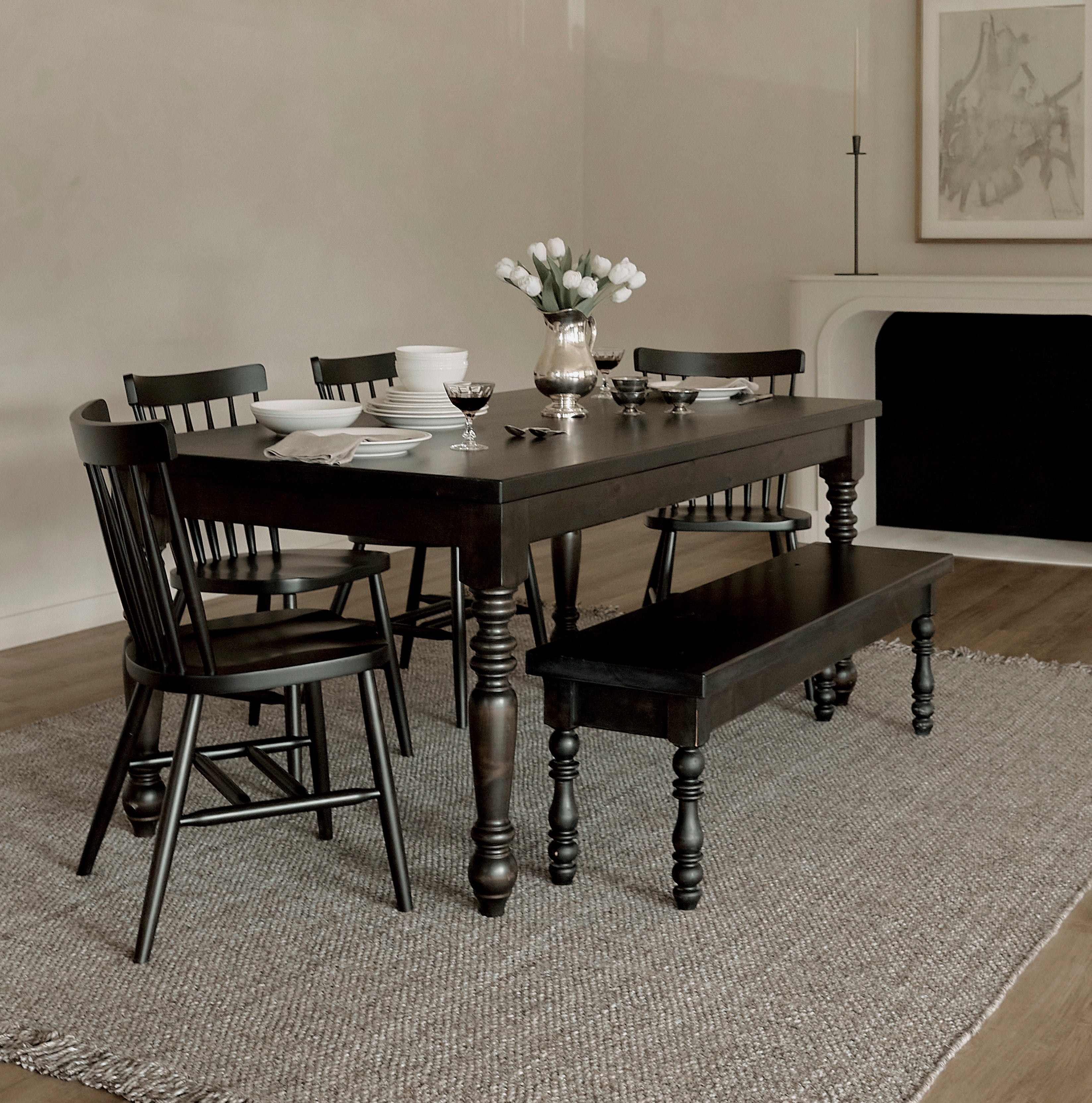
Your counter stools do not need to match your dining table and chairs exactly to make the kitchen and dining area feel cohesive. In many homes, the stronger approach is to coordinate the pieces through wood tone, finish, material quality, upholstery, or overall design language rather than repeating the same furniture across both spaces. When you're comparing our bar and counter stools, think about how the kitchen and dining areas are seen together and decide whether the stools should blend, contrast, or help bridge the two spaces.
The goal is not duplication.
It is continuity.
Start With the Relationship Between the Kitchen and Dining Room
In some homes, the kitchen and dining room are visually separate.
In others, they share one open space.
That distinction matters.
If the stools and dining furniture are visible together from:
- kitchen
- living room
- entry
their relationship becomes more important.
If the dining room is more enclosed, you have greater freedom to let the seating differ.
Matching Can Create a Calm, Unified Look
Using the same or a closely related finish across the stools and dining furniture can make the entire space feel more connected.
This works especially well when the room already contains:
- patterned upholstery
- strong cabinetry
- statement lighting
- several other materials
Repeated wood tones can simplify the palette.
Matching Does Not Mean Identical Furniture
You do not need to use the same chair design at the island and dining table.
The pieces can coordinate through:
- finish
- wood species
- leg shape
- overall design language
while still serving different functions.
This often creates a more refined result than repeating one chair form everywhere.
Kitchen Stools and Dining Chairs Have Different Jobs
Counter stools need to work with:
- a higher surface
- footrests
- island clearance
- traffic flow
Dining chairs are designed around a lower table and different seated posture.
Their proportions should respond to those functions.
Trying to make them visually identical can sometimes compromise the way one of the spaces works.
Coordinate the Material Before the Silhouette
One of the easiest ways to connect two seating areas is to use a related material palette.
For example:
- solid wood stools
- solid wood dining chairs
can feel cohesive even when the designs are different.
Natural grain creates a common language.
Finish Can Tie Different Designs Together
A backed counter stool and a traditional dining chair can look related if they share the same or similar wood finish.
This gives you:
- visual continuity
- functional variety
without making the space look like a furniture set.
You Can Also Coordinate Through Undertone
The finishes do not need to match exactly.
Two woods may differ in darkness while still sharing:
- warm
- golden
- neutral
- reddish
undertones.
That can be enough to make them feel intentional together.
Avoid Accidental Near-Matches
Two finishes that are almost the same can be more distracting than two clearly different finishes.
If one is slightly warmer or darker than the other, the pairing may look like an unsuccessful match.
A clearer contrast can feel more deliberate.
Contrast Can Add Depth
Different finishes can create a richer room when the relationship is intentional.
For example:
- darker stools + lighter dining table
- natural stools + deep dining chairs
- upholstered stools + solid wood dining seating
Variation can make the spaces feel collected rather than copied.
Use One Repeated Element
If the stools and dining chairs differ significantly, repeat at least one strong characteristic.
That might be:
- wood finish
- upholstery color
- metal detail
- leg shape
- overall visual weight
One clear relationship often provides enough cohesion.
Upholstery Creates Another Connection
If the counter stools are upholstered, the fabric can coordinate with:
- dining-chair upholstery
- rug
- curtains
- nearby seating
This can tie the kitchen and dining space together without requiring matching wood tones.
Upholstered Stools Do Not Need Upholstered Dining Chairs
You can mix:
- upholstered stools
- wood dining chairs
successfully.
The upholstery may simply introduce softness in the kitchen while the dining furniture remains more restrained.
Keep another element consistent.
The Dining Table Usually Has More Visual Weight
A dining table is a large furniture piece.
That often makes it one of the dominant wood tones in the space.
Counter stools can either:
- reinforce that tone
- intentionally contrast with it
without needing to compete.
Consider the dining table first, then decide what role the stools should play.
The Island Finish Matters Too
The stools sit directly against the island, so the relationship there may be more important than the dining table.
You are balancing three elements:
- island
- stools
- dining furniture
The best stool finish often creates a useful relationship among all three.
Stools Can Bridge the Island and Dining Table
A stool can act as a visual connector.
For example:
- dark island
- lighter dining table
- medium-tone stools
The stool becomes a transition between the two.
This can work especially well in open layouts.
Stools Can Also Create Deliberate Contrast
You may want the seating to stand out against the island.
That can create stronger definition.
For example:
- natural wood stools against painted cabinetry
- dark stools against a light island
Then the dining furniture can repeat one of those tones elsewhere.
Flooring Is Part of the Wood Palette
Hardwood flooring can introduce another major wood tone.
Do not evaluate the stools and dining table without considering the floor.
A finish may look perfect beside the dining table but disappear against the flooring.
The entire room matters.
Open Floor Plans Need More Discipline
When kitchen, dining, and living spaces are connected, too many unrelated furniture finishes can make the room feel fragmented.
That does not mean everything must match.
It means the palette should feel edited.
Two or three major wood tones are usually easier to manage than five unrelated ones.
Repetition Makes Mixed Finishes Feel Intentional
If the stool finish differs from the dining table, repeat it elsewhere.
That might include:
- console
- picture frames
- shelving
- accent furniture
The tone does not need to dominate.
It just needs to appear more than once.
Scale Should Coordinate Too
Two furniture groups can feel related even when their finishes differ if their visual weight is compatible.
For example:
- substantial dining table
- substantial backed stools
may feel balanced.
A very delicate stool beside heavy dining furniture may feel disconnected.
Look beyond color.
Backed Stools Create More Visual Presence
Because the backs rise above the counter, they become a larger part of the room.
Their relationship to dining chairs becomes more noticeable.
This makes:
- finish
- shape
- scale
especially important.
Backless Stools Give You More Freedom
A backless stool has a lower visual profile.
That means it can differ more from the dining chairs without creating conflict.
Much of the stool disappears beneath the counter when not in use.
This can simplify coordination.
Keep Function Ahead of Matching
Do not choose a stool simply because it matches the dining chairs.
It still needs the correct:
- height
- width
- footrest
- comfort
- spacing
for the island.
A matching stool that performs poorly is not the right furniture.
The Stool Height Should Never Be Compromised for Coordination
Your dining chairs may have a design you love.
That does not mean the counter stool version will automatically fit your island.
Measure the surface first.
Then coordinate the style.
Function comes before the furniture set.
Consider How Often Each Area Is Used
If the kitchen island is used every day and the dining room only occasionally, the stools may deserve more focus on comfort and maintenance.
The dining seating can remain more formal or visually distinct.
The two spaces do not need to behave identically.
A Family Kitchen May Benefit From Simpler Stool Materials
If the stools are used heavily around food, you may prioritize:
- solid wood
- easy maintenance
even if the dining chairs use upholstery.
That difference is practical.
You can still coordinate through finish or overall style.
Formal Dining Furniture Does Not Require Formal Stools
The kitchen often has a more casual role.
It is fine for the stools to feel:
- simpler
- lighter
- more relaxed
while the dining furniture has greater formality.
The material palette can keep the spaces related.
Modern Kitchens Can Mix Traditional Dining Furniture
A clean-lined stool can work with a more traditional dining table when the wood tone or material creates continuity.
Avoid assuming that every furniture piece has to share one exact style label.
Rooms are more interesting when different pieces belong together without copying each other.
Traditional Kitchens Can Use Simpler Stools
The same principle works in reverse.
A traditional kitchen does not require ornate stools.
A restrained solid wood design can let:
- cabinetry
- dining furniture
carry more of the detail.
The stool can provide a quieter layer.
Our Finishes Are Designed to Coordinate
Our made-to-order hardwood stools are crafted through a trusted U.S.-based artisan partner, and the available finishes are designed to coordinate naturally with the broader James & James furniture palette.
That can make it easier to create continuity between:
- stools
- dining tables
- dining chairs
without requiring every piece to be identical.
Natural Wood Variation Keeps Matching From Feeling Mechanical
Even when pieces share the same finish, real wood can show variation in:
- grain
- tone
- figuring
This helps coordinated furniture feel more natural and less like a printed matching set.
Finish Samples Are Valuable
If you are trying to coordinate the stools with existing dining furniture, compare physical finish samples in the room when possible.
Place them near:
- dining table
- flooring
- island
- cabinetry
Look at them in both daylight and evening light.
Lighting Can Change the Relationship
Wood may look warmer under:
- pendants
- recessed lighting
- evening lamps
than it does during daylight.
Because stools sit directly beneath kitchen lighting, this can affect how closely the finishes appear to coordinate.
Step Back and Look at Both Spaces Together
Do not judge the stool finish only from the kitchen island.
Stand in:
- living room
- entry
- dining room
and look at the entire arrangement.
The broader view often makes it easier to see whether the furniture feels related.
Matching Is Not Automatically More Refined
A fully matching room can look cohesive.
It can also feel overly coordinated if every piece repeats the same design.
There is nothing inherently premium about matching.
The quality of the materials and decisions matters more.
Mixing Is Not Automatically More Sophisticated
Different furniture does not become better simply because it is mixed.
If every piece has:
- different finish
- different style
- different material
the space may feel random.
Intentional variation requires enough repetition to maintain order.
Ask What the Room Needs
Does the kitchen and dining room already feel busy?
More matching may create calm.
Does the room feel flat?
Contrast may add depth.
Are there already several wood tones?
Repeat one instead of adding another.
Is the island visually dominant?
Use the stools to balance or soften it.
This is more useful than following a universal rule.
A Simple Coordination Process
1. Identify the dominant wood tone
Usually the dining table, flooring, or cabinetry.
2. Look at the island
Decide whether the stools should blend or contrast.
3. Choose the correct stool function
Height, comfort, and back design first.
4. Pick one relationship to repeat
Finish, material, upholstery, or shape.
5. Limit unnecessary new tones
Keep the palette controlled.
6. Test finish samples
In the actual room.
7. Step back
Judge the kitchen and dining spaces together.
The Best Coordination Feels Intentional, Not Identical
Your counter stools can match your dining furniture.
They can also be different.
The right approach is the one that creates a clear relationship while allowing each piece to do its job.
Choose the stools that fit:
- the island
- the household
- the way you sit
Then connect them to the dining furniture through the materials and finishes that make the entire space feel like one home.
Explore our bar and counter stools to compare hardwood and upholstered designs, backs, finishes, and configurations that can coordinate naturally with your dining room and kitchen furniture.