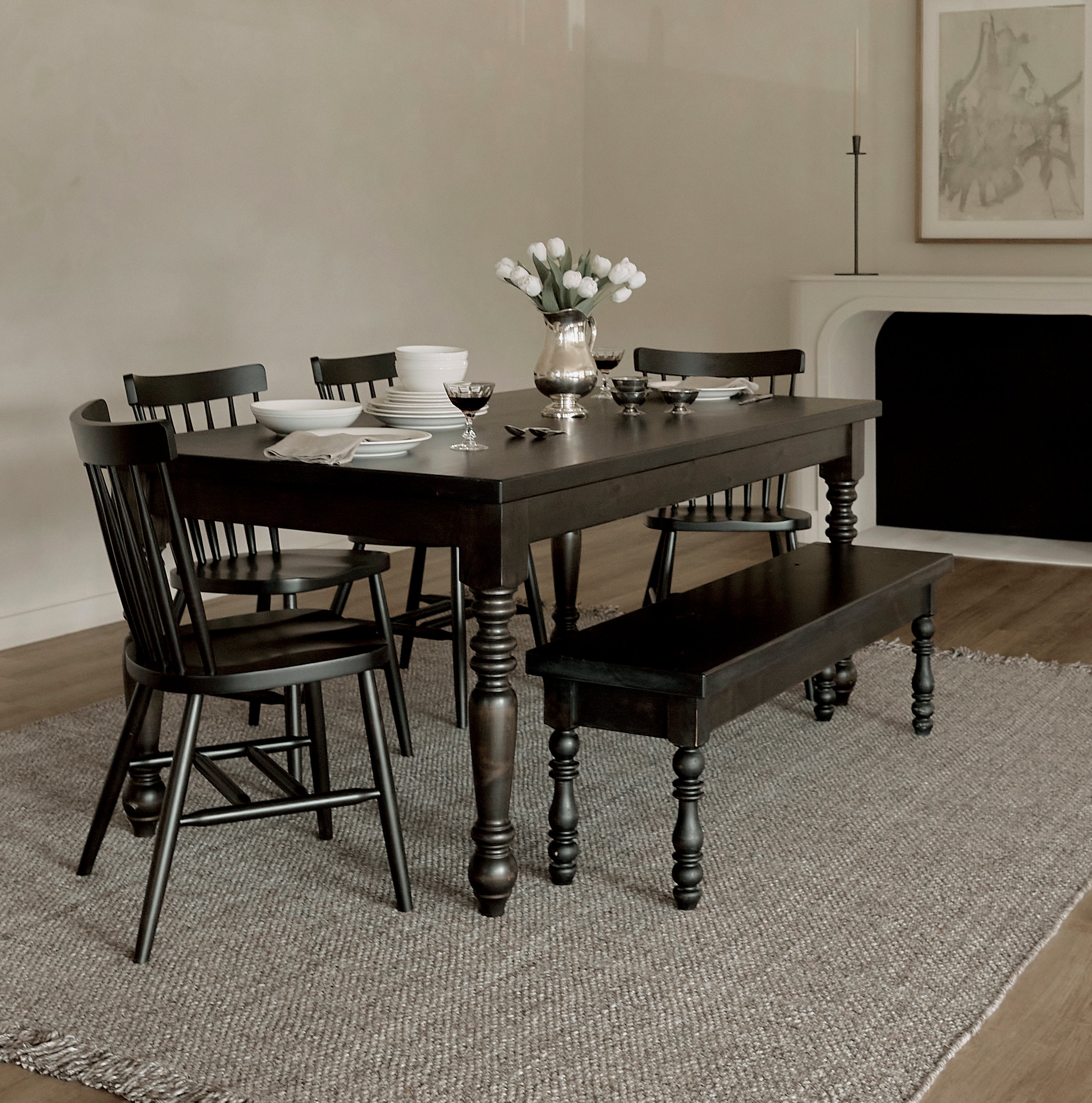
A bed-frame finish does more than determine the color of the wood. It changes how the bed carries the room: whether it feels light and relaxed, rich and grounded, quietly tailored, or warmly collected. Because the bed is usually the bedroom’s largest piece, its finish becomes part of the room’s everyday atmosphere.
The goal is not to match every wood surface exactly. It is to choose a finish that gives the bed a clear relationship to the floors, light, nightstands, textiles, and style of the home—while leaving you enough flexibility to refresh the room over time.
Explore hardwood beds with room photographs, material samples, and the exact product options in hand.
Start with the Bedroom’s Existing Materials
The finish should be chosen in the room, not in isolation.
Look at the floors first
Flooring is often the largest continuous wood or color surface in a bedroom. The bed does not need to match it, and an exact match can make the room feel flat. Instead, notice the floor’s undertone: warm, golden, neutral, deep, or cool-leaning. Then decide whether the bed should harmonize with that direction or provide a deliberate contrast.
A lighter bed can keep a darker floor from making the whole room feel heavy. A deeper bed finish can give a pale floor and light walls a useful anchor. The right relationship will make the materials feel chosen together, even when they are not the same color.
Include walls, textiles, and hardware
Look at wall paint, rugs, bedding, window treatments, lamps, and hardware. These layers affect how a finish reads. A rich wood tone may feel balanced in a room with light linen and pale walls; a lighter finish may be exactly right in a room with dark textiles or strong architectural details.
The bedroom should have enough contrast to feel interesting and enough connection to feel calm. The bed finish can help create both.
Understand Undertone Before Comparing Color Names
Finish names are less useful than the way the wood reads in your own room.
Warm, neutral, and deeper directions
Some finishes bring forward warmer gold, amber, red, or brown notes. Others read more neutral, softly weathered, or deeply saturated. None is better in the abstract. The useful question is whether the bed’s undertone supports the materials already in the room.
For example, a warm finish can bring life to a cool, pale bedroom. A neutral or lighter finish may let a room with warm floors and richly colored textiles feel less enclosed. A deep finish can create an elegant focal point when the rest of the room has enough light and air around it.
Grain and species influence the finish
The wood beneath the finish matters. Grain, natural color, knots, and texture can make the same finish read differently across wood species and individual pieces. That is part of the beauty of solid wood, but it is also why a screen image cannot tell the whole story.
James & James offers product-specific wood and finish options on its bed pages. Confirm the selected design’s current choices before deciding, because availability can vary by model.
Decide Whether the Bed Should Blend or Anchor
Both approaches can create a beautiful bedroom. Decide which role you want the bed to play.
Choose harmony for a quieter room
A finish that relates closely to the floors, nightstands, or surrounding woodwork can make the bedroom feel calm and cohesive. This may be especially appealing in a compact room, a room with many existing details, or a space where you want the bed to feel integrated rather than dominant.
Harmony does not require identical wood tones. A slightly lighter or deeper variation within a compatible undertone can give the room depth without breaking its calm.
Choose contrast for a clearer focal point
A contrasting bed finish can make the frame feel more intentional. A deep bed against pale floors and walls can anchor a large or light-filled bedroom. A lighter bed can relieve visual weight in a room with deep floors, dark walls, or substantial companion furniture.
Repeat the contrast somewhere else when possible. A dark bed may relate to a lamp, hardware, art frame, or rug detail. A lighter finish may echo woven materials, pale wood, or soft bedding. This makes the choice feel connected to the room rather than accidental.
Consider the Amount of Light in the Room
Light changes every finish.
Check daylight at several times
Morning, afternoon, and evening light can reveal different warmth and grain in a wood finish. A tone that looks neutral in a small sample may feel warmer in direct sun or deeper in a room with limited daylight.
Place samples beside the floor and near the wall behind the bed. Look at them at the times you are most often in the bedroom. This is a more reliable test than choosing from a product thumbnail or a brightly lit photograph.
Consider evening lighting too
Bedrooms are often used at night, when lamps and warmer bulbs may change the way the wood reads. A finish should feel good at the end of the day as well as in morning light. Consider the light from bedside lamps, overhead fixtures, and any window treatments that affect the room’s tone.
The right finish is one you enjoy under the actual conditions of the room, not a theoretical version of them.
Plan Nightstands and Dressers as a Group
The bed should lead the bedroom, but the companion pieces help it feel complete.
Do not overmatch every wood surface
Matching the bed, nightstands, dresser, and floor exactly can make the room feel flat. Related undertones, complementary finishes, or a mix of wood and upholstered pieces can create a more layered bedroom while still maintaining coherence.
A substantial hardwood bed may pair beautifully with nightstands in a related but not identical tone. It may also work with upholstered nightstands or a painted dresser if the rest of the palette creates a clear connection.
Use scale and material to create balance
If the bed has a deep, rich finish and a tall headboard, the nightstands should have enough visual presence to support it. If the bed is lighter and cleaner, companion furniture may bring contrast or texture. The finish is one part of that balance, along with height, shape, and material.
For the companion-furniture decision, see How to Choose Nightstands That Work with Your Bed once published.
Let Bedding and Textiles Do Some of the Work
The bed frame does not need to carry every color or texture in the bedroom.
Use textiles to soften a darker finish
A deeper wood frame can feel warm and inviting when paired with light bedding, textured linens, a soft rug, or an upholstered bench. These layers keep the bed’s visual anchor from becoming too heavy.
Use contrast to give a lighter finish definition
A lighter bed can be given presence through richer bedding, darker lamps, artwork, or an accent wall. This can be a useful approach in a smaller room where you want the frame to keep the space open but still feel like a purposeful centerpiece.
The beauty of a lasting bed frame is that these textile layers can change. Choose the finish you want to keep, then let the more flexible elements refresh the room around it.
Use Samples and Product Details Before Ordering
The final decision should be made from the exact product options, not a general finish name.
View samples in the actual room
James & James offers finish samples; confirm the current program and the available finish options for your selected bed. Place samples on the floor, against the wall, beside bedding, and next to existing furniture. Look at them from the doorway as well as up close.
Samples are a guide, not a promise of identical grain. They help you understand undertone, finish depth, and whether the direction feels right for the room.
Confirm the selected design’s options
Before ordering, verify:
- Wood species available for the exact bed
- Finish options available for that wood and design
- Product-specific natural variation or texture guidance
- The bed’s profile, headboard height, and external dimensions
- Care guidance for the selected finish
This keeps a finish choice connected to the actual piece you will receive.
A Simple Decision Framework
Choose a lighter or more natural finish if you want:
- A bedroom that feels open, relaxed, and visually light.
- To balance darker floors, walls, or companion pieces.
- Visible grain and material warmth without too much visual mass.
- A frame that leaves room for deeper textiles or accent colors.
Choose a deeper finish if you want:
- A strong, grounded focal point in the bedroom.
- Contrast against pale walls, flooring, or bedding.
- A finish that gives a substantial bed more architectural presence.
- A room plan with enough light and visual air around the frame.
These are not limits. The exact wood, finish, profile, light, and room composition should make the final choice.
Browse hardwood beds with samples and room photographs or checkout How to Choose a Hardwood Bed Frame for a Primary Bedroom.
Frequently Asked Questions
Should my bed frame match my wood floors?
No. Related undertones or an intentional contrast often create a more layered room than an exact match. View finish samples beside the floor in your actual light before deciding.
Is a dark wood bed frame too heavy for a small bedroom?
Not necessarily. A deep finish can work in a small bedroom when the bed profile, light, walls, bedding, and surrounding furniture keep the overall composition balanced. Map the exact bed and view samples in the room.
What bed-frame finish works with white walls?
Both light and deep finishes can work. A deeper finish can provide contrast and anchoring presence; a lighter finish can keep the room soft and open. Floors, light, and companion furniture should guide the choice.
Will finish samples match the final bed exactly?
Samples help you understand the finish direction and undertone, but real wood has natural grain and color variation. Confirm product-specific material information and expect the finished piece to have its own character.
Editorial implementation notes — do not publish
- Primary internal link: the Hardwood Beds collection appears in the opening.
- Pillar return link: once live, add one contextual link using “how to choose a hardwood bed frame” to how-to-choose-hardwood-bed-frame.
- Related support links: Article 7 is live in copy. Add Articles 5 and 11 after their final Shopify paths are confirmed.
- Product verification: Reconfirm wood-species availability, all finish options, sample program details, natural-character guidance, dimensions, and care instructions before publication.
- EEAT: Add a named James & James designer or finish specialist as reviewer, plus publication/update dates in the CMS.
- CTA: Keep to samples, browsing, and comparison; avoid unverified price, inventory, delivery, customization, or performance claims.