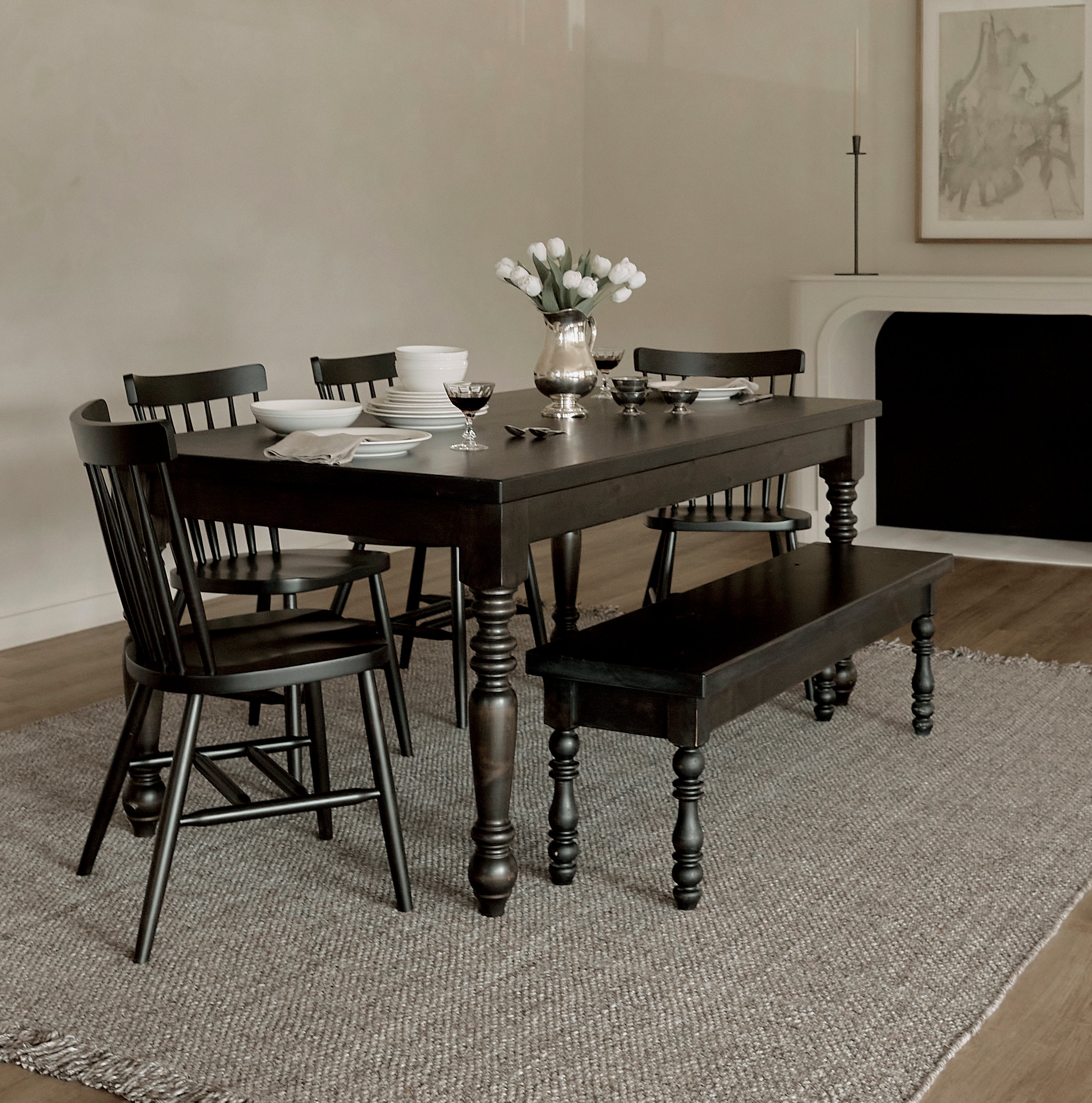
A desk finish does more than change the color of the wood. It changes the way the entire office feels.
The right finish can make a room feel lighter, more grounded, more tailored, or more relaxed. It can help a desk belong beside existing floors and furniture without forcing everything into an exact match. For a piece you expect to live with for years, the goal is not to choose the finish that looks best in a small screen image. It is to choose the one that feels right in your actual home.
Explore solid wood office furniture as you compare desk designs, wood options, and current finish choices.
Begin with the Room, Not the Finish Swatch
A finish should be chosen in context.
Before narrowing options, look closely at the room where the desk will live:
- Flooring and existing wood furniture
- Wall color and trim
- Natural light at different times of day
- Upholstery, rugs, and window treatments
- The scale and visual weight of the desk itself
- Whether the office is dedicated, shared, or visible from another room
A desk does not need to match every wood surface exactly. In fact, exact matching can make a room feel overly coordinated. The more useful question is whether the finish creates a relationship with the rest of the room that feels deliberate.
A lighter desk can keep a compact or lower-light office feeling open. A deeper finish can bring welcome contrast and presence to a larger room. Both can be timeless choices when they suit the architecture and furnishings already in place.
Choose the Wood Character You Want to Live With
Finish and wood work together.
The reviewed James & James desk pages describe made-to-order desks available in oak or knotty alder, hand-finished in available tones and sealed with a protective polyurethane finish. Confirm the exact wood and finish options for the desk you are considering before ordering; availability may vary by design.
The wood itself influences the final appearance. Grain, knots, tonal variation, and the way a stain settles into the material all contribute to the desk’s character. That natural variation is part of the appeal of real wood. A finish can unify the overall tone, but it should not be expected to make every board look identical.
Choose the combination that gives the room the level of movement and warmth you want to see every day.
Consider the Desk’s Profile Alongside Its Finish
The desk’s shape and base influence how a finish reads.
A cleaner, steel-base design such as the Fulton can give deeper finishes a more contemporary, architectural presence. Turned-leg designs such as Olivia and Hathaway can make the same tonal family feel softer, more traditional, or more layered.
This is why finish should not be chosen separately from the desk profile. A light tone on a detailed base may feel warm and relaxed. A dark tone on a clean-lined desk may feel more tailored and defined. Neither is a formula. The right combination is the one that supports the character of the room without becoming tied to a passing trend.
View Samples in the Actual Office
A screen can help narrow the options, but it cannot show how a finish will live with your floor, walls, and light.
If finish samples are available, place them near the intended desk location. View them in daylight, in the softer light of the evening, and beside the materials already in the room. Look at them from the doorway as well as from the chair position.
Light matters over time, too. The Canadian Conservation Institute notes that light can affect both wood and surface finishes, with changes accumulating over time. Do not choose a finish out of fear of normal living, but consider direct sun exposure when deciding where the desk will sit.
Use curtains, blinds, or thoughtful placement where direct sunlight is part of the room. The goal is not to remove daylight from the office. It is to understand how the desk will look and wear in the environment you have.
Decide Whether You Want Contrast or Continuity
A finish can either blend with the room or give it a stronger anchor.
Choose continuity when the room needs calm
A finish related to the floor or nearby furniture can help a smaller office, bedroom workspace, or shared room feel quiet and cohesive. This does not mean identical. Similar warmth or undertones are often enough.
Continuity is especially useful when the desk is already visually detailed or when the room contains several materials and patterns.
Choose contrast when the room needs definition
A deeper or more distinct finish can give a spacious office a center of gravity. It can make the desk feel intentional against lighter floors or walls and help the office read as a complete room rather than a collection of individual pieces.
Contrast works best when it is repeated or supported elsewhere—through a frame, lamp, hardware, rug detail, or another furniture element. The desk should feel connected to the room, not placed there by itself.
Think Beyond the First Year
A desk finish should have enough character to feel personal now and enough restraint to stay relevant as the rest of the room evolves.
Paint, art, rugs, and upholstery can change more easily than a solid wood desk. Choose a finish that works with the home you have now but does not depend on one temporary color scheme to make sense.
The U.S. Forest Service research notes that wood finishes serve both practical and aesthetic purposes: they help protect the surface, maintain its appearance, and create a cleanable finish.
That practical role does not make finish selection merely technical. It is part of deciding how the desk will live with you: its color, texture, natural variation, and everyday use all become part of the room’s story.
Confirm the Exact Product Before Ordering
Before making a final decision, review the selected product page and confirm:
- Current wood and finish options
- The desk’s exact profile, dimensions, and base details
- Whether samples are available
- Any customization options that apply to that specific design
- Product-specific care guidance
- How the selected finish looks beside your floor, walls, chair, and nearby furniture
Do not assume that an option shown on one desk is available on every desk. Treat the exact product page as the final source of truth.
Questions to Answer Before You Order
- Does the room need a lighter, more open feeling or a deeper visual anchor?
- How does the finish look beside the floor, walls, upholstery, and nearby wood furniture?
- Does the desk profile make the finish feel more modern, more traditional, or more layered?
- Have I viewed samples in the room at different times of day?
- Have I confirmed the selected design’s current wood and finish options?
The best finish choice is not simply the one you like in isolation. It is the one that makes the office feel more settled every time you enter it.
Explore wood office furniture with your room’s materials and light in mind.
Frequently Asked Questions
Should my desk finish match my floor?
Not exactly. The desk should relate to the floor in a way that feels deliberate, but matching every wood tone can make a room feel overly coordinated. Look for compatible warmth, undertones, and visual weight instead.
Is a light or dark desk better for a home office?
Neither is universally better. A lighter finish can keep a smaller or lower-light room open, while a deeper finish can give a larger office more contrast and presence. Choose based on the room’s light, floor, and existing furniture.
Why should I view finish samples in the room?
Screens cannot fully show how a finish will relate to your floor, walls, and changing natural light. Viewing samples in the room makes it easier to choose a finish that will feel right in daily life.