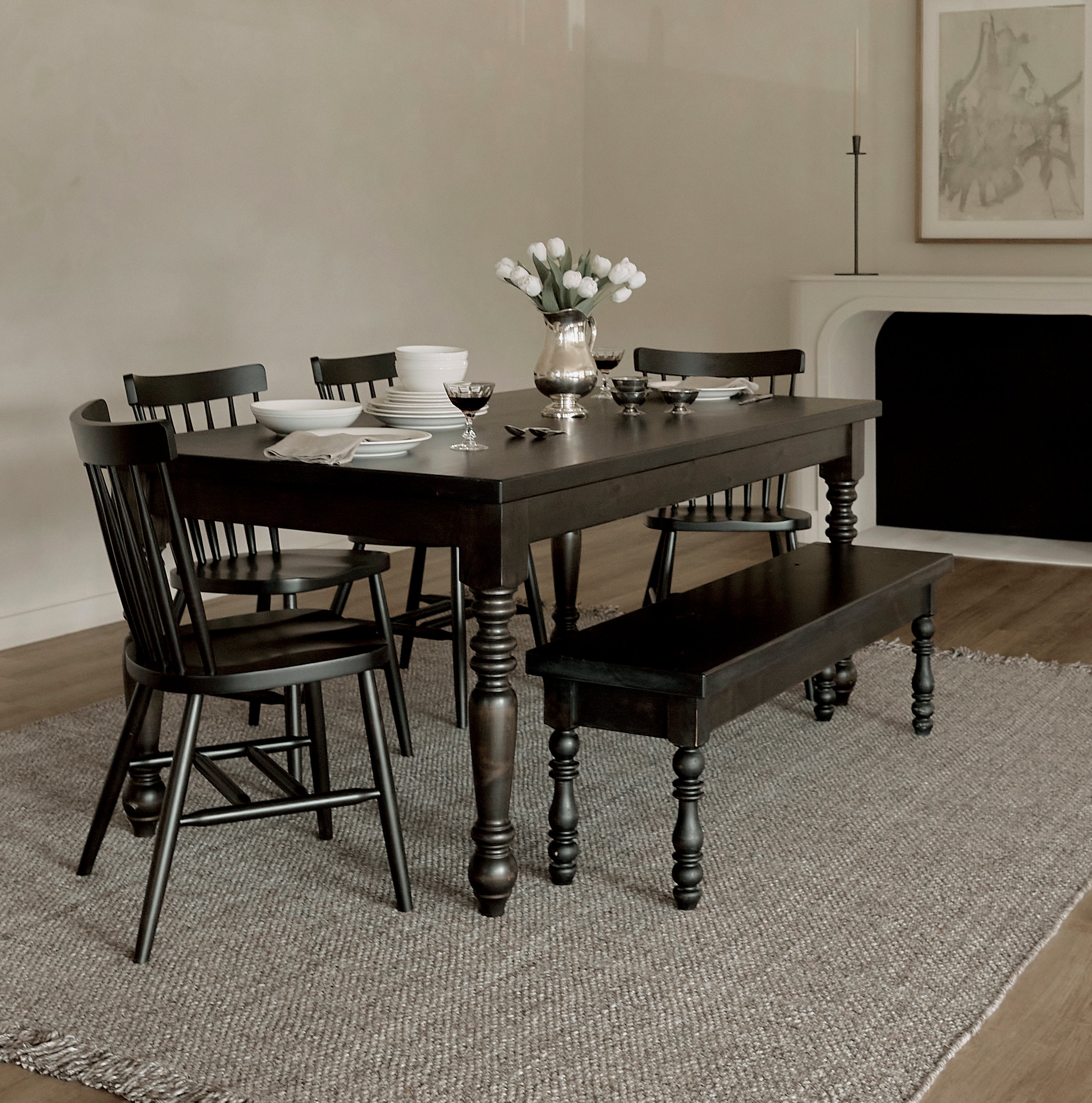
A well-planned home office is not a desk placed beside a shelf. It is a room where the furniture works together: the desk gives the day a place to begin, shelving keeps the practical things close without crowding the surface, and the overall arrangement feels like part of the home.
That is especially important when you are choosing solid wood office furniture intended to stay in the room for years. The desk and shelves should be considered as one composition before either piece is ordered.
Start with the Desk, Not the Storage
The desk determines the room’s primary work zone. It affects chair placement, sightlines, lighting, wall space, and the circulation left for everything else.
Choose the desk first by considering the work it must support. A writing desk may be right for laptop work, correspondence, planning, and a more open office. A corner desk can give a fuller workday more surface area for monitors, paperwork, and active materials.
Once that decision is clear, the shelf can serve the desk rather than compete with it.
James & James currently offers four writing desks and three corner desks within the Office collection. The reviewed desk product pages show that dimensions and options vary by model, so plan around the exact product rather than a general desk category.
Decide What Belongs on the Desk
A clear work surface is more useful than a larger desk filled with objects that should live elsewhere.
Before planning shelving, divide the things in your office into three groups:
- Items you use constantly and need within reach
- Materials you use regularly but do not need on the desktop
- Books, objects, and documents that can be stored or displayed farther away
The first group belongs on or immediately beside the desk. The second group often belongs on a nearby shelf. The third should be given a considered place so it adds character to the room rather than visual noise.
OSHA recommends allowing enough desk space for the monitor, keyboard, pointing device, and materials used most often. Shelving can help protect that usable surface by giving the rest of the office a home.
Choose Shelving for Function and Visual Balance
Shelving should make the room more capable without making it feel overfilled.
James & James currently includes Gwen, Arlo, and Boyd shelves in the Office collection. Before choosing one, consider what it needs to hold and how much visual weight the room can comfortably take.
A shelf may be useful for:
- Books and reference materials
- Files or working documents that should not live on the desk
- A small number of personal objects that make the office feel lived in
- Baskets or boxes that keep practical items from becoming visible clutter
- Art, lighting, or objects that give the office more depth
The right shelf does not need to display everything. It should create enough order that the desk remains clear and the room feels more complete.
Plan the Relationship Between Desk and Shelves
Desk and shelving placement should create a useful working rhythm.
Keep the most-used items close without crowding the chair
A nearby shelf can be helpful when it holds materials you reach for throughout the day. But it should not interfere with the chair’s movement or make the desk feel boxed in.
Mark the desk and chair footprint first. Then identify the space left for a shelf without narrowing the paths through the room. This is particularly important when the office is compact or when the desk sits near a door or window.
OSHA’s desk guidance recommends preserving enough room beneath and around the work surface for comfortable positioning and movement. Treat that clearance as part of the furniture plan, not leftover space.
Use the shelf to balance the room
A substantial desk can be balanced by shelving on a nearby wall, especially in a dedicated office. A lighter writing desk may need only one shelf or a smaller storage solution to keep the room from feeling sparse.
Look at the room from the doorway. If the desk is the visual anchor, the shelf should support it rather than become a competing focal point. Leave blank wall space where the room needs it. An office should feel intentional, not fully occupied.
Consider Windows, Light, and Sightlines
The office should work well in daylight and after dark.
A desk facing a window can feel open, but a monitor placed directly against bright light may create glare. A shelf near a window can affect the amount of light moving through the room. Before finalizing the layout, test where the desk will sit at the times you are most likely to work.
OSHA recommends arranging screens and task lighting to reduce reflected glare from windows and overhead fixtures.
Shelving can also shape what you see while working. A view toward a calm arrangement of books, art, or a few personal objects may feel more settled than facing an overfilled wall. Choose what remains visible with as much care as what gets stored away.
Let Material and Finish Tie the Room Together
A desk and shelf do not need to match perfectly to feel related. They should, however, belong to the same conversation.
The reviewed James & James desk pages describe made-to-order pieces in oak or knotty alder, hand-finished in available tones and sealed with a protective polyurethane finish. Confirm current wood and finish options for the exact desk and shelf before ordering.
A shared finish can create a quiet, cohesive foundation. Related but distinct tones can make the room feel more layered. The useful question is whether the furniture works with the floor, wall color, upholstery, and light in the actual room.
If finish samples are available, view them together beside the intended desk and shelf locations. The right combination should feel considered in daylight and in the softer light of the evening.
For help with that decision, see How to Choose a Wood Finish for a Home Office Desk.
Avoid Treating Shelving as Overflow Storage
A shelf can make an office more functional, but it should not become the place where every unresolved item goes.
Before ordering, decide what needs open access, what can be stored more discreetly, and what does not need to live in the office at all. This helps preserve the calm that makes a dedicated workspace feel worth using.
The strongest offices have enough storage for daily life and enough restraint to let the furniture, materials, and room itself breathe.
Questions to Answer Before You Order
- What must stay on the desk during a typical workday?
- What needs to be nearby but off the desktop?
- Does the desk leave enough space for a shelf and the chair at the same time?
- Where will doors, windows, outlets, and natural light affect the layout?
- Does the shelf balance the desk, or make the room feel crowded?
- Have I confirmed the exact dimensions, materials, finish options, and configurations for each selected piece?
When desk and shelving are planned together, the office becomes more than a place to put work. It becomes a room with structure, warmth, and enough order to support the way you live.
Explore solid wood office furniture with a complete room plan in hand.
Continue planning your office with How to Choose Solid Wood Shelving for a Home Office.
Frequently Asked Questions
Should I choose a desk or shelving first for a home office?
Choose the desk first. It determines the primary work zone, chair placement, and the remaining space available for shelving. Add storage only after the desk layout is clear.
How close should shelving be to a desk?
Keep regularly used materials within easy reach, but leave enough space for the chair to move and for the room’s main paths to remain open. Mark both pieces on the floor before ordering.
Do desk and shelving finishes need to match?
No. They should have a deliberate relationship in material, tone, or design character, but a room often feels more natural when the furniture is coordinated rather than perfectly matched.