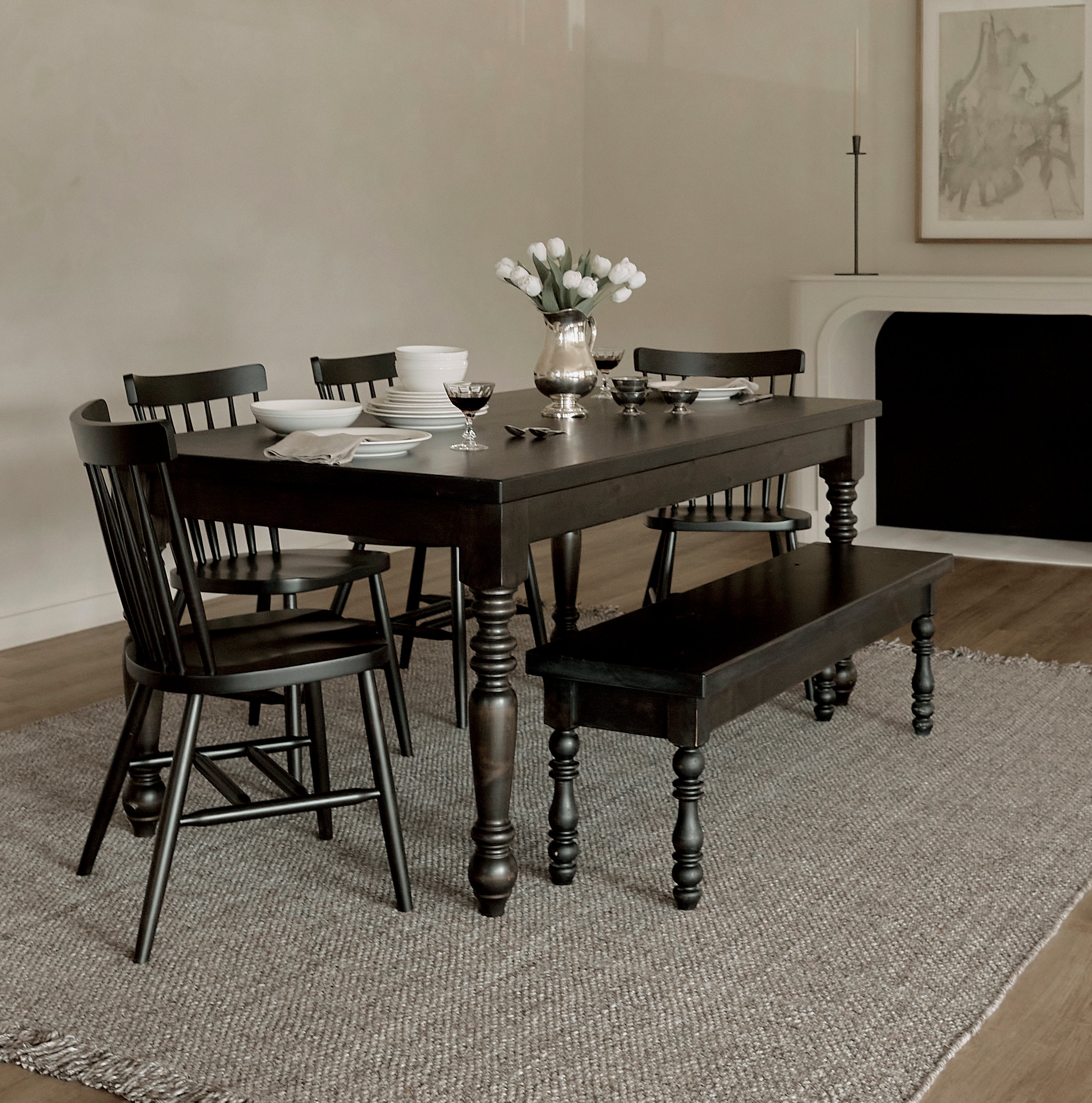
A small dining room does not need to feel like a compromise. The right chairs can make it feel intentional, comfortable, and ready for the meals that matter—without filling every useful inch of floor space.
The key is not automatically choosing the smallest chair. It is choosing chairs whose width, depth, arms, back profile, and visual weight work with the table and the actual paths through the room. A compact room can still hold beautifully made chairs with presence. They simply need to leave the home enough room to breathe.
Browse dining chairs with your table dimensions and room plan nearby. The best choice will support daily use first, then give you a sensible plan for guests.
Begin with the Room’s Real Movement
In a small dining room, circulation is not an afterthought. It is part of the furniture decision.
Identify the paths that matter every day
Notice how people move around the table. Does the route connect the kitchen to the living room? Is there a door, cabinet, or pantry nearby? Does the dining area sit within an open-concept room where chairs are part of a larger walkway?
Mark those paths before choosing a chair. A dining set can appear to fit the open floor area and still make daily life awkward if a pulled-out chair blocks the route everyone uses. The room should remain easy to pass through when people are seated—not only when every chair is tucked in.
Test the actual chair footprint
Chair dimensions make a meaningful difference in a compact space. Measure the complete depth and width of the chairs you are considering, then map them around the table in both tucked-in and pulled-out positions.
Do not rely on product photographs. A generous upholstered chair may need more space than its silhouette suggests; a slim wood chair may be able to provide comfort while preserving room around the table. The full-scale test is where the right tradeoff becomes clear.
Choose Chairs That Fit the Table First
A small room does not forgive a mismatch between table and chair. The pieces need to work together physically before you decide whether they work aesthetically.
Check width, depth, and height together
Chair width determines how comfortably people sit beside one another. Depth determines how far the chairs reach into the room. Seat height and arm height determine whether they work beneath the table.
Gather these dimensions from the product pages for both pieces. Then check the table’s underside, apron, and base placement. The goal is a chair that lets someone sit close enough to eat comfortably, tucks in when appropriate, and does not create a conflict with the table’s supports.
Pay attention to the table base
A pedestal table can give chairs more freedom around the edge because it has no corner legs. This can be helpful in a smaller room, especially around a round table. A legged or trestle table can still be an excellent choice, but its supports establish seating zones that must be included in the plan.
The right base is the one that works with the table you love and the chairs you need. Test where each chair will sit rather than assuming every point around the top is equally usable.
Favor a Lighter Footprint, Not a Lesser Chair
Small spaces benefit from chairs that are proportionate, but that does not mean they need to be flimsy or visually forgettable.
Side chairs often create more flexibility
Armless side chairs can be easier to tuck under a table and generally use less lateral space than armchairs. They can be a strong choice along the sides of a rectangular table, around a round table, or in any arrangement where chair placement needs to stay adaptable.
This does not mean side chairs are always small or that they are less comfortable. Look at the specific seat, back support, and dimensions. A well-proportioned side chair can give a compact dining room exactly the right mix of comfort and openness.
Use armchairs selectively
Armchairs can bring real comfort and a generous, welcoming quality to a dining room. In a smaller room, a pair at the ends of a rectangular table may add personality without asking every seat to carry their added width and depth.
Confirm that the arms clear the table if you want the chairs to tuck in. If they do not, plan for their full depth against the room’s walls and paths. An armchair should improve the dining experience, not become the object everyone walks around.
Use Visual Weight to Help the Room Feel Open
Physical space matters, but visual space matters too. The chairs are one of the most visible elements in a compact dining area.
Let the chair back shape work with the room
An open or visually lighter chair back can allow more of the room to remain visible. This may be especially helpful near windows, in a nook, or in an open-concept space where the dining area is seen from several directions.
A more substantial chair back can also be beautiful in a small room when the table is appropriately scaled and the rest of the room is quiet. The goal is balance: enough presence that the dining set feels complete, not so much that it reads as a single dense block of furniture.
Be deliberate with upholstery
Upholstered chairs can add softness and comfort to a compact room, but a group of deeply upholstered seats can make the dining area feel fuller. Consider the chair’s profile as well as its fabric. A tailored upholstered side chair may give you the warmth you want with a more manageable footprint than a broad armchair.
James & James offers both wood and upholstered chair styles. For upholstered designs, verify the current fabric options, chair dimensions, and care instructions for the specific product before deciding.
Consider a Bench Only When It Serves the Room
A bench can be useful in a small dining room, but it is not a universal space-saving answer.
Where a bench can help
On the wall side of a table, a bench can reduce the number of individual chair backs in the room and may tuck more neatly beneath the table when not in use. It can also be a practical choice for children or casual family meals.
Where chairs may still be better
Chairs provide individual access and back support. In a room where people need to enter and leave their seats frequently, or where adults regularly sit for long meals, individual chairs may work more naturally. Choose a bench because it solves a specific circulation or seating need—not simply because it appears to be the small-room default.
Make a Plan for Guests Without Overfilling the Room
A small dining room can still host. The best approach is to plan for the gathering rather than keeping every possible chair in place every day.
Keep everyday seating right-sized
Choose the number and type of chairs that make the room comfortable on a normal week. These are the seats that should look and feel right in the room most of the time.
Then decide how you will add a guest or two. Extra chairs might be used at a desk or vanity elsewhere in the home, stored in a nearby space, or selected as folding or occasional seating. They should still relate to the dining set in height, scale, and visual character.
Use an extendable table thoughtfully
An extendable table can help a small dining room serve a larger meal without permanently carrying the larger footprint. Test the table closed and open with every chair you expect to use. The expanded setup can feel fuller; it should still allow people to get to their seats and move through essential paths.
Create a Full-Scale Layout Before Ordering
The floor test is especially valuable in a compact room.
Mark the table and chair positions
Use painter’s tape for the table footprint and tape, boxes, or chairs you already own to represent the intended seating. Include the full depth of each chair, then move the chairs out to their likely position when someone sits down.
Look at the room from every adjoining space. Open doors and cabinets. Walk from the kitchen with a serving dish. Try the layout with two people moving at once. This process can expose a problem—and reveal a solution—before a purchase is made.
Aim for ease, not emptiness
The right compact dining room does not feel oversized. It feels considered. The table and chairs have enough room to be used, the paths stay practical, and the furniture looks like it belongs there.
When that balance is in place, a small dining room can feel more intimate and welcoming than a larger one with no sense of scale.
Browse dining chairs with your room plan in hand.
Frequently Asked Questions
What kind of dining chairs are best for a small dining room?
The best chairs are those that fit your table and leave workable paths around it. Armless side chairs can offer flexibility, while carefully selected upholstered chairs or end armchairs may also work if their dimensions suit the room.
Should I avoid upholstered chairs in a small dining room?
No. Upholstered chairs can add comfort and softness. Compare their exact depth and visual weight with the room and table, and consider a tailored side-chair profile if a broad upholstered armchair feels too full.
Can I use armchairs in a compact dining room?
Yes, when their width, depth, and arm clearance fit the table and room. A pair at the ends of a rectangular table may be more practical than using armchairs at every seat.
How do I make room for guests in a small dining area?
Keep everyday seating right-sized and make a plan for extra chairs that can be used or stored elsewhere. If the table expands, test the full open configuration before ordering.