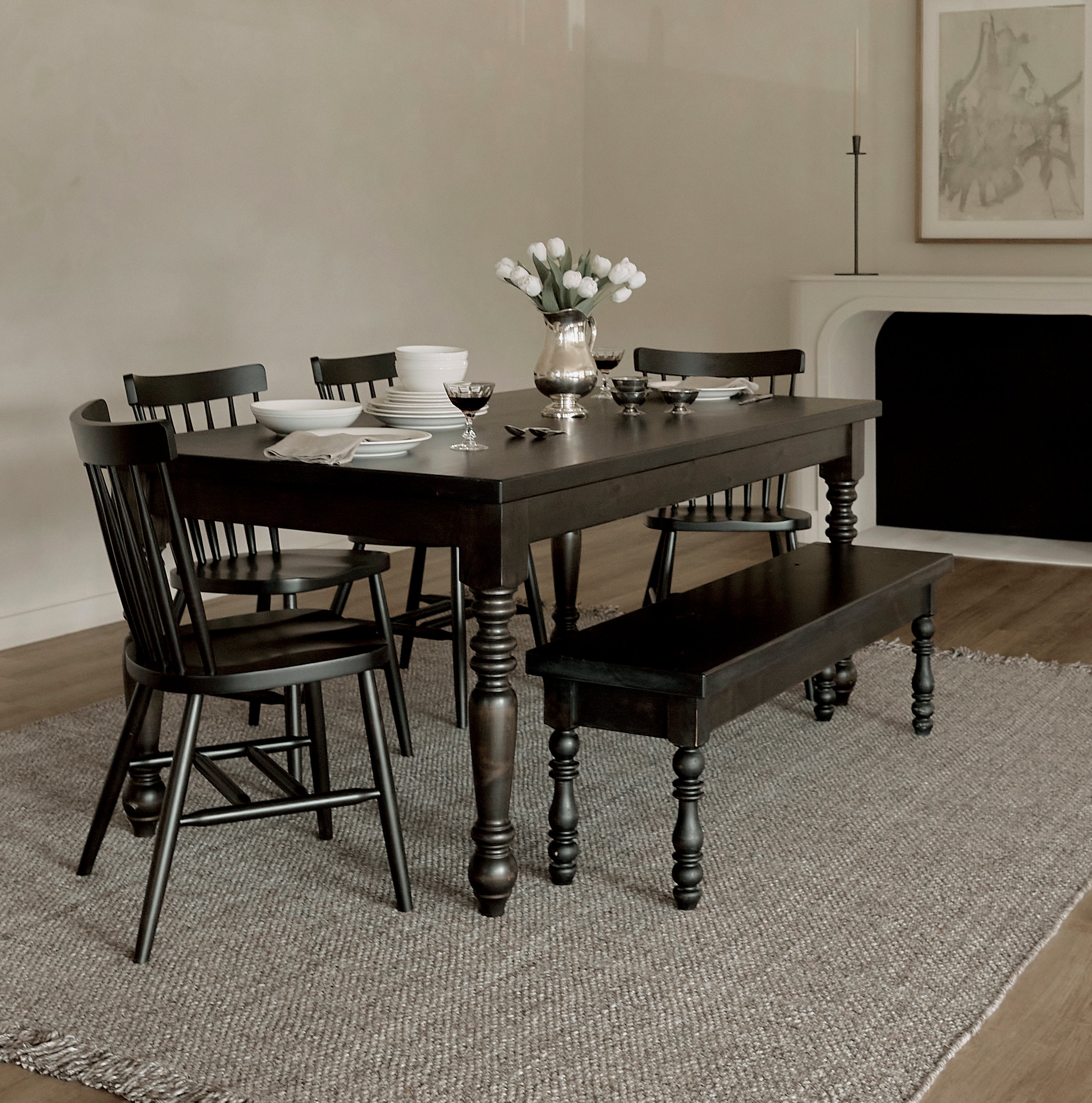
A wood dining table and wood dining chairs do not need to match exactly to belong together. In fact, an exact match can sometimes make a room feel more like a set than a home. The more enduring goal is a relationship: finishes that share a mood, a material story, or a thoughtful contrast.
That relationship is shaped by undertone, grain, sheen, natural light, and the furniture already in the room. Once you know what to look for, choosing chair finishes becomes less about finding the same color and more about creating a dining room that feels settled from every angle.
Explore dining chairs alongside your table finish, room photographs, and finish samples whenever possible.
Begin with the Table’s Undertone
Before choosing chair finishes, look closely at the table. Its color is only one part of what you are seeing.
Notice whether the wood reads warm, cool, or neutral
Some wood finishes carry more golden, amber, red, or brown warmth. Others appear more neutral, weathered, or quietly cool. The right chair finish does not need to duplicate that undertone, but it should relate to it intentionally.
Warm with warm can create a layered, inviting room. A deeper or more neutral chair finish can give a warm table useful contrast. What usually feels least resolved is a combination of undertones that compete without a clear connection elsewhere in the room.
Look at grain and texture as well as color
Two finishes may look similar in a small swatch yet feel very different when spread across a tabletop and several chair frames. Wood species, grain pattern, knots, and hand-finishing can all influence how color reads.
This is one reason an exact match is not always possible—or necessary. James & James notes that natural variation between wood types can mean table and chair finishes are complementary rather than identical. Let the material’s natural individuality be part of the design rather than treating it as a problem to correct.
Decide Whether You Want Harmony or Contrast
Both approaches can work. The important thing is to choose one on purpose.
Choose related finishes for a calm, cohesive room
Chair finishes close to the table’s tone can create a quiet, unified dining set. This may be especially appealing in a smaller room, a home with a simple material palette, or a space where you want the table to feel like one continuous anchor.
Related does not mean identical. A slightly lighter chair can keep the perimeter from feeling heavy; a slightly deeper chair can give the table a visual frame. Look for compatible undertones and a similar overall warmth.
Use contrast to give the table definition
A lighter table with deeper chairs, or a deeper table with lighter chairs, can create a dining room with more depth. Contrast can also make a table stand out as the centerpiece of the room while the chairs provide a distinct but connected supporting role.
The contrast should be repeated or supported somewhere else. A dark chair finish may relate to window trim, hardware, a nearby cabinet, or the legs of another piece. A lighter chair may echo flooring, walls, or a woven rug. This gives the choice context so it feels considered rather than arbitrary.
Consider the Room Before Choosing a Finish
Finishes are experienced in a room, not in a product grid.
Look at the floor and surrounding woodwork
Floors, cabinetry, beams, trim, and nearby furniture all influence how a chair finish will read. You do not need to match the floor or cabinets exactly. Too much matching can make a room feel flat. Instead, look for a finish that creates a useful relationship with the established materials.
For example, a dining table can be the warmest wood in the room while chair finishes bridge toward a cooler floor. Or the chairs can introduce depth beside a light table and pale walls. The best choice is the one that makes the room feel more complete as a whole.
Notice the light at different times of day
Natural light can bring out warmth, coolness, and grain that are not obvious in a screen image. Evening lighting can change a finish again. Place samples on or near the table, then look at them in morning light, afternoon light, and the lighting used for dinner.
This is especially important in rooms with large windows, north-facing light, dark walls, or strong artificial lighting. A finish should feel right in the life of the room, not only at one moment of the day.
Use Upholstery as a Bridge When Needed
Upholstery can make it easier to combine finishes because it introduces another connecting material between the table and chair frame.
Let fabric soften a wood-to-wood contrast
An upholstered chair with a wood frame can pair a contrasting chair finish with a table more gently. A warm neutral fabric, for example, may connect a deeper wood frame to a lighter table. Textured upholstery can also add the visual pause that keeps a room from becoming all wood tone.
The fabric should relate to the larger room as well. Consider rugs, drapery, wall color, and nearby seating, particularly in an open-concept home. Choose a fabric and finish as a pair rather than selecting one after the other.
Keep the wood frame part of the plan
Even on an upholstered chair, the wood frame or legs remain visible. Check how that finish looks beside the table, not only how the fabric looks. The chair should bridge the room, not introduce two unrelated ideas at once.
James & James offers both wood and upholstered dining chairs. Confirm available upholstery, finishes, materials, and care instructions for the individual design before making a final selection.
Match Visual Weight, Not Just Color
A finish can change how heavy or light a chair appears.
Deeper finishes can give the room an anchor
Dark or richly toned chairs can frame a lighter table, add contrast in a bright dining room, and give a larger table enough visual support. In a compact or low-light room, however, several substantial dark chairs may make the dining area feel more filled than you want.
This is not a rule against dark finishes. It is a reminder to consider the combined weight of the table, chairs, rug, walls, and light.
Lighter finishes can keep the perimeter open
Lighter chair finishes can make the dining set feel airy and can allow a substantial wood table to remain the visual focus. They may work especially well near windows, in a small dining area, or in a room where other materials already carry depth.
A lighter finish can still have warmth and character. Look at the grain and undertone rather than treating “light” as a single style.
Order Samples and Make a Full-Room Comparison
The best finish decision is usually made in the actual home.
View samples beside the table
Order or request finish samples when they are available. Place them directly on the table and beside other important materials. Hold them against the floor, cabinetry, rug, and wall paint. Look at them at several times of day.
James & James offers finish samples; confirm the current sample options and program details before publishing any related call to action. A small sample cannot show every feature of a finished piece, but it can reveal undertone and help you understand the direction of the pairing.
Take a step back
View the samples not only from directly above but from the entry, kitchen, and adjoining room. Dining chairs are often seen from the back and across the table. The finish should make sense from these wider perspectives as well as at close range.
If you are considering a mixed set, compare every finish at once. Two choices that look good separately may create too many competing notes when they are combined.
A Few Pairing Approaches That Often Work
These are design directions, not strict formulas:
- Keep table and chairs within a similar warm or neutral undertone, with a slight difference in depth.
- Pair a light table with deeper chairs when another dark element in the room repeats the contrast.
- Use a deeper table with lighter chairs to give the dining area a more open perimeter.
- Combine a wood table with upholstered chairs whose fabric bridges the table tone and the rest of the room.
- Use matching chairs for a calm rhythm, or a balanced mix of armchairs and side chairs for more dimension.
The right pairing should make you feel that the pieces were chosen together, even if they are not the same finish.
Questions to Ask Before You Choose
- What undertone does the table have in the room’s real light?
- Do I want the chairs to harmonize with the table or give it contrast?
- What other woods, fabrics, and finishes are visible in the dining area?
- Does the chair finish repeat or bridge something else in the room?
- Does the combined table-and-chair arrangement feel too light, too dark, or balanced?
- Have I viewed samples beside the table at different times of day?
- Have I confirmed the exact finish options for the selected chair and table?
When the relationship feels intentional, the dining room will not depend on an exact match. It will feel layered, personal, and made to be lived with.
Browse dining chairs with your samples and room palette nearby.
Finally, consider What to Look for in a Solid Wood Dining Chair.
Frequently Asked Questions
Do dining chair finishes need to match the table exactly?
No. Related undertones, compatible visual weight, or an intentional contrast often create a more layered room than an exact match. Natural wood variation can also make exact matching impractical.
Can I use dark chairs with a light wood dining table?
Yes. The contrast can be beautiful when it is supported elsewhere in the room and the combined visual weight suits the space. View samples in the room before deciding.
How do I match dining chairs to wood floors?
Avoid trying to match every wood surface exactly. Choose chair finishes that relate to the floor and table through undertone, depth, or contrast, then view samples in the actual room.
Should upholstered chair legs match the dining table?
They do not need to match exactly, but their finish should have a clear relationship to the table and room. Treat the fabric and wood frame as one design decision.