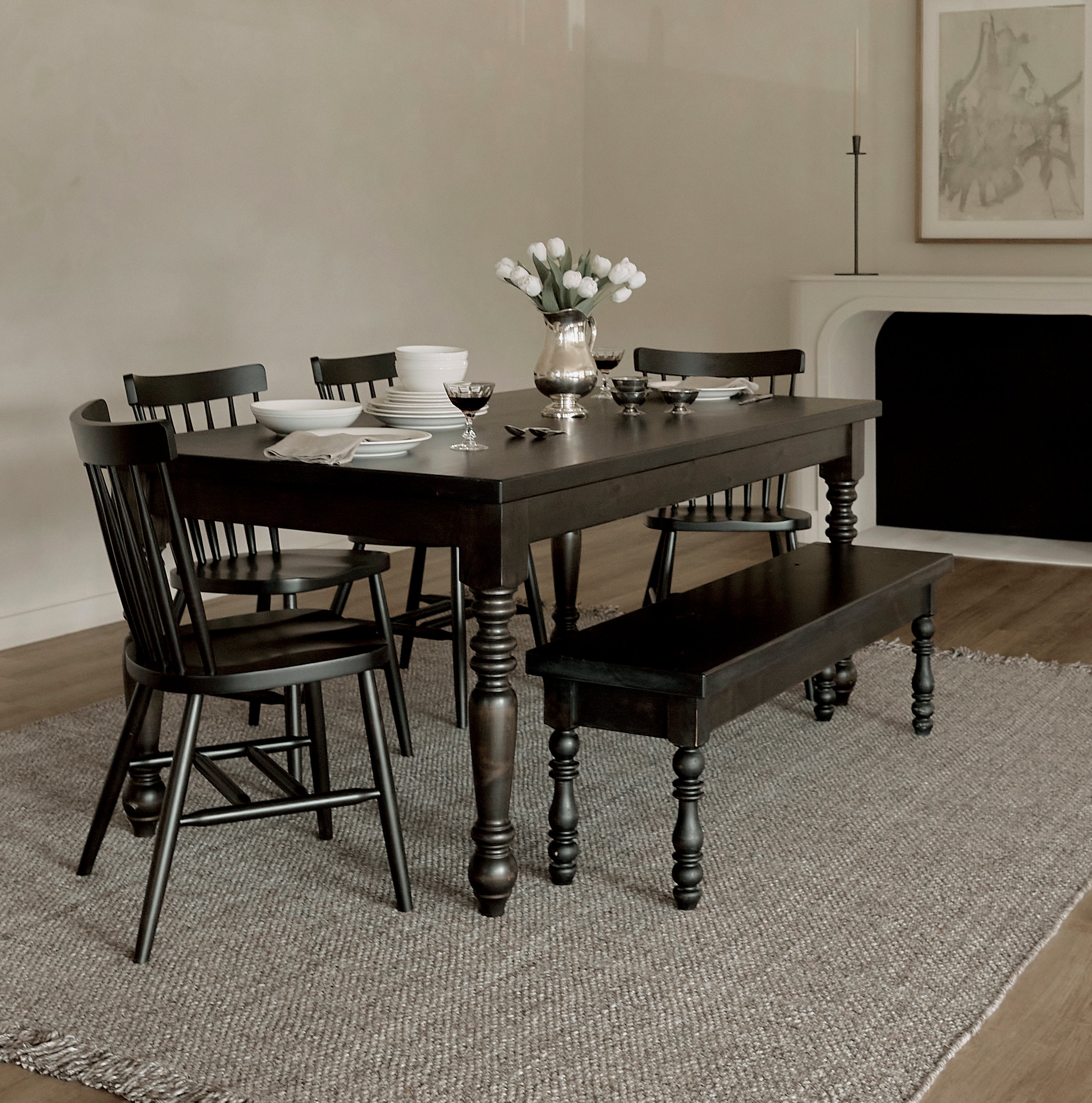
A solid wood dining chair has an honest kind of presence. You can see the grain, feel the structure, and understand that it is meant to carry ordinary life: breakfasts, homework, holidays, and the long conversations that happen after dinner.
But “solid wood” is only the beginning. The right chair also needs to fit the table, support the person sitting in it, work with the room’s movement, and have a finish and care profile that suit the way your household lives. A chair can be beautifully made and still be the wrong choice if it is too wide, too deep, or uncomfortable at the table you already own.
Explore dining chairs as you compare solid wood designs with the details that matter most in your home.
Start with the Material—Then Look at the Specific Chair
Solid wood brings natural character that manufactured look-alikes struggle to recreate. It also means no two pieces will be exactly alike.
Ask what wood is used
The wood species and the way it is finished affect the chair’s grain, tone, visual weight, and relationship to the table. Do not assume that every chair uses the same wood as every James & James dining table. Check the current product page for the particular design you are considering.
For example, James & James lists the Lynn Upholstered Dining Chair with a maple wood frame. That is a product-specific detail, not a range-wide claim. The useful habit is to confirm the material for each selected chair, then consider how it will look and live beside your table.
Expect natural variation
Real wood has variation in grain, texture, and color. Those qualities are part of what make a solid wood chair feel individual rather than mass-produced. They can also mean a chair finish complements a table rather than matching it with factory precision.
James & James explains that natural wood variation can affect the way chair and table finishes relate. View samples and images as useful guides, but expect the finished piece to carry its own character. That is not a compromise; it is the point of choosing a natural material.
Look for a Chair That Feels Purposeful in Its Construction
You do not need a lesson in joinery to shop well. You do need to look at how the chair’s form supports daily use.
Consider the relationship between seat, back, and legs
Look at the chair as a whole. Does the back appear to support the sitter naturally? Does the seat look proportionate to the frame? Do the legs and stretchers, if present, give the chair a grounded, balanced stance? A good dining chair should feel resolved from every angle, not merely decorative from the front.
Product photography can help you understand silhouette, but it cannot replace the specifications and the maker’s details. Use both. If a construction or material detail matters to your decision, ask before ordering rather than inferring it from an image.
Think about how the chair will be used
A chair used every day needs a different kind of practicality than a pair of occasional host chairs. Consider children moving the chairs, guests pulling them in and out, the table’s edge, and the room’s floor surface. The best chair is not the one that looks untouched; it is the one that remains useful and beautiful through real use.
Comfort Is a Design Detail, Not an Extra
A solid wood chair can be comfortable for a full meal when its proportions suit the person and table.
Compare seat height and depth
Seat height affects how comfortably the chair works with the table. Seat depth influences whether someone can settle in naturally while still sitting close enough to eat. Gather the exact chair dimensions, then compare them with the table’s underside clearance and your own experience with chairs you know.
Do not judge comfort by material alone. A wood chair can have a shaped seat, supportive back, and proportions that make it easy to use. An upholstered chair can be less comfortable if it is too deep, too high, or wrong for the table. The individual design is what matters.
Consider the back support
Back shape, angle, and contact points all influence a long meal. Some people prefer a more upright chair; others appreciate a little more relaxed support. Look at the chair’s intended posture and, when possible, sit in it for more than a few moments.
If you are buying online, use the full dimensions and ask questions that matter to your household. The goal is a chair that lets people settle in comfortably without making the dining room feel like a lounge.
Make Sure the Chair Fits Your Table
A solid wood chair should be selected with the table, not afterward.
Check the underside and base
Compare the chair’s seat and arm height—if it has arms—with the table’s underside clearance. Include the top thickness, apron, and any structure below the surface. The chair should allow a person to pull close to the table without knees or arms meeting an obstacle.
Then look at the base. A pedestal may offer flexible placement around the perimeter; a four-leg or trestle table creates more defined seating zones. Each can work with solid wood chairs, but the exact configuration should be planned before you order.
Measure width, depth, and circulation
Chair width affects how comfortably people sit beside one another. Depth affects the space the chair requires tucked in and pulled out. Mark the whole arrangement on the floor and walk the routes through the room.
Do not assume a solid wood chair has a small footprint. Its back, arms, and frame can still be substantial. Use the specific dimensions for the chair you choose.
Choose a Finish for the Room, Not Only the Chair
Finish is the bridge between the chair, table, floor, and rest of the home.
Look for a relationship, not an exact match
Wood chairs do not need to match the dining table exactly. A related undertone, a lighter or deeper contrast, or a shared visual weight can create a more interesting room than a perfectly uniform set.
Look at the table’s grain and tone, then consider floors, cabinetry, rug, wall color, and nearby furniture. A finish that looks excellent in isolation may not be the finish that brings the room together.
Use samples in the actual light
If samples are available, view them beside the table at different times of day. Natural light and evening lighting can bring out different tones in the wood. Look from across the room as well as at close range; chair backs and legs are often seen from the kitchen, living room, or entry.
James & James offers finish samples. Confirm the current program and available options before relying on it in a purchase plan.
Know the Care Expectations Before the Chair Arrives
Solid wood is resilient, but it is still a natural material. Reasonable care helps it stay beautiful through everyday use.
Follow the product-specific guidance
Use care instructions for the specific chair and finish you buy. James & James’ chair-care guidance for its Lynn Upholstered Dining Chair recommends regular dusting with a soft, dry cloth; when needed, it advises water and a wood-safe cleaning product, avoiding abrasive cleaners and harsh chemicals, and drying the wood promptly.
Treat that as an example of the type of guidance to follow, not a substitute for the current instructions on your product. Finishes and materials can vary, and the item page should be confirmed before publication or purchase.
Choose wood because you will use it
Wood can carry a home’s history gracefully. A dining chair will be touched, moved, and used. The goal is not to preserve it in an untouched state; it is to care for it well enough that it remains part of the household for years.
Use it with ordinary care, clean it as recommended, and appreciate the grain and variation that make the chair distinct. A solid wood dining chair should make the dining room feel more lived in, not more restricted.
Consider a Set or a Mixed Arrangement
Solid wood chairs can create a consistent rhythm around the table, but they also work beautifully within a mixed set.
A full wood set can feel calm and enduring
Matching wood chairs can give a dining room a clean, cohesive foundation. They may be especially suitable when the table itself has strong grain, a substantial base, or a classic silhouette. The repetition can make the room feel settled without becoming overly formal.
Mix wood chairs with upholstery when it adds purpose
Wood side chairs with upholstered armchairs at the ends can give the room both structure and softness. The chair finishes, seat heights, and visual weight should relate so the contrast looks chosen.
Questions to Ask Before You Choose
- What wood is used for this exact chair, and how will it relate to the table?
- Does the chair’s seat height, depth, and back support fit the people who use it?
- Does it fit beneath and around the table’s underside and base?
- Are chair width and depth workable for the room’s circulation?
- Is the finish harmonious or intentionally contrasting with the table and room?
- What care guidance applies to the exact wood and finish?
- Have we confirmed current product specifications rather than assuming a range-wide feature?
When those answers are clear, a solid wood dining chair becomes more than a seat. It becomes part of a dining room that is comfortable enough for everyday life and strong enough to remain with the home as it changes.
Browse dining chairs with your table measurements, room plan, and finish samples nearby.
Frequently Asked Questions
Are solid wood dining chairs comfortable?
They can be very comfortable when the individual design has appropriate seat height, depth, back support, and proportions for the table. Comfort depends on the chair’s design, not wood alone.
Do solid wood chairs need to match a solid wood dining table?
No. Complementary finishes, related undertones, and a balanced visual weight can create a more layered room than an exact match. Natural wood variation is part of the material’s character.
What should I check before ordering solid wood dining chairs?
Confirm the specific wood, dimensions, seat and arm height, table fit, room clearance, finish options, and product-specific care instructions. Test the layout at full scale when possible.
How should I clean solid wood dining chairs?
Follow the care instructions for the chair and finish. As an example, James & James advises regular dusting of its Lynn chair with a soft, dry cloth and avoiding abrasive or harsh cleaners; confirm the current guidance for the exact product you select.