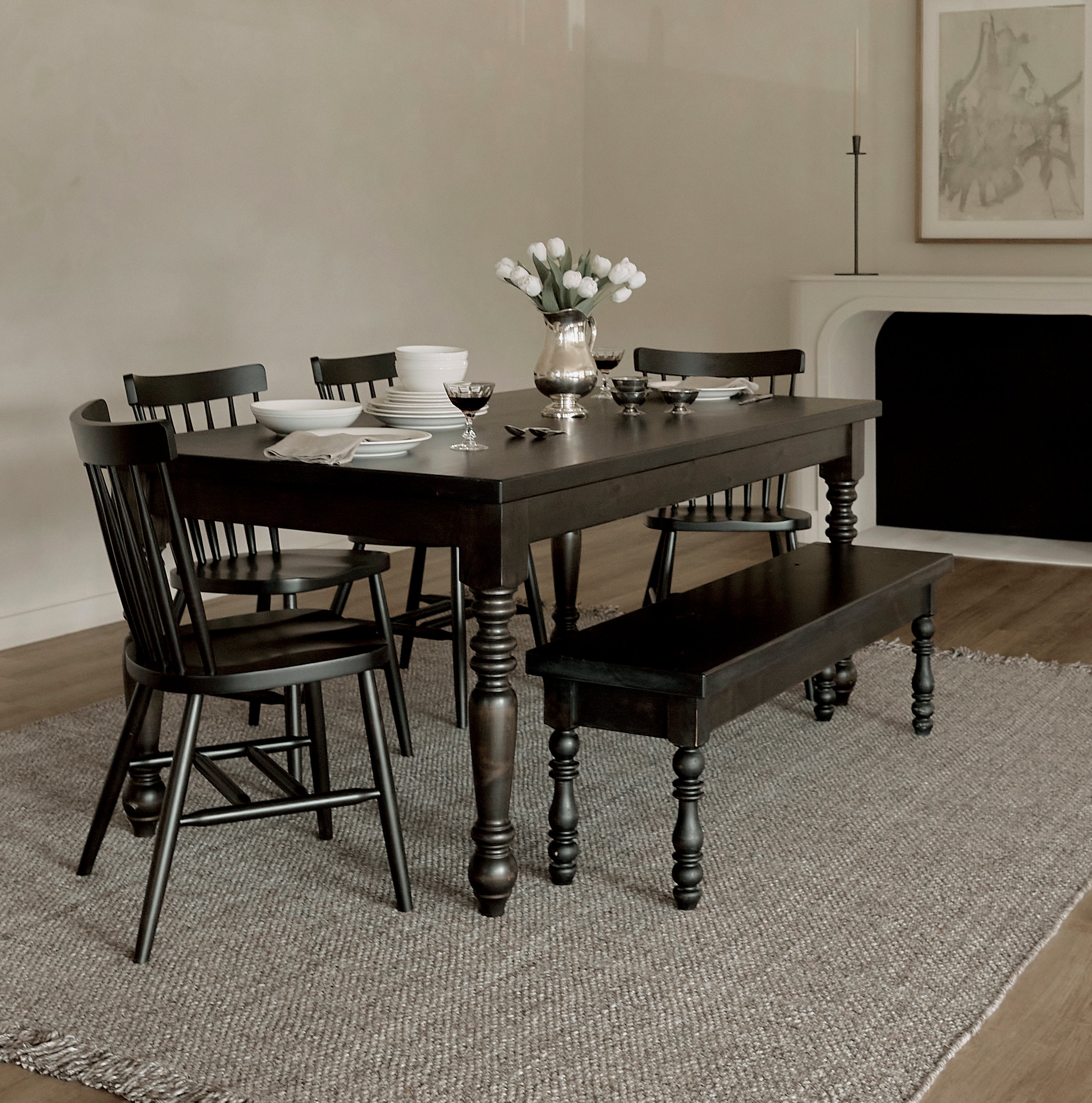
Armchairs and side chairs can make the same table feel like two entirely different dining rooms. One choice can create a relaxed, generous place to linger; the other can keep the room open, flexible, and easy to move through. Often, the best answer is a thoughtful combination of both.
The decision should begin with the table and room, not the chair alone. An armchair needs more width and clearance, while a side chair can be easier to place in a close seating plan. Both should feel comfortable, fit the table’s base, and reflect the way your household gathers.
Browse dining chairs as you compare arm and side styles with your exact table measurements nearby.
Understand the Difference Before You Compare Styles
The distinction is simple, but its practical effects are meaningful.
Side chairs keep the profile lighter
A side chair is generally armless. That can make it easier to tuck beneath the table, use along the sides of a rectangular table, or fit around a smaller round table. Without arms, the chair can occupy less visual and physical space while still providing a supportive place to sit.
Side chairs work especially well when you want a consistent set, a flexible seating arrangement, or more freedom to adjust chairs around the table. They are not a lesser version of an armchair. In many dining rooms, their quiet simplicity is precisely what lets the table and the room feel balanced.
Armchairs bring more presence and enclosure
An armchair gives the sitter a more defined place. Its arms can create a feeling of comfort and occasion, particularly at the ends of a long table or as part of a more relaxed, upholstered dining arrangement.
That added presence needs room. Armchairs are often wider than side chairs, and their arms need to clear the table if you want to tuck them in. They can make a dining room feel generous and grounded, but a group of them can also make a compact space feel fuller very quickly.
Begin with the Table’s Shape and Base
The right chair type depends on where it will sit—not only how it looks from the front.
Rectangular and oval tables often invite a mixed arrangement
For a rectangular or oval table, armchairs at the ends and side chairs along the length are a classic solution. The armchairs frame the table, while side chairs preserve workable spacing along the sides. It gives the dining set hierarchy without asking every seat to carry the same visual weight.
This is a starting point, not a requirement. A long table can use all side chairs for a cleaner, more flexible look, or all armchairs when the room is large enough and the chairs are appropriately scaled. Measure each intended position before deciding.
Round tables need perimeter planning
Around a round table, each chair shares the same perimeter. Armchairs can work beautifully, especially with a pedestal base, but their width and the room’s circulation need careful consideration. A mix can feel uneven unless it has a clear purpose, such as two matching armchairs balanced with side chairs.
Map the chairs around the actual diameter of the table and check how they look and move as a group. In a smaller dining area, side chairs may preserve the conversational ease of a round table without filling the room.
The base can decide what is comfortable
A pedestal base can provide more flexibility around the table’s edge because there are no corner legs. A four-leg or trestle base can create more defined seating zones. This is especially important for an armchair, whose width and arm position can be less forgiving.
Look beneath the top before purchasing. Confirm that chair arms clear the underside, that legs do not compete with a natural seating position, and that people can pull their chairs in without awkward adjustments.
Compare Comfort for the Way You Dine
Comfort is not reserved for armchairs, and an armchair is not automatically the best choice for every meal.
When armchairs make sense
Armchairs can be especially appealing when dinners are long, the dining table is used for work or conversation, or the room has enough space to let each seat feel generous. Upholstered armchairs can provide a soft, welcoming contrast to a solid wood table. Wood armchairs can bring a more structured but still substantial feel.
They may also work well as occasional host chairs—at the head and foot of a table, at a desk-height dining table used for work, or at the seats most often occupied by people who value arm support.
When side chairs make sense
Side chairs are often a better choice when the household needs flexible capacity. They can be easier to place, tuck, and bring in for guests. A well-designed side chair can still be comfortable for a long meal; consider its seat shape, back, upholstery if any, and overall dimensions rather than assuming it is only for short stays.
They can also keep a smaller dining room from feeling overfurnished. If the room needs to preserve paths to the kitchen, a doorway, or a living area, a lighter chair profile can have a surprisingly large effect.
Plan Seating Capacity with Real Chair Dimensions
The chair count printed in a general guide is less useful than a full plan for your own table and room.
Measure chair width and depth
Start with each chair’s width and depth. Armchairs may need more lateral space, and upholstered chairs often need more depth than a slim wood side chair. Add the chair’s pulled-out position when you test the room—not simply the tucked-in footprint.
Then look at the table’s usable perimeter and base. You want each person to have a seat that feels natural, not a place that exists only because a chair can technically be pushed into it.
Leave room to enter and leave the table
Dining chairs are in motion throughout a meal. Someone pulls one back, another person passes behind it, a guest heads to the kitchen, and a child returns to their seat. That is why chair depth and circulation matter as much as the number around the table.
Mark the dining set on the floor and rehearse those movements. If armchairs create a pinch point at the ends, side chairs may serve the room better. If the room feels too spare and the table needs a stronger frame, a pair of armchairs may be exactly what is missing.
Consider the Room’s Visual Balance
Chair choice is also an editing decision. It determines how much material, color, and shape surrounds the table.
Armchairs can anchor a substantial table
A solid wood table with a broad top or a strong base can benefit from chairs with enough presence to meet it visually. Armchairs at the ends can create a finished composition, particularly in a dedicated dining room where the table is a focal point.
They are also visible from more than one angle. In an open-concept home, look at their backs from the kitchen and living room. A beautiful armchair can act almost like a small piece of architecture in the wider space.
Side chairs can let the room breathe
Side chairs can make a dining set look more open without making it less intentional. Their simpler outline leaves more of the table and room visible, which may be exactly right in a small space, near large windows, or in a home with a lot of surrounding detail.
This does not mean side chairs must be visually plain. A well-made wood chair, an interesting back, or a tailored upholstered side chair can have real personality while still keeping the dining room lighter on its feet.
A Mix Often Offers the Best of Both
One of the most enduring dining-room arrangements uses armchairs where their comfort and presence add value, and side chairs where flexibility matters most.
Use armchairs as anchors
Place matching armchairs at either end of a rectangular table, or use them in a clearly balanced arrangement around a larger round table. Let them create a focal point rather than scattering them without a visual reason.
Check arm clearance first. If the chairs cannot tuck beneath the top, make sure the room has enough space for their full depth when pushed in.
Use side chairs to adapt to everyday life
Side chairs can fill the regular places along the table and make it easier to adjust the arrangement when guests arrive. If you use an extendable table, they may be especially helpful in the expanded configuration, when extra seating needs to be added without making the room feel blocked.
Questions to Ask Before You Decide
- Do the armchairs clear the table’s underside and base?
- Does the room have enough space for each chair when it is pulled out?
- Would armchairs at the ends add useful comfort, or simply take up needed room?
- Would side chairs better support our everyday seating and guest plan?
- Do the chairs feel proportionate to the table’s top, base, and room?
- How do the chair backs look from the adjoining rooms?
- Have we confirmed the exact width, depth, seat height, arm height, material, and care requirements for each chair?
The right answer may be armchairs, side chairs, or a mix. What matters is that the seats make the table easier to enjoy—and make the room feel more like yours.
Browse dining chairs to compare arm and side designs with a clear seating plan.
Next, read How to Choose Dining Chairs That Fit Your Table.
Frequently Asked Questions
Should I use armchairs at the ends of a dining table?
They can work beautifully there, especially on a rectangular or oval table. Confirm that their width, depth, and arms work with the table and room before choosing them.
Can I use only armchairs around a dining table?
Yes, if the table, room, and chair dimensions allow enough comfortable spacing. An all-armchair arrangement often has more visual and physical weight, so it is usually best in a room with adequate clearance.
Are side chairs comfortable enough for long dinners?
They can be. Comfort depends on the individual chair’s design, seat, back support, and dimensions—not simply whether it has arms. Compare the exact chair and how your household uses the table.
Do armchairs need to tuck under the table?
Not always, but you should plan for their full depth if they do not. If tucking matters to your room’s circulation or visual order, confirm arm height against the underside of the table before ordering.