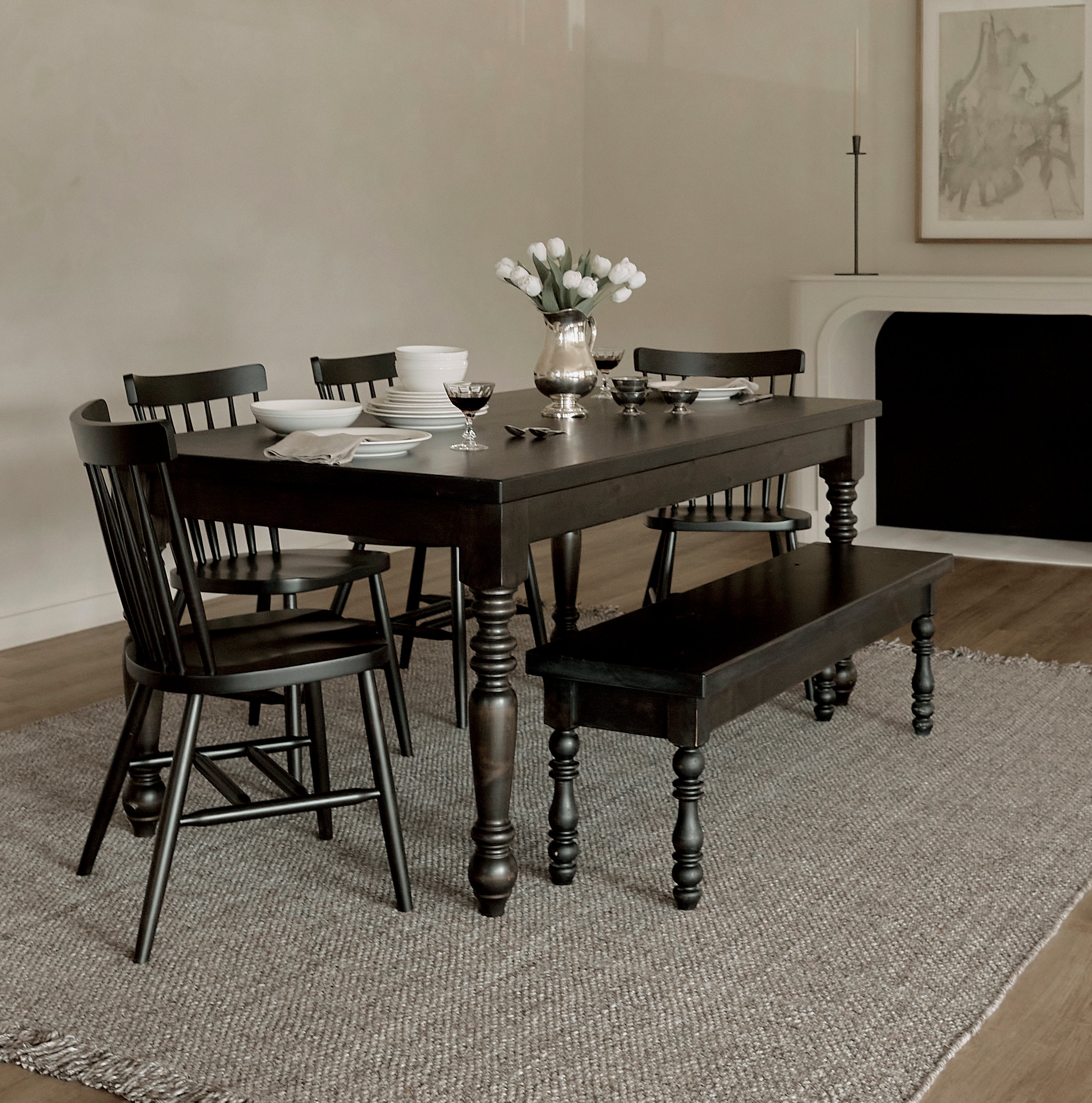
The choice between wood and upholstered dining chairs is not simply a question of style. It shapes how a meal feels, how the room looks from across the house, and how readily the dining table becomes a place where people linger.
Wood chairs bring structure, natural texture, and a direct connection to a solid wood table. Upholstered chairs add softness, tactile comfort, and a more relaxed invitation to stay. Either can be right. The useful question is which one suits the way your household uses the dining room—and which one will still feel right years from now.
James & James offers dining chairs in both solid wood and upholstered styles. Start by considering everyday life, then compare the materials, proportions, and care requirements of the individual designs that speak to you.
Begin with the Meals You Have Most Often
A dining chair should serve more than the room’s best photograph. Think about the meals, conversations, work, and gatherings that happen around the table in a normal month.
Choose wood chairs when you value structure and natural character
Solid wood chairs can make a dining room feel grounded. They bring the warmth of real grain and a clear architectural outline that works especially well with a substantial wood table. In a room with a lot of material richness already—wood floors, a textured rug, or cabinetry nearby—they can create a calm, cohesive rhythm.
They may be a natural fit for a household that wants the dining area to feel tailored but not precious. Wood is tactile, easy to understand, and visually enduring. The chair’s shape, back support, and any seat contour still matter for comfort, so do not treat wood as a category that feels only one way.
Choose upholstered chairs when lingering comfort is central
Upholstery can make a table feel instantly more inviting. It adds softness around a wood top and can be especially appealing if dinners tend to stretch into conversation, the table doubles as a work surface, or the dining room is part of an open-concept living area.
The extra comfort is not merely physical. Upholstered chairs often soften the visual edge of a room, which can make a formal dining space feel more relaxed and a minimal room feel more layered. The tradeoff is that fabric becomes part of the care plan, so select it with your actual household in mind.
Compare Comfort Beyond the First Sit
Comfort is personal, and it is affected by more than the presence of upholstery.
What wood chairs can offer
A well-proportioned wood chair can be comfortable for a full meal, especially when its seat, back, and angle support the body naturally. It may suit people who prefer a firmer seat or who like the responsive feel of a chair with a clear structure.
If you love the look of wood but want a softer place to sit, consider whether a seat cushion or a mix of upholstered host chairs could provide the balance you need. Do not add a cushion simply to correct an otherwise uncomfortable chair; use it as a deliberate part of the dining-room plan.
What upholstered chairs can offer
An upholstered seat can provide a more immediately forgiving place to settle in, particularly for long dinners. A padded back can add further support, while upholstery can help a dining room feel less formal without losing its sense of occasion.
But upholstery does not automatically make a chair right. Seat depth, back shape, arm placement, and the chair’s overall scale still determine whether it fits the people who use it. Whenever possible, sit in the chair. When you cannot, compare its complete dimensions with your table and room rather than judging comfort from imagery alone.
Consider Care as Part of the Design Decision
The best material is one whose care requirements feel reasonable for the household.
Caring for wood chairs
Wood chairs are a natural choice for homes where meals are active and the dining area gets used often. They still deserve appropriate care: dust regularly, clean according to the finish guidance, and avoid harsh or abrasive products that could damage the surface.
Real wood has natural grain and color variation. Those characteristics help make each piece individual, and they can become more expressive over time. A buyer who appreciates that natural character will often find wood a rewarding choice for a dining room that is meant to be used.
Caring for upholstered chairs
Upholstery calls for a little more material awareness. Consider young children, pets, frequent entertaining, and how you feel about the occasional spill before choosing a fabric color or texture.
James & James states that its upholstered chairs use performance Crypton Home fabric, designed to resist spills and stains. Confirm the available upholstery, care instructions, and product-specific details for the exact chair you choose before ordering. Performance fabric can make an upholstered dining chair feel more practical for daily life, but it should still be cared for according to its instructions.
Let the Room’s Scale Guide the Material Mix
Wood and upholstery carry different visual weight. That matters as much as their comfort.
Wood can keep a smaller room visually open
In a compact dining area, chairs with visible wood frames and open space around the back can help the room feel lighter. They do not disappear, but they allow more of the table, floor, and surrounding architecture to remain visible.
A wood chair can also be a strong choice when the table itself is already substantial. It gives the dining set continuity without adding another large upholstered mass around the perimeter.
Upholstery can soften a larger or more open room
In a generous dining room or an open-concept home, upholstered chairs can provide welcome softness and help the dining area feel more established. They can bridge the table to upholstered living-room furniture nearby, creating a connected feeling across the larger space.
Pay attention to width and depth. A fully upholstered chair may need more room than a slimmer wood chair, and a group of them can make a room feel fuller even when the dimensions technically fit. Map the actual chair footprint before deciding.
Think About the Table as a Partner, Not a Separate Purchase
The table and chairs should be chosen as one arrangement. A beautiful chair that does not fit under the table, lands against a base, or overwhelms the top in scale will not feel right for long.
Pairing wood chairs with a wood table
Wood chairs can create an easy, harmonious relationship with a wood table, even when the finishes are not identical. Look for a connection in undertone, visual weight, or design language rather than trying to make every surface match exactly.
James & James notes that natural variation between wood types means chair and table finishes may be complementary rather than an exact match. That is often what gives a room depth. Order finish samples and view them in the dining room’s natural light when possible.
Pairing upholstered chairs with a wood table
Upholstery can provide a useful counterpoint to a solid wood table. It softens a rugged grain, adds color or texture, and can make the dining set feel more tailored. The wood frame or legs of an upholstered chair can help preserve a relationship to the table, while the fabric brings a different layer to the room.
Choose fabric with the surrounding home in mind: floors, drapery, rug, cabinetry, and the rooms visible from the table. A chair does not need to repeat every color in the space. It should simply make the composition feel more settled.
A Mixed Set Can Give You Both Benefits
The choice does not always need to be all wood or all upholstery. A mixed arrangement can be especially useful when you want everyday durability with a little more softness at key seats.
Use upholstered chairs where they add purpose
Armchairs at the ends of a rectangular table can provide a generous, comfortable focal point, while wood side chairs along the length keep the overall arrangement open. Around a round table, a small number of upholstered chairs can create softness without making the room feel heavy.
This approach works best when the chairs share a relationship in scale and finish. The goal is a deliberate contrast, not a collection of unrelated seats.
Keep extra seating in the same visual family
If you bring additional chairs into the dining room for guests, choose pieces that relate to the everyday set through height, color, wood tone, or visual weight. This gives you flexibility without making a larger gathering feel improvised.
Questions to Ask Before You Decide
- How long do people typically sit at our table?
- Is the dining room used every day, or mainly for hosting?
- Do we want the room to feel structured and architectural, or softer and more relaxed?
- How much space can the chairs occupy when tucked in and pulled out?
- What level of fabric care feels realistic for our household?
- How will the chair material relate to the table, floors, and adjoining rooms?
- Would a mixed arrangement solve a genuine comfort or styling need?
- Have we confirmed the exact material, dimensions, fabric, finish, and care instructions for the selected chair?
When the answers are clear, the choice becomes less about wood versus upholstery in the abstract. It becomes about the dining room you want to live in: one that is ready for ordinary meals and the people who stay a little longer.
Browse dining chairs to compare wood and upholstered designs with your room plan in hand.
Next, read Armchairs vs. Side Chairs for a Dining Table: Which Is Right for Your Home?
Frequently Asked Questions
Are wood or upholstered dining chairs more comfortable?
Comfort depends on the individual chair’s seat, back, dimensions, and the person using it. Upholstery can add softness, while a well-proportioned wood chair can also be comfortable for a full meal. Choose based on the chair itself and how long your household typically sits at the table.
Are upholstered dining chairs practical for families?
They can be, particularly when the selected fabric is designed for everyday use and the household is comfortable following its care guidance.
Do wood dining chairs have to match a wood table?
No. They should feel related in undertone, proportion, or visual weight, but exact matching is not necessary. Complementary finishes and natural wood variation can make the room feel more layered and personal.
Can I mix upholstered and wood dining chairs?
Yes. A mixed arrangement can give the room both structure and softness. Keep the pieces connected through scale, finish, height, or overall style so the contrast feels intentional.