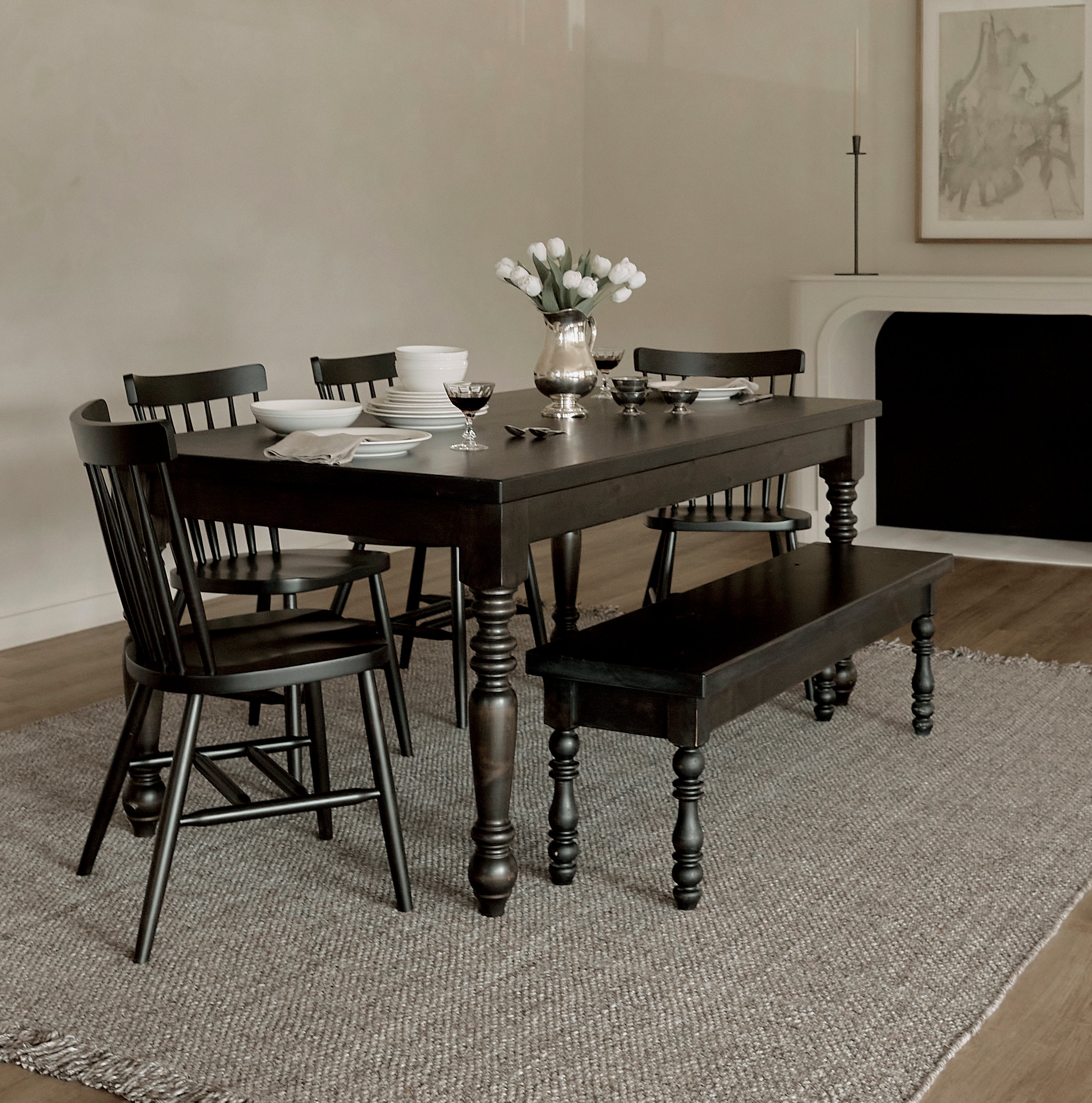
The best entertaining table does not announce itself only when company comes over. It makes ordinary meals feel settled, then quietly makes room when the guest list grows.
That is the appeal of an extendable dining table. It allows a dining room to stay comfortable on a quiet weekday while still being ready for a long dinner, a holiday meal, or an unplanned evening when everyone decides to stay a little longer. The key is choosing a design that serves the way you host—not an imagined version of entertaining that leaves the room oversized the rest of the year.
Explore expandable dining tables as you plan for a table that feels as natural for two as it does for a full house.
Begin with the Gatherings You Actually Host
Hosting means different things in different homes. For one household, it is a few close friends for dinner. For another, it is a large family holiday, a weekly Sunday meal, or a steady rotation of children, partners, and neighbors around the table.
The right extendable table begins with an honest picture of those occasions.
Make room for the regular guest list
Think beyond the largest event you have ever hosted. How many people do you welcome often enough that you want them to feel expected? How many sit at the table on a normal week? How many arrive for the celebrations that matter most to your household?
Those numbers create two useful targets: the closed table for everyday life and the open table for meaningful gatherings. You do not need a dining room permanently arranged for its most crowded night of the year. You need a table that can become generous when the occasion calls for it.
Consider the kind of meal you like to host
A quick casual supper and a lingering multi-course dinner place different demands on the table. Think about serving dishes, shared platters, candles or flowers, children’s activities, and the way people linger after dessert. Capacity is important, but usable surface and comfortable seating matter just as much.
The right table should not leave every place setting pressed together simply because the room technically holds the chair count. A little breathing room makes guests feel welcome.
Choose an Everyday Footprint You Enjoy Living With
An extension table earns its value by being right when it is closed. This is the form that shapes the room most days.
Test the closed table in the real room
Map the closed dimensions on the floor using painter’s tape, cardboard, or a sheet. Add your chairs, then move through the room as you normally would. Open doors and cabinets. Walk from the kitchen with a serving dish. Sit at each place and pull a chair back.
If the table makes ordinary movement difficult when closed, it is probably too large for everyday life. Consider a different shape, a smaller closed size, or a seating plan that better suits the room. An extendable table should preserve the ease of the home before it solves the larger-gathering question.
Let the room remain useful between gatherings
The dining area may serve several roles: homework spot, work surface, place for a quiet coffee, or simply a passage between the kitchen and another room. A well-chosen closed table supports those daily moments without making the area feel permanently occupied by furniture.
That balance is particularly valuable in compact rooms and open-concept homes. It allows the home to feel calm and workable while keeping its hospitality close at hand.
Plan the Expanded Table Like a Hosted Event
The expanded configuration deserves a full rehearsal. It is not enough to know that the leaf adds length; you need to know how people will sit, serve, and move when it is in place.
Map the full footprint, including every chair
Mark the table at its expanded dimensions and add all the chairs you would use for a real gathering. Then test the routes guests will use. Can people reach their seats? Can someone get from the kitchen to the table carrying a dish? Can a person stand up without blocking the only route through the room?
The room can feel lively when it is full. It should not feel impassable. If the open table blocks a doorway or removes every workable path, a different expansion size or shape may be the better answer.
Think through serving space
Hosting is easier when the table can hold more than plates. Consider where shared dishes will go, whether a sideboard or kitchen island can help with serving, and how much room a centerpiece needs before it competes with dinner.
You do not need to create a formal dining scene every time. You simply want the table to have enough practical generosity that serving a meal feels relaxed rather than carefully balanced at the edge of every setting.
Choose the Shape for Your Room and Gathering Style
Shape affects not only how the table looks, but the tone and movement of the gathering.
Round and oval tables keep conversation close
A round table can make a small group feel immediately connected. Everyone faces toward a shared center, and there are no corners to navigate in a room where people pass nearby. When a round table expands to an oval, it can add capacity while retaining a softer, more conversational feeling.
This can be a particularly graceful choice for an intimate dining room, a square-ish dining area, or a household that values the easy exchange of a meal with friends and family.
Rectangular tables can organize a larger meal
A rectangular table often suits a longer room and gives a larger gathering a clear, familiar structure. It can create generous space along the sides for a family-style dinner and make good use of a dining room’s length.
When expanded, pay attention to end chairs and the route around each end of the table. A rectangular form can be ideal for entertaining when its full length still leaves room for guests to circulate.
Make Seating Feel Welcoming
Guests remember whether they felt at ease. The chairs and table base are central to that feeling.
Plan regular chairs and occasional chairs together
Decide which chairs belong around the table every day and which will be added when it expands. Extra chairs may come from another room, live nearby, or be selected specifically as complementary occasional seating. The plan should be easy enough that you will actually use it.
Mixed chairs can feel intentional when they share a quality: related wood tones, compatible upholstery, a common height, or similar visual weight. The objective is not perfect uniformity. It is a table that still feels composed when one more guest arrives.
Consider the base before assigning seats
A pedestal can offer more flexibility around the perimeter because it does not have corner legs. A legged table can establish a pleasing, defined rhythm for chairs. Both can work beautifully for entertaining, but they create different seating zones.
Review the particular base and test your actual chairs in both configurations. Do not assume a seat works simply because there is open tabletop above it. Feet, chair arms, table legs, and clear paths all matter.
Make the Leaf Part of the Hosting Plan
The leaf is what turns a normal dinner table into a hosting table. Storing it well and using it thoughtfully makes the transformation feel effortless.
Know where it lives
Before ordering, confirm whether the leaf is removable and choose a flat, clean, cool, dry, shaded indoor storage location. Do not assume every expandable table includes a self-storing leaf. That feature is product-specific.
The storage location should be easy enough to reach before a gathering and suitable for the leaf’s exact dimensions. A plan made before delivery is much better than searching for a safe spot the first time guests are on the way.
Bring it out before the event
Solid wood responds to its environment. If a leaf has been stored separately, bring it into the dining room ahead of time. James & James advises allowing a leaf to reacclimate in the same environment as the table if it does not fit properly after storage; do not force it into place.
This is a small hosting habit with a large payoff. The table is ready before cooking begins, and you have time to inspect, clean, and install the leaf without a last-minute rush.
Choose a Finish That Feels Good in a Lived-In Room
Entertaining is not a reason to make the dining room precious. It is a reason to choose a table you will be comfortable using.
Look at the room’s light, floors, cabinetry, and surrounding furniture. A solid wood finish should relate to the home while still giving the table its own presence. Consider how you want the piece to feel after years of shared meals: polished and formal, relaxed and collected, light and airy, or rich and grounding.
Follow the current care guidance for the specific table and finish. Use reasonable protection from heat and moisture, clean spills promptly, and choose care products only when they are recommended. A table that is cared for thoughtfully can be used freely.
Questions to Ask Before You Choose
- How many people sit at the table every day, and how many do we regularly host?
- Does the closed table leave the room easy to use?
- Does the open table leave enough room for chairs, serving, and movement?
- Which shape best suits the room and the way we gather?
- Where will extra chairs and the leaf live when they are not in use?
- Does the base work with our actual chair plan?
- Have we confirmed the exact dimensions, leaf configuration, and care guidance for the table we are considering?
When those answers are clear, an extension table stops being a contingency piece. It becomes the center of a home that is ready to welcome people well.
Browse expandable dining tables and compare each design with your next good gathering in mind.
Frequently Asked Questions
What is the best extendable dining table for entertaining?
The best table is one whose closed size suits everyday life and whose expanded size supports the gatherings you host most often. Compare exact dimensions, shape, base, chair plan, and leaf storage before deciding.
Should I choose a larger fixed table if I entertain often?
Not necessarily. An extendable table can be a better choice when a permanently large footprint would make the dining room less comfortable on ordinary days. Map both configurations in your home to see which approach truly works.
How do I fit more people around an extendable table comfortably?
Plan the full expanded configuration with every chair included. Consider chair width and depth, base clearance, end seating, serving space, and paths through the room. Comfort matters more than achieving the highest possible seat count.
How should I prepare a table leaf before guests arrive?
Bring it out early, inspect it, and follow product-specific care guidance. If a solid wood leaf does not fit easily after storage, allow time for it to acclimate in the same environment as the table rather than forcing it.