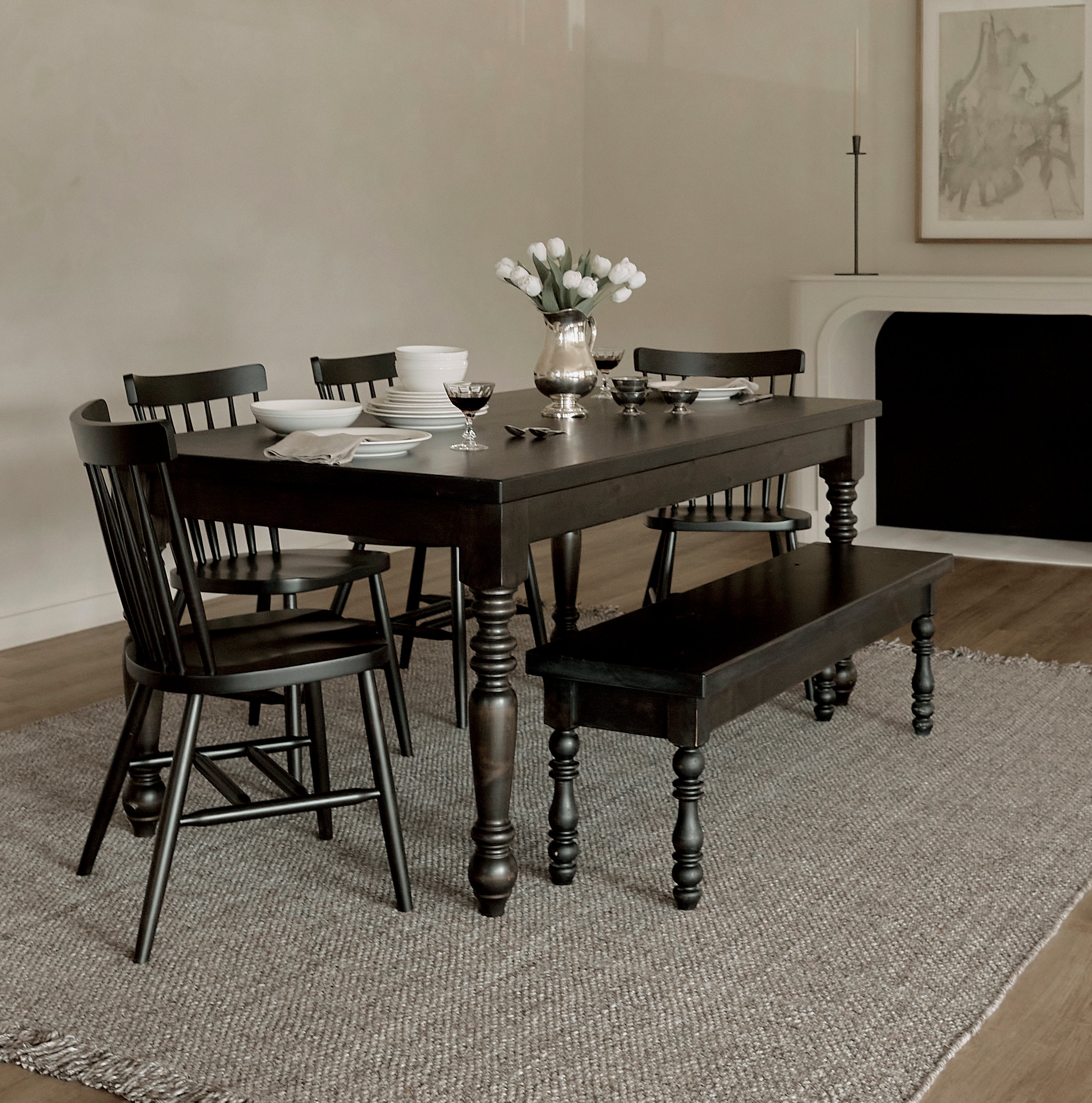
An extendable dining table leaf is what makes a dining room more generous when the guest list grows. When it is not in use, it deserves a little planning of its own.
Proper storage helps protect the leaf’s finish, shape, and fit over time. It also makes hosting easier: when the moment comes to open the table, you know exactly where the leaf is and how to prepare it. For a solid wood table, the essential ideas are simple—store the leaf flat, keep it in a stable indoor environment, and allow it to reacclimate if it has been away from the table for a while.
If you are comparing designs or planning for a new table, browse expandable dining tables. The product page for the exact design you choose should always be your final source for leaf configuration and care guidance.
Start with the Product-Specific Guidance
Not every extension table uses the same leaf, storage arrangement, or mechanism. Before deciding where a leaf will live, read the current product page and care instructions for the table you are considering.
James & James’ expandable-table care guidance directs owners to keep a wooden leaf flat in a clean, cool, dry, shaded area. It also notes that a leaf that does not fit properly after storage may need time in the same environment as the table to acclimate to temperature and humidity. Those practices are a useful foundation, but confirm the directions for your individual table before treating them as final.
Do not assume the leaf stores inside the table
Some extension tables have self-storing components; others use removable leaves that need a separate storage location. This is a product-specific feature, not something to infer from the word “extendable.”
If leaf storage convenience is an important buying factor, ask about it before ordering. The right table may use a removable leaf that is simple to store, but you should have a clear plan for it rather than discovering the need after delivery.
Store the Leaf Flat
For a solid wood leaf, flat storage is the central rule. Leaning a leaf upright can place uneven stress on it and may increase the risk of warping over time.
Good storage locations are low, level, and protected
A closet floor, the space beneath a bed, or a suitable area beneath a couch can all work when they are clean, dry, shaded, and level. The leaf should be fully supported rather than resting on a narrow edge or uneven surface.
Before choosing a location, measure it. Make sure the leaf can lie flat without being forced, bent, or repeatedly moved out of the way. A storage spot that is easy to reach will make the extension feel more useful when you want it.
Keep it away from direct sun and unstable conditions
Solid wood responds to its environment. Avoid storage areas with direct sunlight, high moisture, strong temperature swings, or conditions that are noticeably different from the main living space. A garage, outdoor shed, damp basement, or hot attic may be unsuitable for a finished hardwood leaf.
The goal is not to create a laboratory environment. It is to choose a stable indoor location that protects the wood from the conditions most likely to make it move or become difficult to fit.
Protect the Surface Without Trapping Moisture
The storage space should protect the leaf from scratches, dust, and accidental contact without creating a damp or abrasive environment.
Use a clean, soft layer when needed
If the leaf will share a space with other items, use a clean, soft protective layer between the wood and anything that could scratch it. Keep the surface free of grit before covering or moving it; even a small amount of debris can mark a finish under pressure.
Do not stack heavy objects on top of the leaf. It is not a shelf, even when it is lying flat and out of sight. The safest storage plan is one in which the leaf can remain undisturbed until it is needed.
Pay attention to humidity
In a humid environment, James & James advises protecting a stored leaf from moisture and mold. If you use a covering, choose a clean material and make sure the storage location itself remains dry. The product-specific care guidance should take precedence if it differs for your design or finish.
Good storage is largely about avoiding extremes: not too wet, not too hot, not exposed to prolonged sun, and not pressed between items that can mark the surface.
Plan Storage Before You Order
An extension leaf can be surprisingly easy to manage when its home is chosen in advance. It becomes frustrating only when there is nowhere appropriate for it to go.
Measure the storage space as carefully as the room
When you measure for an extendable dining table, include the leaf-storage location in the plan. Record the leaf’s dimensions from the product page, then make sure the chosen area has enough clear, level space.
This matters especially in a smaller home, apartment, or open-concept layout where closets and under-bed space already carry a lot of responsibility. A table that expands beautifully is more valuable when the leaf can be stored safely and retrieved without turning the home upside down.
Think about who will set up the table
Consider how often the table will be expanded and who will normally bring out the leaf. A location that is technically safe but difficult to access may discourage you from using the extension. A low, protected, easy-to-reach location can make hosting feel simple.
If the leaf is large or substantial, plan the path from storage to table too. Clear a route before a gathering so you are not navigating tight corners while carrying a finished hardwood piece.
Let the Leaf Reacclimate Before Installation
Wood can expand and contract as it responds to temperature and humidity. A leaf that has been stored separately may need time to settle back into the conditions around the table.
If the leaf does not fit easily, pause
Do not force a leaf into place. First check for debris, misalignment, or anything else obvious that could be affecting the fit. If the leaf has been stored in a different environment, bring it into the room where the table lives and give it time to acclimate.
James & James advises placing a leaf in the same environment as the table for a few days if it does not fit properly after storage. Once it has adjusted, check the fit again carefully. The product-specific guidance for your table should guide the exact approach.
Build a little time into hosting plans
If you know a gathering is coming, bring the leaf out early rather than waiting until the table needs to be open. This small habit reduces last-minute stress and gives you time to inspect the leaf, wipe it clean, and ensure it fits comfortably.
It also helps you set the table with a calmer hand—the whole point of an extension table is to make room for people, not create a task list before they arrive.
Clean and Handle the Leaf Thoughtfully
Before reinstalling it, inspect the leaf in good light. Remove any dust or debris using the care approach recommended for its finish. Avoid harsh chemicals or abrasive products that could damage the surface.
When lifting and carrying the leaf, use a steady, supported hold. Do not drag it across the floor, rest it on an edge, or place it against a sharp corner. If it is awkward to move alone, ask someone to help. Taking a moment to handle it carefully is much easier than repairing avoidable damage later.
Once the leaf is in the table, check that the connection is aligned and the surface is clean before setting a meal on it. Then use the table as intended: for the everyday dinners, long conversations, and occasions that gave the extension a purpose in the first place.
Storage Mistakes to Avoid
Avoid these common shortcuts:
- Leaning the leaf upright against a wall.
- Storing it in direct sun, a damp area, or a space with dramatic temperature changes.
- Placing it under heavy boxes or using it as a storage surface.
- Wrapping or covering it while it is dirty or damp.
- Forcing it into the table when it does not fit easily.
- Assuming leaf-storage features are the same across every extendable table.
None of these require complicated solutions. A level, stable place and a little patience when reinstalling are usually the more enduring approach.
Questions to Ask Before You Choose a Table
- Is the leaf removable, and what are its exact dimensions?
- Does the product offer self-storage, or do I need a separate storage plan?
- Where can the leaf lie flat in a clean, dry, shaded indoor location?
- Will it be easy to access before a gathering?
- Does the storage area stay reasonably stable in temperature and humidity?
- What care guidance applies to the wood and finish on this specific table?
Those answers turn leaf storage from an afterthought into part of a good purchase decision. Browse expandable dining tables with a plan for both the table and the leaf that makes it grow.
Consider reading How to Choose an Extendable Dining Table for Entertaining.
Frequently Asked Questions
Should an extendable table leaf be stored flat or upright?
Store a wooden leaf flat. James & James advises keeping a leaf flat in a clean, cool, dry, shaded area; leaning it upright may increase the risk of warping. Verify the care guidance for your exact table.
Can I store a table leaf in a garage or attic?
It is generally better to choose a stable indoor living-space location. Avoid areas with direct sun, high moisture, or dramatic temperature changes. Follow the product-specific instructions for your table.
What should I do if the leaf does not fit the table after storage?
Do not force it. Check for debris or alignment issues, then allow the leaf time to acclimate in the same environment as the table. James & James advises allowing a few days for reacclimation when needed; confirm current guidance for your product.
Does every extendable table have a self-storing leaf?
No. Leaf storage is product-specific. Confirm the details of the individual table before ordering rather than assuming an extendable design includes self-storage.