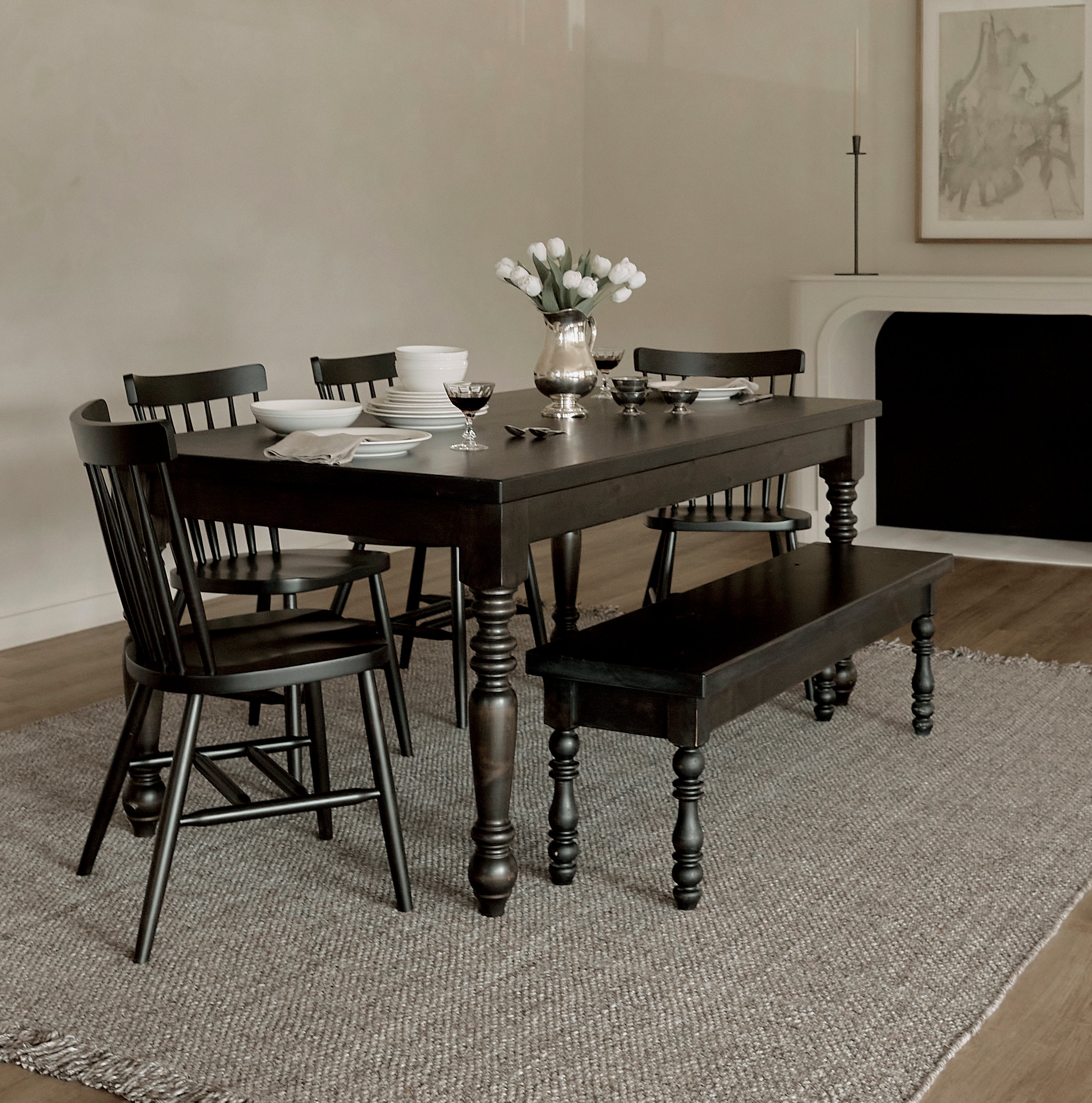
An extendable dining table is only as comfortable as the chairs around it. The table may give you more room for guests, but the chairs determine whether everyone can sit easily, pull in close, and stay for the conversation after the meal.
That makes chair selection a two-configuration decision. Your chairs need to work when the table is closed for everyday life and when it is open for a larger gathering. They should fit beneath the top, relate to the base, leave workable paths around the room, and feel like they belong with the table for years to come.
Start with the table itself. Browse expandable dining tables, then plan the chairs around the exact design and dimensions you are considering.
Choose the Table and Chairs as One Arrangement
It is tempting to choose a table first and treat chairs as a finishing detail. In practice, the two pieces affect each other constantly. A chair that looks beautiful beside a table may be too deep for the room, too wide for the seating plan, or unable to tuck comfortably beneath the apron or top.
Before ordering, gather the actual dimensions of the table and each chair you are considering. If you already own chairs you love, measure them. If you are choosing new chairs, ask for complete dimensions rather than relying on photographs alone.
Start with chair width and depth
Chair width affects how comfortably people sit side by side. Chair depth affects how much room the dining area needs when the chair is in use. Both become more important when the table is extended, because the arrangement may include more places and more movement around the room.
Do not plan from a general seat count alone. The same tabletop can accommodate a different number of people depending on whether the chairs are slim side chairs, generous upholstered armchairs, or a mix. A layout that looks possible on paper may feel crowded once people actually sit down.
Check the tucked-in position and the pulled-out position
Chairs need a place to live when no one is sitting in them, and they need enough room to move when someone is. Test both positions in your room.
Map the table’s closed footprint on the floor, then position chairs at their full depth. Pull them back as though someone were getting up from dinner. Walk behind them, open nearby doors and cabinets, and follow the routes that pass through the dining area. Repeat the test with the table fully expanded and the extra chairs in place.
The room does not have to feel expansive at a full gathering. It should still feel hospitable. People should be able to find their seat, stand up, and move through the home without the dining setup becoming an obstacle course.
Account for the Table’s Base
The base influences where chairs can sit and how easily they slide into place. It is one of the most important practical details to review before falling in love with a chair shape.
Pedestal tables can offer flexible chair placement
With a pedestal base, there are no corner legs at the table’s perimeter. This can allow more freedom to position chairs around a round or oval table and may be useful when an occasional extra guest joins the meal.
That flexibility does not eliminate the need to measure. The pedestal itself has a footprint, and some chair styles can still interfere with it. Review the specific design, then test the chair placement in both the closed and expanded configurations.
Legged tables create more defined seating zones
A four-leg table often makes chair placement feel clear and orderly. Its legs can also limit where chairs fit most comfortably, especially near corners or when the table’s extension changes the seating arrangement.
This can be exactly right for a consistent set of chairs and a more formal layout. Just make sure a chair does not land against a leg, and consider where extra seats will go when the table opens.
Plan for the Closed Table First
The closed configuration is the one you will live with most of the time. It should feel balanced, comfortable, and easy to use without chairs visually or physically overwhelming the dining area.
Give everyday seats enough room
Think about the people who regularly sit at the table. Do they prefer a chair with arms or a lighter side chair? Do young children need easy access? Does someone like a supportive upholstered seat for a long dinner? Those daily preferences matter more than a maximum chair count.
Place your likely chairs around the closed table and look at the composition from across the room. The arrangement should feel intentional: enough room for each person, enough open floor around the table, and a visual balance between the table’s scale and the chairs’ silhouettes.
Consider whether a bench solves a real need
A bench can tuck beneath a table and may give a family a flexible extra seat. It can be a practical choice when one side of the table sits near a wall or when children often share a side. But it is not automatically more comfortable or more space-efficient for every household.
Consider back support, access, and how often adults will use that seat. A bench should make the room work better, not simply add another way to count capacity.
Treat the Open Table as Its Own Seating Plan
When the leaf is inserted, do not assume the same arrangement merely stretches. The expanded table may create different usable zones, especially with a legged base or an oval form.
Decide where extra chairs will come from
Extra seating deserves a home before guests arrive. Some households use dining chairs elsewhere in the home; others keep a small set nearby or bring in complementary occasional chairs for larger meals. The best plan is one that feels natural on a normal day and reliable when people gather.
If you mix chairs, create a connection between them. Matching wood tones, related upholstery, a shared silhouette, or a consistent level of visual weight can make a varied set feel collected rather than accidental.
Confirm the end seats
End seating can be especially useful on a rectangular or oval table, but it depends on the table’s dimensions, base, and room clearance. Include end chairs in the full-scale test. They need space behind them and should not interfere with a doorway, buffet, or primary path.
The goal is not to use every possible inch of tabletop. It is to create places where guests can eat and linger comfortably.
Balance Comfort, Proportion, and Style
Good dining chairs do more than fit. They invite people to stay at the table.
Match the visual weight to the table
A substantial solid wood table can support chairs with presence, but a very heavy chair may make a smaller dining zone feel crowded. Conversely, chairs that are too slight can look disconnected from a large, sturdy top.
Look at the relationship between the chair and table from the side and from across the room. Consider the height of the chair back, the thickness of the table top, the base style, and the room’s other furniture. The goal is harmony, not identical shapes or finishes.
Use contrast deliberately
Chairs do not need to be made from the same wood or finished exactly like the table. A contrast in material or tone can bring warmth and personality to the room. Upholstered chairs can soften a dining area; wood chairs can emphasize its craft and natural texture.
The contrast should feel considered. Bring samples into the room if possible, and view them in daylight and evening light. This is especially valuable in an open-concept home, where the dining chairs are part of the wider visual landscape.
Do not overlook arms and seat height
Armchairs can feel generous and comfortable, but their arms must clear the table’s underside if you expect the chairs to tuck in. Seat height also affects comfort and the relationship to the tabletop. These measurements should be confirmed for the specific table and chairs before purchase.
Avoid assuming all dining furniture uses the same proportions. Exact specifications are more useful than a familiar category label.
Use the Room’s Traffic Pattern as a Final Check
The dining area must continue to work when people are seated, not only when chairs are pushed in. This is especially important near a kitchen, doorway, island, or route between connected rooms.
At the closed table, check the paths your household uses daily. At the open table, check the paths guests will use during a meal. Carry a tray, open a door, walk behind a chair, and try to reach each seat. These simple movements often make a decision clear.
If a chair is beautiful but creates a persistent pinch point, another silhouette may be the better choice. The most enduring dining rooms do not look carefully planned only in photographs; they feel comfortable when real people use them.
Questions to Answer Before You Buy
- What are the exact width, depth, seat height, and arm height of each chair?
- Do the chairs tuck beneath the table comfortably?
- Do they work with the table base when it is closed and expanded?
- How many chairs does the everyday arrangement need?
- Where will the extra chairs live between gatherings?
- Can people pull chairs back and still move through the room?
- Do the chairs feel proportionate to the table and related to the rest of the home?
- Have you checked all product-specific dimensions before ordering?
When you can answer those questions, the chairs become more than accessories. They become part of the reason an extendable table works so well—ready for a quiet morning, a regular family dinner, or a table full of guests.
Browse expandable dining tables while you compare designs with your chair plan in hand.
Next, read How to Store an Extendable Dining Table Leaf.
Frequently Asked Questions
How many chairs should I buy for an extendable dining table?
Buy for the way you use the table most often, then plan additional seating for the expanded configuration. The exact number depends on the table dimensions, base, chair width, room clearance, and how many people you realistically host.
Can I use armchairs with an extendable dining table?
Yes, provided the arms clear the table and the chairs fit the seating plan. Confirm the chair’s arm height and width against the particular table, including its base and the space available when the table is open.
Do dining chairs need to match an extendable table?
No. They should feel intentional with the table in scale, color, material, or overall visual weight. A carefully chosen contrast can make the room more personal while still feeling cohesive.
Can I mix chairs for extra seating?
Yes. Choose complementary extra chairs and confirm that their size works with the table and room. Think through where they will be used or stored when the table is closed so the arrangement remains practical.