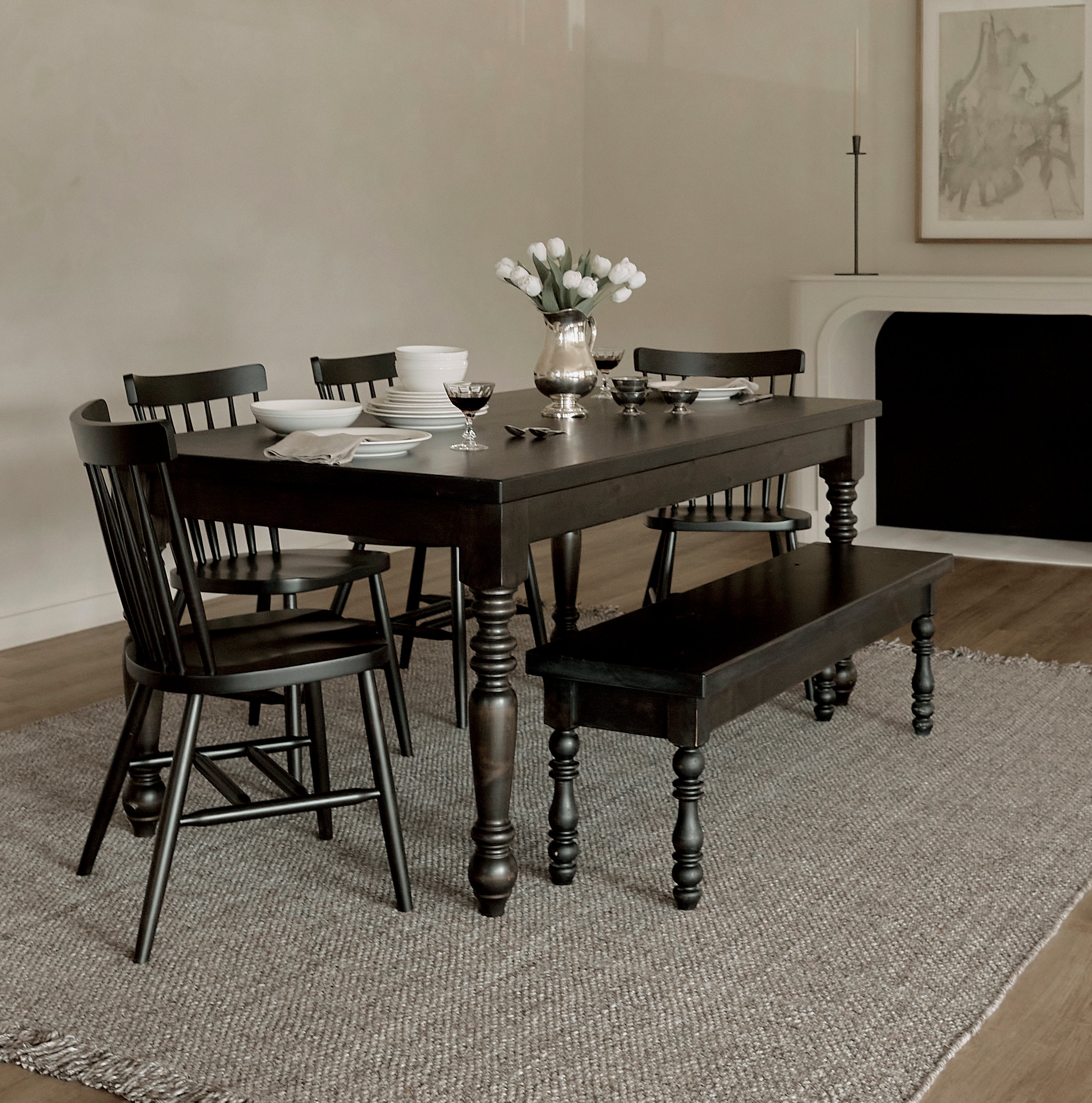
An extendable dining table asks more of its construction than a table that stays one size. It must feel beautiful and steady in everyday use, then expand smoothly when more people gather. When it is made from solid wood, it also brings the warmth, natural variation, and lasting presence that make a dining table feel like part of the home rather than a temporary purchase.
The right table is not defined by a single feature. It is a considered combination of material, proportions, base, extension details, finish, and care expectations. Understanding each of those elements will help you compare designs with confidence—and choose a table that is ready for the years of meals and gatherings ahead.
Explore expandable dining tables, each handcrafted in solid hardwood and made to order in the United States.
Start with Genuine Solid Wood
“Wood” can describe many very different materials. For a dining table intended to be used for years, it is worth understanding what is actually in the piece.
Why solid wood matters
Solid wood has depth that is hard to imitate. Its grain, color variation, and small individual characteristics give a table a sense of life. No two boards are exactly alike, which means the finished piece has its own quiet identity.
It is also a material that can be maintained over time. A solid wood table is made to be lived with, though like any natural material it benefits from thoughtful care. Its surface will respond to light, humidity, use, and time. That change is not automatically a defect; often it is part of the patina that makes a well-loved table feel more personal.
Ask for the specific species—not just “hardwood”
Different wood species bring different grain patterns, tones, and visual character. The choice should be informed by the room, the finish you prefer, and the way you want the table to feel.
James & James product pages identify the wood used for each design and may offer additional species by request. For example, the Expandable Round Heirloom Dining Table is listed in solid knotty alder, with white oak, maple, and black walnut available by request. Confirm the current material options on the exact product page before ordering, since specifications can vary by design.
Rather than assuming one species is universally best, look at samples and product imagery in the context of your home. Think about floors, cabinetry, the amount of daylight, and whether you prefer pronounced grain, a more even look, lighter warmth, or deeper contrast.
Look Beyond the Top: Consider the Whole Construction
The tabletop is the most visible part of a dining table, but a strong extension design depends on how the entire piece works together.
The table should feel resolved in both forms
An extendable table should look and function like a complete piece whether it is closed or open. Study the product photographs and specifications for both configurations. Does the expanded form retain a balanced proportion? Does the base look appropriate beneath the longer top? Does the table’s overall character still feel intentional when it makes room for guests?
The extension should feel like part of the original design—not an afterthought added to a fixed table. This does not mean every mechanism needs to be visible or described in technical detail. It means the table should be evaluated as two purposeful configurations.
Check dimensions before you compare appearances
Images can make tables difficult to judge. Start with exact closed and expanded dimensions, then map both footprints in the room with chairs included. Do this before becoming attached to a particular silhouette.
For example, the James & James Expandable Round Heirloom Dining Table is approximately 48 inches round when closed and approximately 72 inches oval with its leaf inserted. Those numbers help illustrate why both configurations matter: one design can serve a compact everyday dining area and a longer gathering layout. Always use the current specifications for the exact design you are considering.
Understand the Leaf and Extension Details
An extension leaf is central to the table’s value, so it deserves more than a quick glance at a product photo.
Review how the design expands
Extension designs vary. Some change the table’s length, some also change its shape, and leaf sizes and configurations differ from one product to another. Do not assume a feature on one table is present on another. Read the individual product details, then ask any remaining questions before ordering.
Consider when you expect to use the extension. Is it for a few holidays each year, a regular Sunday dinner, or a household that changes size often? The answer affects how important setup ease, leaf storage, and the expanded footprint will be to you.
Make a leaf-storage plan
Before the table arrives, decide where the leaf will live when it is not in use. Follow the care instructions supplied for the specific table. For the Expandable Round Heirloom Dining Table, James & James advises storing the leaf flat in a cool, dry, shaded location.
This is a small practical detail with a meaningful long-term effect. Avoid placing a solid wood leaf in conditions that expose it to strong direct sun, moisture, or uneven support. If a stored leaf needs time to acclimate before it fits comfortably, allow that time rather than forcing it.
Do not overgeneralize mechanism features
Terms such as self-storing or butterfly leaf describe specific product configurations. They should not be assumed simply because a table extends. If storage convenience or a particular mechanism is central to your decision, confirm that exact feature on the live product page or with the James & James team before you buy.
Choose the Base for Real Seating, Not a Diagram
The base influences both the table’s look and the way people sit around it.
A pedestal can offer flexible placement
A pedestal base can keep the table’s perimeter clearer because it does not use four corner legs. This may make chair placement more flexible, particularly around a round or oval table and when an extra person occasionally joins the meal.
The specifics still matter. The shape and width of the base, the chair style, and the expanded configuration all affect comfort. Test your intended chairs and study the particular design rather than relying on a general seat count.
Legs can provide a grounded, defined arrangement
A legged table can bring a classic, architectural quality to the dining room. Its supports also establish natural seating zones, which may suit a household with a regular chair layout. When the table expands, map the new seating plan carefully to make sure legs do not land where a guest needs to sit.
Select a Finish for the Home You Actually Live In
Finish is one of the most personal choices in a custom or made-to-order table. It influences how the wood reads in the room, how the table relates to other materials, and how you experience its surface day after day.
Consider light, surrounding materials, and mood
Look at the dining area at different times of day. Note the floors, cabinetry, hardware, upholstery, and walls. A finish does not need to match everything exactly, but it should create a relationship that feels deliberate.
A lighter tone can bring brightness to a compact or low-light room; a deeper finish can provide contrast and an anchoring presence. Grain, sheen, and undertone matter too. The most useful choice is rarely the one that looks best in isolation—it is the one that makes the whole room feel more settled.
Think about a finish as part of the table’s life story
A dining table is touched constantly. It will reflect the household that uses it: a family dinner, an afternoon project, a long conversation after guests have left. Be realistic about the kind of wear you expect and the way you want to feel about it.
Some people want a finish that keeps the table looking very even; others appreciate the gradual character that comes from use. Solid wood should not be treated carelessly, but it also should not make a home feel untouchable. Ask for current care guidance and choose with your actual routines in mind.
Make Care Part of the Purchase Decision
Good care is simple when it is understood from the beginning. It protects the table while allowing it to be used as intended.
Follow the guidance for your exact table and finish
The product page and care information for your order should guide cleaning, placement, and seasonal expectations. Solid wood responds to its environment, so a stable indoor setting and ordinary good habits matter.
Use protection from heat and moisture as appropriate, clean up spills promptly, and avoid treating the surface with products that are not recommended for its finish. Do not force an extension leaf or moving components if they need time to adjust to the home’s conditions. When in doubt, ask before trying a product or adjustment.
Expect natural variation and change
Wood is not a printed pattern. Grain and color variation are part of its appeal, and exposure to light can gradually affect its tone. A thoughtful buyer sees these qualities as evidence of a natural material, while also knowing when a specific concern deserves a conversation with the maker.
That balance is one reason solid wood tables can become heirloom pieces: they keep their usefulness while carrying the subtle record of the home around them.
Questions to Ask Before You Choose
- What exact wood species is used for this design, and what alternatives are available?
- What are the closed and expanded dimensions?
- How does this specific table expand, and where will its leaf be stored?
- Does the base work with our chairs and seating plan in both configurations?
- How will the chosen finish look with our floors, cabinetry, and natural light?
- What care guidance applies to this table and finish?
- Which product claims have we confirmed directly from the current product page?
The answer should not be a table that merely checks a material box. It should be a solid wood piece whose scale, extension, base, and finish all support the way your home gathers.
Frequently Asked Questions
Are solid wood extendable dining tables a good long-term choice?
They can be an excellent long-term choice when the table’s material, construction, extension design, and care requirements suit the household. Solid wood brings natural character and can be maintained over time, but it should be cared for according to the product-specific guidance.
What should I look for in an extension leaf?
Confirm the table’s exact expanded dimensions, how the leaf is configured, when you expect to use it, and where it will be stored. Do not assume leaf-storage or mechanism features are standard across all extension tables.
How should I store a solid wood table leaf?
Follow the instructions for the specific table. James & James advises storing the leaf for its Expandable Round Heirloom Dining Table flat in a cool, dry, shaded place. Reconfirm the current guidance for the product you choose.
Will a solid wood dining table change over time?
Natural wood can show grain variation and can respond gradually to light and its environment. With appropriate care and reasonable expectations, this evolving character can be part of the table’s appeal.