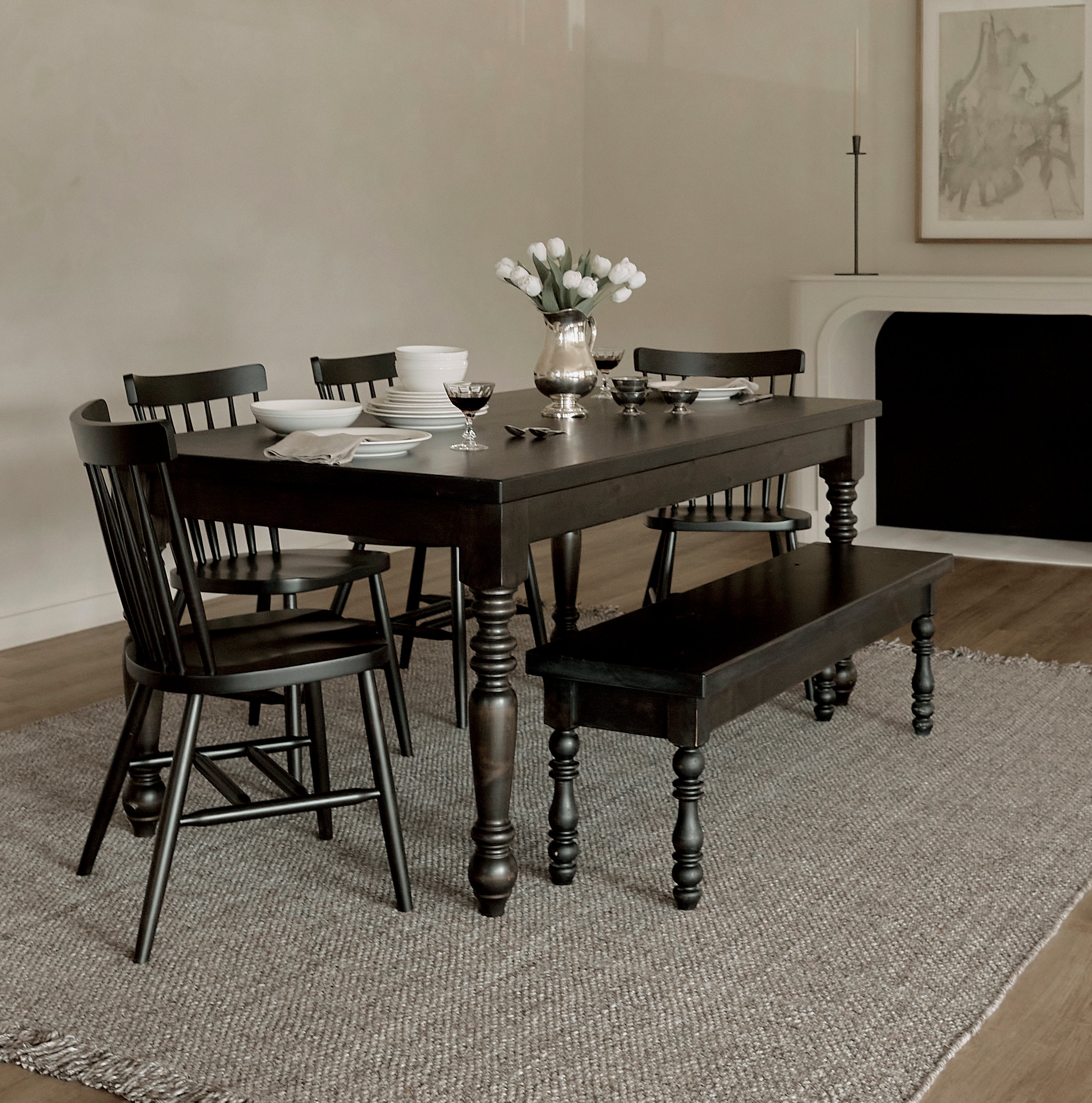
Choosing between a white oak and walnut dining table is rarely a question of which wood is “better.” Both have the presence, natural character, and lasting appeal that make solid hardwood furniture worth considering. The more useful question is which one belongs in your home—the light, texture, and calm of white oak, or the depth and richness of walnut.
Wood is not a background detail on a dining table. It is the material you will see at breakfast, touch as you set a table, and live alongside as the room changes over time. Its grain, tone, and variation will shape the atmosphere of the entire space.
James & James builds dining tables in solid hardwood, with material availability varying by design. Before choosing, confirm the options on the exact product page or with the design team. You can begin by exploring our solid wood dining tables, then compare samples and specifications for the piece you have in mind.
The Difference You Will Notice First: Light and Depth
White oak and walnut create two very different starting points for a room.
White oak generally brings a lighter, more open visual character. Its color can range from pale to medium brown, and its grain has a distinct texture that gives a table quiet movement without making it feel busy. In a dining room with natural light, soft walls, or an emphasis on clean materials, white oak can make the whole space feel grounded and breathable.
Walnut tends toward a deeper palette, from light brown through richer chocolate tones. It has a more dramatic presence, especially when paired with light walls, pale upholstery, or a room that benefits from a darker anchor. The contrast between walnut’s darker heartwood and lighter sapwood is part of its natural character, not an imperfection to be disguised. The American Hardwood Export Council’s species comparison offers a useful technical reference for the visual characteristics of both species.
Neither wood is confined to one style. The same white oak can feel relaxed, architectural, rustic, or traditional depending on the table’s silhouette and finish. The same walnut can feel mid-century, formal, contemporary, or quietly classic. The decision begins with the mood you want the dining room to hold.
Choose White Oak When You Want Warmth Without Heaviness
White oak is often a natural choice for homeowners who want a table with visible grain and warmth, but who do not want the room to feel dark. It can bring an honest, tactile quality to the dining room while keeping the overall palette light enough for the space to remain open.
White oak works beautifully with natural light
In rooms with generous daylight, white oak can reflect and soften the light rather than absorbing it. It often pairs naturally with linen, stone, plaster, neutral paint, and light-to-medium flooring. It can also balance a home with darker architectural features by keeping the dining area from becoming too visually dense.
This does not mean white oak needs a minimalist setting. A table in white oak can sit beautifully with traditional chairs, textured rugs, antique pieces, or painted cabinetry. The grain gives it enough character to feel substantial even when the finish is light.
Let the grain be part of the design
Oak is valued in furniture partly because its grain is visible and expressive. Rather than expecting a perfectly uniform surface, look for a table whose natural variation feels right to you. A clear, lighter finish may reveal more of that texture; a deeper stain can shift the mood while preserving the material’s underlying character.
This is why samples are worth the time. A finish that looks quiet on a small swatch may reveal more warmth or contrast in the light of your home. Place the sample near your flooring, cabinetry, and fabrics, and look at it throughout the day before making a decision.
Choose Walnut When You Want a Richer Visual Anchor
Walnut often appeals to buyers who want the dining table to carry more visual weight. Its deeper tones can make a large room feel more intimate, give a pale dining room a strong center, or create a thoughtful contrast against lighter materials.
Walnut brings depth to a room
A walnut table can be especially compelling in a space that feels washed out or overly uniform. Its brown tones bring depth without relying on ornament, and its natural variation can make the table feel substantial even when the silhouette is simple.
In a home with white or light-painted walls, warm brass, aged leather, stone, or natural textiles, walnut can create a sense of balance. It may also complement darker cabinetry or floors when the room has enough light and contrast to keep the overall palette from feeling heavy.
Do not assume walnut must make a room formal
Walnut has a refined reputation, but it does not need to make the dining room feel precious. A simple walnut tabletop can be relaxed and welcoming when paired with comfortable chairs and an unfussy room. Conversely, a highly detailed table in any wood can feel more formal. The base, edge profile, scale, and surrounding materials are just as important as species.
If you are drawn to walnut, ask yourself whether you enjoy a table that will be a visible focal point. If the answer is yes, its richness may be exactly what the room needs.
Compare the Woods in the Context of Your Home
The best material choice is rarely made in isolation. Bring the rest of the room into the decision.
Look at your floors and cabinetry
You do not need to match the dining table exactly to the floor or kitchen cabinetry. In fact, exact matching can make a room feel flat. Instead, look for a relationship: a shared warmth, a complementary contrast, or a difference that feels intentional.
White oak can work well beside many tones because it leaves visual room for other materials. It can soften dark floors, connect with pale oak cabinetry, or bring texture to a room that otherwise relies on painted surfaces. Walnut can create a more pronounced contrast against lighter surroundings or deepen a palette that already uses warm, natural tones.
If the floor and cabinetry are both dark, be especially deliberate with walnut. It may be beautiful, but the room may need lighter upholstery, a pale rug, or strong natural light to preserve a sense of balance. If the room is very light, white oak may keep it serene while walnut may give it the grounding point it lacks.
Consider the light at different times of day
Wood changes with light. Morning sun, afternoon shade, and evening lamplight can each bring out a different quality in the same finish. A darker wood may feel inviting under warm evening light but heavier in a room with limited daylight. A lighter wood may feel airy during the day and quietly warm at night.
That is another reason to view actual samples in the room. James & James offers wood and upholstery samples, allowing you to see the finish near the materials it will live with. Take your time with this step. A dining table is not a paint color you will change next year; it is a piece meant to settle into the life of the home.
Think About Character, Not Perfection
Solid wood is a natural material. Variation in color and grain is part of what gives each table its own presence. White oak and walnut will both show that variation in different ways, and a hand-applied finish can further shape how the wood reads.
If you want a table whose surface feels lighter and more textural, white oak may be the better fit. If you want richer tonal depth and a more pronounced focal point, walnut may be the better fit. Neither should be chosen in the hope that it will look like a perfectly flat, uniform manufactured surface. The character is the point.
James & James notes that its handcrafted furniture is built in solid hardwood and finished by hand. For the exact table you are considering, confirm the wood species, finish choices, and any expected natural variation before ordering. That conversation is part of choosing the piece with confidence.
Let the Table’s Shape Guide the Wood Choice Too
Wood and shape work together. A large rectangular table has more surface area on which grain and color will be visible, so the choice between white oak and walnut can have a dramatic effect on the room. A round table concentrates the material into a more intimate footprint, where a darker tone can feel particularly warm and a lighter tone can keep the room feeling open.
For a long rectangular dining table, white oak can emphasize light and length, while walnut can make the table a strong architectural presence. For a round dining table, white oak can feel easy and conversational; walnut can make the table a sculptural center.
There is no fixed rule. Consider the visual weight of the whole piece—the size of the top, the base style, the chairs around it, and the space it occupies—before deciding which wood will feel most at home.
Ask the Right Questions Before You Order
Before choosing white oak or walnut, ask:
- Does the room need more lightness or more visual depth?
- Which wood feels right beside the floors, cabinetry, textiles, and wall color?
- Have we looked at samples in the room at different times of day?
- Do we enjoy visible grain and natural variation, or are we expecting a more uniform appearance?
- Will the table be a quiet part of the room or a strong focal point?
- Is the wood species available for the exact table and dimensions we want?
- Have we confirmed the available finish options and care guidance before ordering?
The last two questions matter because material options can vary by design. A comparison article can help you name your preference, but the product page and design conversation should confirm what is possible for the table you choose.
Find the Wood That Feels Right at Home
White oak and walnut both reward a considered choice. White oak can bring light, texture, and an easy sense of warmth. Walnut can bring depth, richness, and a more pronounced center of gravity. The better choice is the one that makes the dining room feel more settled from the moment you walk in.
Explore our solid wood dining tables to compare available materials, shapes, and finish options for the way you want to live.
Next, read How to Choose the Right Dining Table Finish for Your Home
Frequently Asked Questions
Is white oak or walnut better for a dining table?
Both are well regarded hardwoods used in furniture. Choose based on the visual character you want, the amount of light in the room, and the options available for the exact table you are considering. Construction and finish details should always be confirmed product by product.
Does white oak work with dark floors?
It can. White oak may create a useful contrast against dark flooring and keep the dining area from feeling overly heavy. Use a sample in your room to see whether the undertones feel intentional alongside the floor and surrounding materials.
Will a walnut dining table make my room feel dark?
Not necessarily. Walnut can add warmth and depth to a light room. In a room that already has dark floors, cabinetry, or limited daylight, balance it with lighter upholstery, a rug, walls, or other reflective materials.