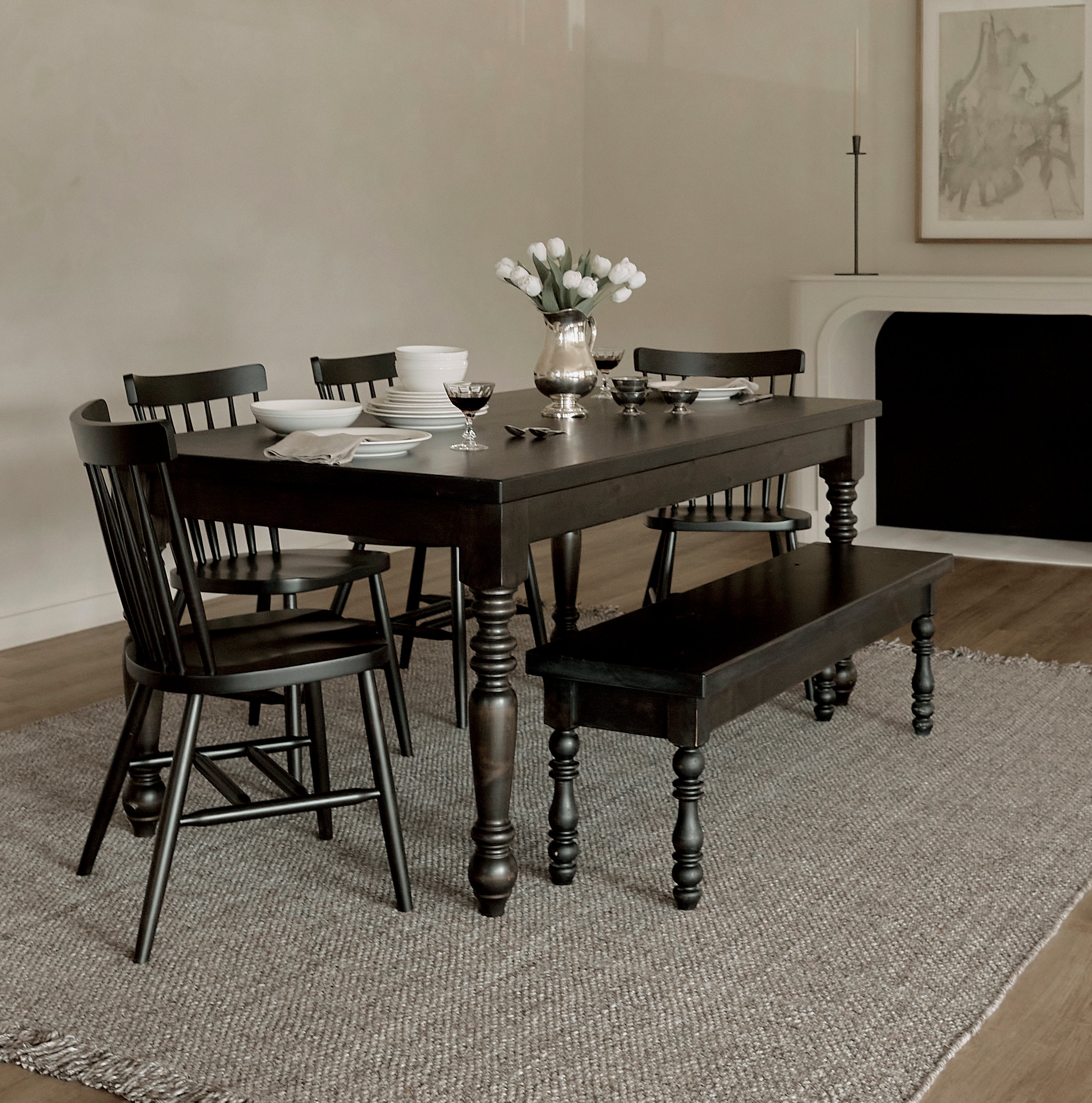
Round and rectangular solid wood dining tables create very different experiences in a room. One is not more welcoming, more practical, or more beautiful by default. The right shape is the one that gives your room the right balance of movement, seating, and presence—and makes gathering feel effortless rather than arranged around a compromise.
A rectangular table brings direction and structure. It can make a long room feel purposeful, accommodate a generous number of guests, and provide a familiar layout for meals and celebrations. A round table softens the room, gathers people toward one another, and can make circulation feel easier where corners would otherwise get in the way.
The decision is best made with the room in view. Explore our round dining tables and rectangular dining tables as you compare the shapes below.
Start With the Shape of the Room
The room should lead the decision. A dining table does not need to mimic the room exactly, but its footprint should feel at ease within the space. The most useful question is simple: which shape leaves the room feeling usable once chairs, people, and daily movement are part of the picture?
A rectangular table often feels natural in a room with a clear lengthwise orientation. It follows the room’s longer line, helps organize a formal dining space, and can make a larger room feel intentionally furnished rather than scattered. A round table often works beautifully in a more balanced room, a breakfast area, or an open dining zone where people move around several sides of the table.
Before you decide, mark each option on the floor. Use tape, boxes, or the chairs you already own to sketch the footprint. Then walk through the room, open nearby doors, and look at the arrangement from the rooms around it. A shape that looks correct on a plan may feel very different when you see it at full scale.
When a Rectangular Dining Table Makes Sense
Rectangular tables have a quiet logic in many homes. They create a clear centerline, work well with longer rugs and linear lighting, and offer a straightforward arrangement for guests along both sides. For families who host larger meals or prefer a more traditional dining-room layout, that clarity can be exactly what the room needs.
A strong fit for longer rooms
If your dining room is longer than it is wide, a rectangular table can use the space efficiently. It gives the room a sense of proportion, leaving the side paths available for chairs and movement when the width is planned carefully. In a dedicated dining room, it can also create the visual formality that makes a meal feel like an occasion without becoming stiff.
The key is to respect the table’s width as much as its length. A long table that is too wide can narrow the paths on either side; a table that is too narrow may feel underscaled for the room and the guests it is meant to welcome. Measure the full footprint with chairs in place before you settle on dimensions.
More intuitive for larger gatherings
Rectangular tables make it easy to understand where people will sit, especially as the group grows. They can accommodate a longer line of guests and, depending on the base and overall dimensions, may allow end seating as well. That makes them a natural option for homes where hosting is frequent and the dining table is expected to carry the weight of a larger meal.
This does not mean every rectangular table needs to be oversized. A smaller rectangular table can work beautifully in a modest room when the proportions are right. The advantage is flexibility of scale: the shape can feel intimate for a family meal or substantial enough for a larger room and a longer guest list.
Consider the legs, apron, and chair placement
The shape alone does not determine how many people can sit comfortably. A four-leg table needs chairs to work around the legs; a table’s apron affects knee clearance; and the distance between the supports can matter as much as the tabletop’s overall dimensions.
James & James product pages provide the specifications for each design, including the practical dimensions that help with planning. On a made-to-order table, use those details to decide where chairs will sit and how the table will function when it is fully in use.
When a Round Dining Table Makes Sense
A round table can make a dining area feel immediately more connected. There is no head of the table, no one seated at a distant end, and no sharp corner to navigate when moving around the room. It invites a different kind of gathering: less linear, more shared.
A natural choice for conversation
At a round table, everyone faces toward the center. That arrangement can make it easier for guests to take part in one conversation, particularly for smaller groups. It is an appealing choice for people who want meals to feel relaxed and inclusive rather than formally arranged.
The shape also has a visual softness that can help a dining area feel warmer. In a room with many straight lines—cabinetry, windows, an island, or a long sofa—a round table can introduce a welcome counterpoint without needing to become a statement piece.
Helpful where circulation matters
Because there are no corners, a round table can feel easier to move around in a compact dining area or an open-plan home. That does not make it small-space magic; its diameter still needs room for chairs and walkways. But when the dining zone sits along a natural route between the kitchen and living room, a curved edge can make the path feel more forgiving.
Round tables are especially worth considering in rooms that are close to square. A long rectangular table can leave such a room with empty ends and constricted sides, while a round form may use the central area more naturally. Compare the available diameters and base styles in our round dining table collection with the actual dimensions of your space.
Think carefully about diameter and guest count
As a round table gets larger, it grows into the room in every direction. That can be exactly right for a spacious dining room, but it is why a round table should always be planned at full footprint. Include the chairs in your floor test, not just the circle of the tabletop.
For households that need occasional extra seating, a round expandable table can be a thoughtful option. It retains the intimate everyday feeling of a round table, then changes shape when a leaf is added. The product-specific dimensions matter here, so confirm the closed and expanded forms before choosing.
Compare Traffic Flow, Not Just Seating Capacity
Two tables can seat a similar number of people and still produce completely different rooms. The distinction often appears in the paths around them.
A rectangular table asks for clear side aisles and space at its ends. In a long dining room, that may be exactly how people already move. In a compact open area, those corners and end seats may compete with a doorway, island, or passage to another room.
A round table asks for more evenly distributed space around its perimeter. That can make movement feel simpler in a central dining area, but a large diameter can quickly consume a room that does not have enough width. The practical choice is the shape that leaves the most useful paths once everyone is seated.
Use the room at its busiest
Do not test the layout only when the table is empty. Imagine the room at its busiest: chairs pulled back, food being carried in, a guest stepping around another guest, children moving through the space, and someone opening the nearby cabinet. If the room still feels calm and usable, you are close to the right answer.
This is also why a table’s base matters. A pedestal can offer flexible seating around a round top, while a legged rectangular table may define each place more clearly. Neither is better. They simply create different ways for people to occupy the room.
Think About Hosting and the Way You Gather
Your favorite kind of gathering should influence the choice. If you picture long dinners with a larger group, shared platters running down the center, and a room that is designed to receive people, a rectangular table may feel most natural. Its shape gives everyone a clear place and can extend gracefully as the guest list grows.
If you picture smaller, lingering dinners where everyone is part of one conversation, a round table may better reflect that experience. It can make an everyday meal feel more connected and a compact room feel more generous.
Of course, the distinction is not absolute. A round table can host a lively crowd; a rectangular table can make an intimate dinner feel wonderful. The point is not to choose a shape based on a rule. It is to choose the one that supports the kind of moments you hope will happen there.
Let the Style of the Table Follow the Room
Once the practical decision is clear, let style refine it. A substantial rectangular table with turned legs can bring warmth and tradition to a formal dining room. A cleaner rectangular silhouette can feel at home in a more contemporary space. A round pedestal table can feel classic, relaxed, or tailored depending on its proportions, base, wood, and finish.
James & James dining tables are crafted in solid hardwood and made to order, with size, stain, and finish options available by design. Use that flexibility to solve the practical fit first, then choose the details that make the table feel as though it has always belonged in the home.
It can help to view wood and finish samples alongside the flooring, cabinetry, and upholstery in the room. A shape that fits well becomes even more convincing when its material character relates naturally to the rest of the space.
Questions to Ask Before You Choose
Before you decide between round and rectangular, ask:
- Is the room longer than it is wide, or more evenly proportioned?
- Where do people need to walk when chairs are in use?
- How many people gather at the table most often?
- How often do we host a larger group?
- Would corners interrupt a natural path through the room?
- Does the table’s base allow the chair placement we need?
- Have we marked the full tabletop and chair footprint on the floor?
The answer is often visible once you see both shapes in the room. The right one will not merely fit. It will make the room feel more complete.
Find the Shape That Brings Your Room Together
A dining table should bring people together without asking the room to work around it. Whether your home wants the structure of a rectangular table or the easy connection of a round one, begin with the shape that supports daily life and gives gathering room to unfold naturally.
Explore our rectangular dining tables and round dining tables to compare the pieces that best fit your home.
Consider reading White Oak vs. Walnut Dining Tables: Which Wood Is Right for Your Home?
Frequently Asked Questions
Is a round or rectangular dining table better for a small room?
It depends on the room’s proportions and traffic paths. A round table can make circulation feel easier where corners would obstruct a walkway, while a narrow rectangular table can work beautifully in a longer room. Mark each footprint with chairs before choosing.
Which a round or rectangle table better for conversation?
Round tables naturally place every guest toward the center, which can make a smaller gathering feel especially connected. Rectangular tables can be equally welcoming, particularly when the size and seating arrangement keep guests comfortably within conversation.
Can a round table seat as many people as a rectangular table?
Both shapes can accommodate larger groups, but they use the room differently. A larger round table needs width around its full perimeter; a rectangular table needs length and clear side aisles. Compare the full footprint, chair placement, and room circulation rather than looking at seat count alone.