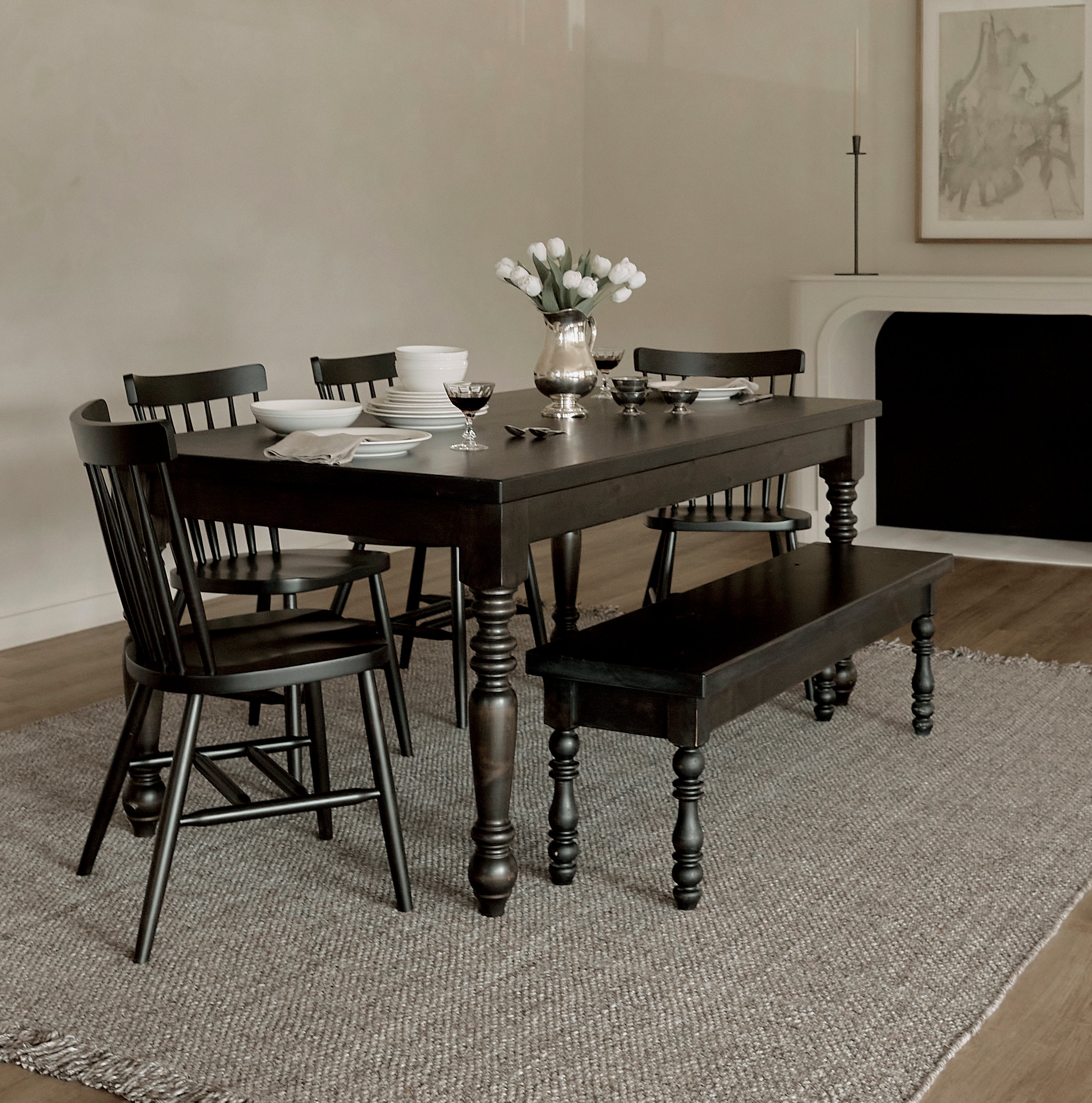
Choosing the right dining table size is less about finding a universal chart and more about understanding how the room needs to work. A table can be beautifully made and perfectly suited to your style, yet still feel wrong if chairs catch on a wall, a doorway becomes difficult to use, or the room loses the ease that made you love it in the first place.
The right table gives people room to gather and the room itself space to breathe. It should suit a quiet weeknight dinner as comfortably as the occasions when a few more chairs are pulled up. That is why the best place to begin is not with a standard size. It is with your home.
If you are comparing dimensions now, explore our solid wood dining tables. Many James & James tables are made to order and can be tailored to the dimensions you select, which makes it possible to choose for the room you actually have—not an imaginary standard one.
Begin With the Room, Not the Seat Count
The number of people you would like to seat matters, but it should not be the only thing deciding the table’s size. A dining room is a working space. People need to enter it, pull out chairs, walk behind one another, serve food, and move naturally between the dining area and the rest of the home.
Start by measuring the room’s length and width. Then mark the approximate footprint of the table you are considering on the floor. Painter’s tape is useful, but so are flattened boxes, a bedsheet, or a few chairs placed at the likely corners. The point is not to create a perfect model. It is to see the scale of the piece in the room before the table arrives.
Once the outline is in place, walk around it as you normally would. Open nearby doors. Pull chairs back. Notice where someone would stand to serve a meal or pass behind a seated guest. This simple exercise often reveals the real decision: perhaps the room wants a narrower table, a different shape, or a base that gives guests more flexibility.
Make Space for Chairs and Movement
The tabletop is only one part of the table’s footprint. Chairs need room to slide out, people need room to sit and stand, and the paths around the table need to remain useful. This is where a room can feel unexpectedly tight even when the tabletop itself appeared to fit.
Rather than relying on a single clearance rule, look at the room as it will actually be used. A table beside a rarely used wall may allow a different arrangement than one next to a kitchen path. A dining room with a door, sideboard, or built-in storage will have its own constraints. The shape and depth of your chosen chairs matter too.
One mistake homeowners often make is measuring only the open floor area. A better approach is to plan for a chair in use. Sit in it. Move it back. Imagine a guest passing behind it. That is the moment the table has to work.
Look at the base as well as the top
Base style changes how comfortably people can sit. A pedestal can create more flexibility around the perimeter because there are no corner legs to navigate. A four-leg table offers a classic, grounded look, but the placement of those legs can influence where chairs sit most naturally. Trestle and other base styles create their own seating patterns.
On a custom piece, overall length and width are important, but the practical clearances beneath and around the table matter just as much. Review the specifications on the exact product page before ordering. For example, the product details for a legged table can show the distance between its legs and the clearance created by its apron—details that help determine how comfortably your chairs and guests will fit.
Choose Seating for Everyday Life First
A dining table does not need to be sized around the largest gathering you could ever host. It should first feel right for the people who will use it most often.
Think about your ordinary week. How many people sit down most nights? Does the table also become a place for homework, laptop work, or weekend projects? Would you prefer a table that feels generous for four or six every day, or one that is primarily sized for a larger group? Neither answer is wrong. The choice comes down to how you want the room to feel between gatherings.
For many homes, a slightly more restrained everyday table creates a calmer, more flexible room. For others, a large table is the point: the dining room is where everyone gathers, and its presence should reflect that. Your home will tell you which approach makes more sense.
Do not forget the people at the ends
When you picture seating, remember the places at the ends of a rectangular or oval table. End seating can be useful for a larger dinner, but it needs the same consideration as every other seat. Look at the base, the leg position, and the space available in the room before assuming an end place will be comfortable.
The same is true of a square or round table. Their seating may feel more conversational, but a larger diameter or width expands into the room in every direction. The right table is one that gives each person a comfortable place without asking the rest of the room to become an obstacle course.
Match the Table Shape to the Room’s Proportions
Table size and table shape are inseparable. Two tables with a similar seating capacity can feel entirely different in the same room because their footprints ask the space to work in different ways.
Rectangular tables for longer rooms
A rectangular table often suits a dining room with a clear lengthwise orientation. It can give a longer room purpose and structure while allowing guests to sit along each side. If you are furnishing a narrow or elongated space, compare the table width carefully; a shape that follows the room’s length can still feel crowded if there is not enough circulation on either side.
Explore rectangular dining tables if your room has the length to support that classic arrangement.
Round tables for a more compact gathering area
A round table can use a more balanced room beautifully. Its curved edge can make circulation feel easier and creates a natural sense of connection among guests. In a smaller dining area, the absence of corners can also make the table feel less imposing.
But a round table should not be chosen on shape alone. Its diameter still needs to work with chairs and walkways around it. For rooms where conversation and a softer footprint matter most, view the current round dining tables.
Oval tables when you want length with a softer edge
An oval table can be a thoughtful choice for a longer room where a rectangular table feels too rigid. It keeps the visual direction of a longer tabletop while softening the ends, which can make it easier to move around in some layouts.
As with every option, mark the full size on the floor before deciding. The curve changes the feel of a space, but it does not remove the need to plan for seating. Browse oval dining tables to compare the proportions that best suit your room.
Square tables for rooms with balanced proportions
A square dining table can feel especially at home in a room that is close to square. It creates a clear, face-to-face seating arrangement and can give a smaller group an intimate place to gather. As it grows, however, it grows in both directions, so it needs a room that can support its full footprint.
If symmetry and shared conversation are priorities, consider square dining tables alongside the room’s actual dimensions.
Plan for Hosting Without Overfilling the Room
The gap between everyday seating and holiday seating is where many dining-table decisions become difficult. You want room for the people you love without committing the room to a permanent size it only needs a few times a year.
An extendable table can be the answer when flexibility is a regular part of your life. It lets the dining room feel open and proportioned for ordinary meals, then creates additional space when family visits or a celebration calls for a larger table.
The planning principle remains the same: check both configurations. Do not choose an extendable table only because the closed size fits. Confirm that the table still leaves the room usable when it is open, chairs are in place, and guests are moving around it.
James & James offers expandable dining tables in a range of shapes and designs. Each product page has its own dimensions and extension information, so use those specifics to make the final call. A piece that changes size should feel like it belongs in the room in both forms.
Use Custom Dimensions to Solve a Real Room Problem
Custom sizing is most valuable when it answers a clear need. Perhaps your room has the length for a generous table but needs a narrower width to protect a walkway. Perhaps an architectural detail makes a standard size feel slightly off. Perhaps your household needs seating for a particular number of people, and you want a table whose proportions still feel balanced when every chair is occupied.
That is the value of made-to-order furniture: the chance to fit the table to the home instead of forcing the home to accommodate a stock dimension. James & James builds dining tables to order, and the product specifications for the design you select will help you understand which dimensions and clearances matter most.
If you are deciding between a few sizes, make the comparison tangible. Mark each option on the floor. Sit at the likely chair positions. Take photographs from the doorway. A size that looks good in a floor plan may feel different when you see it in the architecture and light of your own home.
Questions to Ask Before You Choose a Size
Before finalizing a dining table size, ask yourself:
- How many people will use this table on an ordinary day?
- How many people do we host often enough to plan for them?
- Can chairs be pulled out and used comfortably around the full perimeter?
- Will doors, cabinets, sideboards, and circulation paths still work with the table in place?
- Does the chosen shape suit the room’s length, width, and visual balance?
- Have we reviewed the exact product specifications—not only the overall tabletop dimensions?
- If the table extends, have we planned for its expanded footprint as carefully as its everyday one?
You do not need to solve every future possibility. You only need a table that supports the life you expect to live, with enough thoughtfulness built in for the moments that matter most.
Find a Dining Table That Fits Your Home
The right size is the one that makes the room feel more usable, not more filled. It gives people a place to linger while leaving the home easy to move through. It is generous when the occasion asks for it and comfortable when the room is quiet again.
Explore our solid wood dining tables to compare shapes, dimensions, finishes, and made-to-order options for the way you live.
Consider reading Round vs. Rectangular Dining Tables: Which Shape Is Right for Your Home?
Frequently Asked Questions
How do I know whether a dining table is too large for my room?
Mark its footprint on the floor, add the space needed for your chairs, and walk through the room as you normally would. If doors, pathways, or seated guests make the space feel constrained, consider a smaller dimension or a different shape.
Should I choose my dining table size based on everyday meals or holiday hosting?
Start with everyday use. If you host larger groups regularly, consider an extendable table or a room layout that can comfortably support a larger fixed table. The best choice should feel right more often than it feels exceptional.
Does the table base affect how many people can sit comfortably?
Yes. Pedestals, corner legs, trestles, and aprons create different seating and knee-clearance patterns. Review the specifications of the exact table, and picture where chairs will sit before finalizing the size.