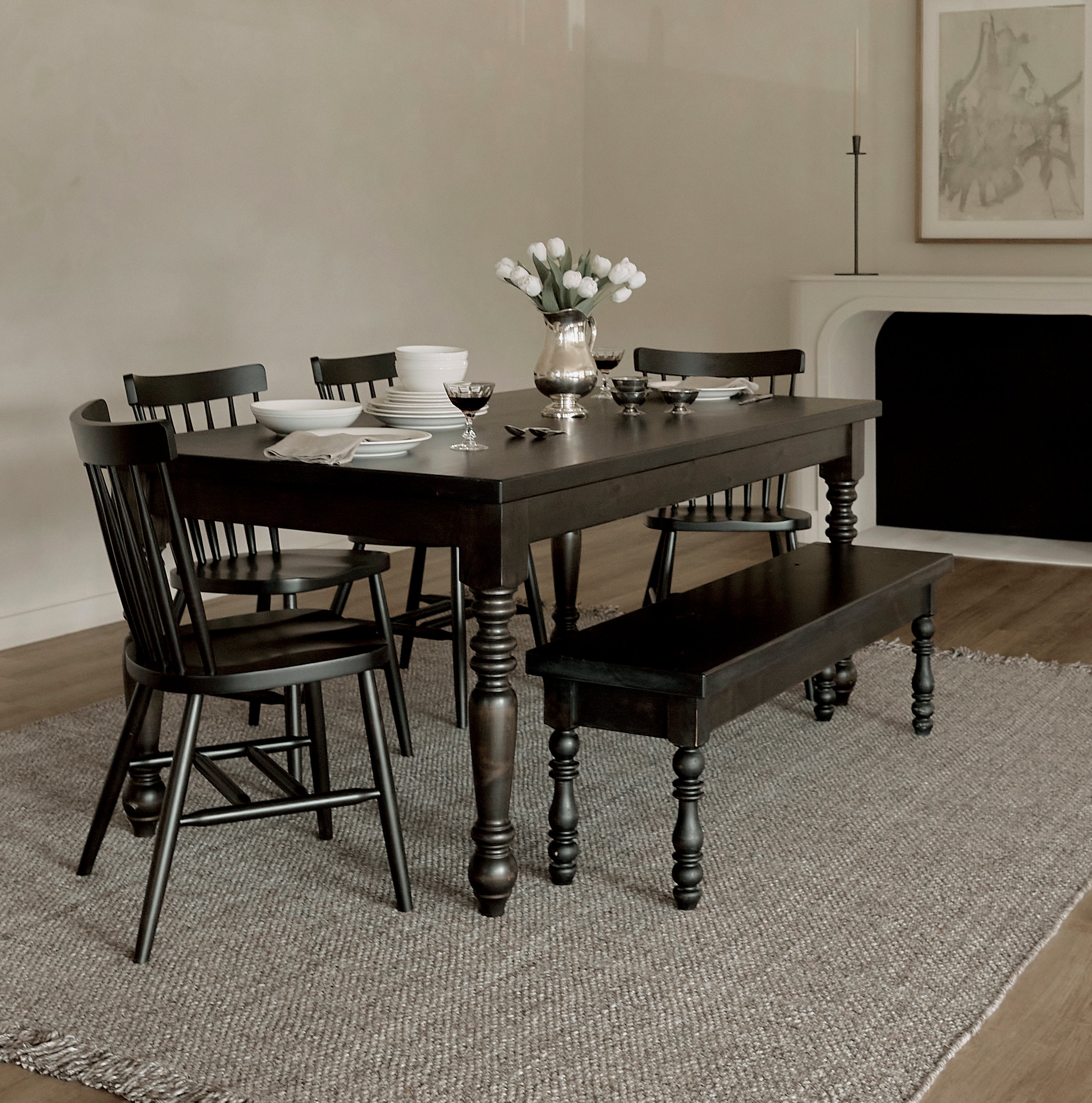
Choosing a dining table finish is not about finding a stain that matches every other surface in the room. It is about choosing a tone that belongs with the home: one that works with the light, relates to the floor and cabinetry, and still lets the natural character of the wood come through.
That distinction matters because a dining table is often the visual center of the room. A finish can make it feel quiet and integrated, warm and welcoming, or deeply anchored. The right choice does not compete with everything around it. It makes the room feel more settled.
James & James tables are made to order in solid hardwood, with finish choices varying by design. As you compare solid wood dining tables, use this guide to narrow the direction that feels right—then confirm the available materials and finishes for the exact table you want.
Start With the Light in Your Home
The same finish can read differently from one room to another. A light oak tone may look soft and warm in a sunlit dining room, then appear cooler beside a shaded wall. A deeper finish can feel rich and inviting in the evening, but may carry more visual weight in a room with limited daylight.
That is why the first step is not choosing from a screen. It is noticing the room at different times of day.
Look in morning, afternoon, and evening light
Natural light changes. A dining room with east-facing windows may feel bright and warm in the morning, then more neutral by afternoon. A room that relies on lamps at night will show wood tones differently again. Bring any sample you are considering into the room and view it near the floor, the walls, and the furniture it will live alongside.
Do not judge a finish from one glance. Leave the sample out for a few days. Notice it in direct sun, shade, and artificial light. The finish you still enjoy across those conditions is usually a better choice than the one that only looked perfect for a moment.
Consider the light that reaches the tabletop
Look not only at windows, but at what sits above and around the table. A large pendant, dark ceiling, nearby cabinetry, or an open view into another room can all affect how the tabletop reads. A finish that feels too dark in a closed dining room may look balanced in an open-plan space with more reflected light. A pale finish may feel beautifully airy in one setting and disappear into another.
The goal is not to make the table blend into the background. It is to choose a finish whose presence feels intentional in the room’s actual light.
Look for Relationship, Not an Exact Match
Many homeowners begin with a reasonable instinct: the dining table should work with the floor. The trouble begins when “work with” becomes “match exactly.” Wood floors, cabinets, chairs, and dining tables do not need to be identical to belong together.
In fact, a room often feels more considered when wood tones relate without repeating one another. A lighter table can lift a darker floor. A deeper table can give a pale room a focal point. A medium, warm finish can bridge tones that might otherwise feel disconnected.
Pairing a table with wood flooring
If your flooring is dark, a lighter or medium table can create contrast and prevent the dining area from becoming visually heavy. If your flooring is light, a deeper table can anchor the room, while a lighter finish can preserve a calm, tonal look. Neither approach is universally right. The room’s light, rug, walls, and upholstery all influence the final effect.
One practical approach is to place the table sample directly on the floor, then step back. Look for undertones that feel at odds: a very cool gray beside a strongly golden floor, for example, may be harder to reconcile than two woods that share a quiet sense of warmth. You do not need a perfect match. You want a combination that looks chosen.
Pairing a table with cabinetry
In an open kitchen and dining area, cabinetry is often the other dominant wood or painted surface in view. If the cabinets are dark, a lighter dining table can add contrast and keep the room from feeling overly dense. If the cabinets are pale, a darker or warmer table can give the dining area definition.
Again, exact repetition is not required. A table can relate to cabinetry through warmth, grain, or finish depth rather than identical color. When in doubt, use the table as the piece that brings the kitchen and dining area into conversation without making them feel like a matching set.
Decide How Much Visual Weight You Want the Table to Carry
Finish changes a table’s visual weight. A lighter finish generally lets the room feel more open and emphasizes the shape and grain of the table. A darker finish tends to make the table feel more substantial, giving the dining area a clearer center of gravity.
Neither is a purely aesthetic choice. The size of the room, the size of the table, and the amount of contrast already present all matter.
Lighter finishes: open, textured, and easy to layer
A lighter finish can be a natural choice for a smaller dining area, a room with limited daylight, or a home where the table should feel warm without becoming the dominant visual feature. It often works beautifully with linen, pale upholstery, plaster, stone, and natural textiles.
Lighter does not mean plain. On solid wood, a lighter finish can make grain and natural variation more visible. If that character is what you love about a hardwood table, give it room to show. A light finish can also bridge styles easily: it may feel fresh beside contemporary lines and quietly familiar beside traditional forms.
Deeper finishes: grounded, warm, and more dramatic
A deeper finish can give a dining room welcome depth. It may be the right choice for a large space that needs a focal point, a pale room that feels too diffuse, or a home with warm materials such as aged leather, brass, richly colored textiles, or darker stone.
The key is balance. A deep finish on a large table will have a stronger presence than the same finish on a smaller one. If the room already has dark floors, dark cabinets, or limited daylight, add contrast elsewhere through upholstery, a rug, walls, or lighting so the table feels grounded rather than heavy.
Medium tones: useful when the room has several materials
A medium finish can be especially versatile in a home with mixed wood tones. It can connect pale and dark elements without insisting that one dominates. If you are furnishing an open-plan home or working around cabinetry, flooring, and existing furniture that do not perfectly align, a mid-range tone may give the room the most ease.
This is not a rule to choose the “safe” option. It is simply a reminder that a finish can do useful design work. The best one is the finish that helps the existing materials feel more coherent.
Let the Wood Species and Finish Work Together
Finish does not erase the character of the wood underneath. It can highlight grain, deepen contrast, soften variation, or change the way a species reads in the room. That is why choosing a wood and choosing a stain should be treated as one decision rather than two separate steps.
On white oak, a finish may emphasize the wood’s textural grain and shift its overall warmth. On knotty alder, a finish may make the natural variation and rustic character more or less pronounced. The exact result depends on the material, the finish process, and the light in the room, which is another reason an actual sample is more useful than a digital swatch.
James & James product pages identify the finish options offered for each table. Some designs offer selections such as lighter oat and almond tones alongside deeper sable and espresso directions, while alder options may include tones such as harvest wheat, tobacco, or charred ember. Treat those names as a starting point, then view the real materials before making a final choice.
Think About the Rest of the Dining Room
The table is the anchor, but it is not alone. Chairs, a rug, artwork, window treatments, and lighting all affect how a finish feels.
Use chairs to create contrast or continuity
Wood chairs in a related tone can create a calm, cohesive dining room. Upholstered chairs can soften a table’s visual weight and introduce fabric color or texture. Mixing the wood tone of the chairs and table can work beautifully when there is a shared element—similar warmth, a repeated finish note, or a common material elsewhere in the room.
Avoid choosing every piece independently and hoping it will come together later. Put fabric swatches, chair finishes, flooring samples, and table samples in the same place. The combination will tell you far more than any single piece viewed alone.
Let the rug support the finish
A rug can help define the dining area and mediate between a table and the floor. Under a dark table and dark floor, a lighter rug can introduce contrast. Under a light table and pale floor, a more textured or deeper rug can give the arrangement definition. If the table will sit on a rug, include the rug sample in your finish test.
Do not overlook metal and lighting
Hardware, lighting, and nearby metal finishes may seem secondary, but they can change the perceived warmth of wood. Brushed brass and aged bronze often accentuate warmth; cooler metals may make the same finish read differently. You do not need to coordinate every metal, but the table finish should feel comfortable within the larger palette.
Order Samples Before You Commit
The most confident way to choose a dining table finish is to see it in your own home. James & James offers wood and upholstery samples, giving you an opportunity to compare the actual materials with your floor, cabinetry, paint, and fabrics before finalizing the order.
When the samples arrive, place them where the table will sit. View them flat and upright. Look at them next to the flooring and against the wall. Photograph them in morning and evening light if you are deciding with someone else. Then choose the finish that remains convincing across all of those moments.
This small step can prevent the most common finish regret: choosing a color in isolation and discovering later that it felt different once it became part of the room.
Questions to Ask Before You Choose a Finish
Before you decide, ask:
- How does this finish look in the dining room’s natural and artificial light?
- Does it relate to the flooring and cabinetry without trying to match them exactly?
- Does the room need more lightness, more depth, or a bridge between existing tones?
- How will the finish look with the chairs, rug, and lighting I plan to use?
- Does the wood’s natural grain and variation show in a way I enjoy?
- Have I confirmed that this finish is available on the exact table and wood species I want?
- Have I viewed a real sample in my home before placing the order?
The right finish will not only look good on the table. It will make the whole room feel more intentional.
Find a Finish That Feels at Home
The best dining table finish is the one that rewards living with it. It works in the changing light of the day, sits naturally beside the materials you already love, and lets the wood bring its own warmth and character to the room.
Explore our solid wood dining tables, then order wood samples to make the choice in the space that matters most: your own.
Consider reading Oval vs. Rectangular Dining Tables: Which Shape Is Right for Your Home?
Frequently Asked Questions
Should my dining table match my floors?
No. A dining table should relate to the flooring, but it does not need to match it exactly. A lighter table can lift darker floors, while a deeper table can anchor a pale room. Look for compatible warmth and an intentional contrast.
Is a light or dark dining table finish better for a small room?
A lighter finish can help a compact room feel more open, especially if it has limited daylight. A darker table can still work beautifully when the rest of the palette provides enough lightness and contrast. Test samples in the room rather than choosing by rule alone.
Why should I order wood finish samples?
Screens and showroom lighting cannot show exactly how a finish will look beside your floor, cabinetry, paint, and light. Real samples let you compare the materials in the home where the table will live.