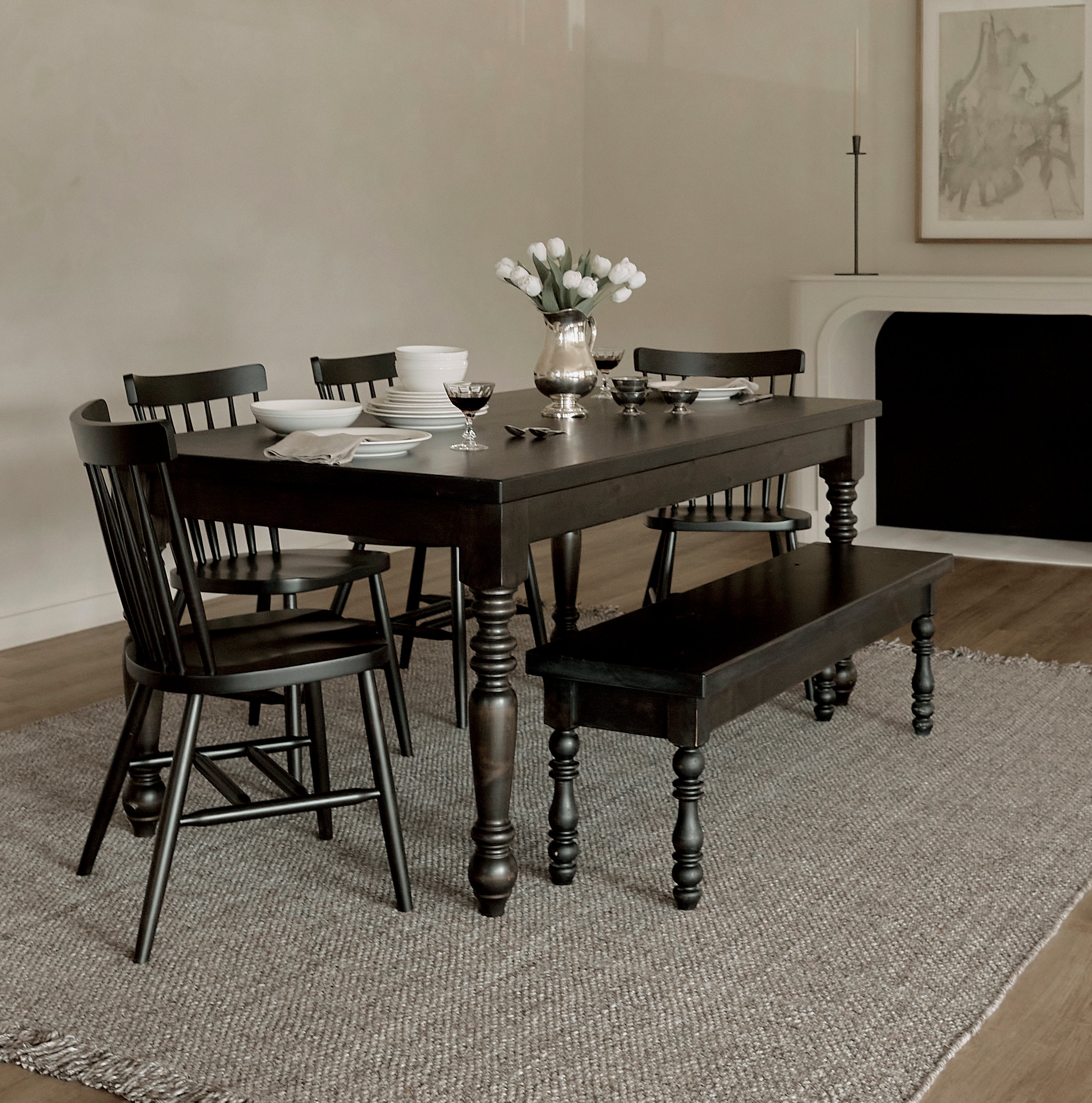
Choosing an extendable dining table is not only a question of how much it can grow. Its shape determines how it belongs in the room every day—and how comfortably everyone gathers when the leaf is in.
Round and rectangular tables can both be excellent choices. A round table often brings a softer, more conversational feel to a compact or square room. A rectangular table can make beautiful use of a longer space and offer a clear rhythm for larger meals. The best choice is the one that works in both configurations: closed for ordinary life, open for the people you love to host.
Explore expandable dining tables as you compare shapes with your own room dimensions in hand.
Start with the Shape of the Room
The room should lead the decision. A table does not need to mirror the architecture exactly, but its shape should work with the room’s proportions, doorways, and natural paths rather than competing with them.
Round tables often suit square or compact rooms
In a square dining room, breakfast nook, or smaller open-plan zone, a round table can feel especially natural. It creates a central gathering point without extending corners into the surrounding circulation. That softer perimeter can make a room feel easier to move through, particularly when people regularly pass close to the table.
When a round extendable table becomes oval, the room needs enough length to welcome its open form. The closed circle may fit effortlessly, while the expanded table may ask for a different chair plan or a little temporary rearranging. Test both footprints before committing.
Rectangular tables often follow a longer room gracefully
In a room that is noticeably longer than it is wide, a rectangular table can use the space with purpose. It follows the room’s strongest line, creates a natural arrangement for chairs, and can make a dedicated dining room feel settled and intentional.
An extendable rectangular table can be particularly useful when the room has length to give but limited side-to-side clearance. The tradeoff is at the ends: when the table expands, check that chairs, doors, and passageways still have enough room to work.
Compare Everyday Life Before Expanded Capacity
An extendable dining table should earn its place on an ordinary Tuesday, not only at a holiday meal. Consider the closed configuration first, because that is the version that shapes the room most of the year.
The everyday character of a round table
A round table naturally brings everyone into a closer circle. It can make small family meals feel connected, and it gives each person a fairly equal relationship to the center of the table. With no head or end positions, conversation tends to move easily around the group.
It can also be a forgiving choice in rooms with close circulation. No corners mean fewer hard edges to navigate when someone is carrying a plate, opening a cabinet, or moving between the kitchen and living area.
The everyday character of a rectangular table
A rectangular table provides a more linear, structured arrangement. It can feel especially right in a formal dining room, a long room, or a household that often uses the table for projects, homework, and longer meals. The length creates clear place settings and can offer a generous surface even when the table is not extended.
For some families, those defined places are part of the appeal. For others, a round table’s flexibility feels more relaxed. Neither is better in isolation; it is a question of the atmosphere you want the room to have.
Plan the Open Configuration as Carefully as the Closed One
The extension is not an abstract benefit. It has a real footprint, a real chair arrangement, and a real effect on how people move through the home. Map it before you choose.
Test a round table as both round and oval
If you are considering a round extendable table, mark the closed diameter on the floor first. Then mark the full oval shape and length once expanded. Add chairs, then walk the paths around it. Can guests reach each seat? Can a person leave the table without asking several others to move? Can the kitchen and any nearby doors still be used?
For example, James & James’ Expandable Round Heirloom Dining Table is approximately 48 inches round when closed and approximately 72 inches oval when its leaf is inserted. Those exact dimensions can be useful as a planning reference, but every room is different. Always confirm the specifications of the design you are ordering and test them in your own home.
Test a rectangular table at its full length
For a rectangular table, use painter’s tape or cardboard to mark both the closed and extended lengths. Include the space occupied by pulled-out chairs at the sides and ends. A table may fit the room beautifully when closed but make a doorway, buffet, or main route unusable once open.
It is fine if the expanded setup is fuller than everyday life. It should feel festive, not frustrating. You want people to be able to sit down, stand up, and move through the home without turning dinner into a furniture puzzle.
Think About Seating Flexibility, Not Only Seat Count
Two tables with a similar surface area can feel very different when people are actually seated around them. The base, chair style, and shape all influence where guests can sit comfortably.
Round and oval tables can make groups feel more connected
Round and oval forms keep people facing toward the center. This can suit family meals and conversation-heavy gatherings especially well. Depending on the base, they may also make it easier to adjust chair positions for an extra guest.
A pedestal base can be helpful in this regard because it reduces the interference of corner legs. That does not mean every round table needs a pedestal or that every pedestal works the same way—review the specific design and chair clearances—but it is a meaningful factor to consider.
Rectangular tables can organize larger gatherings clearly
A rectangular table gives a familiar seating structure: chairs along the sides and, where the dimensions allow, at the ends. This can make larger meals feel orderly and can work well for a household that hosts regularly.
The table’s legs matter here. They can define where chairs fit most easily, especially after the table is extended. Bring the dimensions of your actual or intended chairs into the planning process rather than estimating from a product photograph.
Consider the Visual Weight of the Dining Area
Shape affects not only movement but also what the room feels like when you walk into it.
Round tables can soften the room
The absence of corners can make a round table feel visually gentle, especially in a smaller dining area or a room with several hard architectural lines. It can also give a substantial solid wood table an approachable quality—present without feeling severe.
When expanded into an oval, it retains that softness while gaining a little more direction. This can be a beautiful fit for a home that wants both an intimate everyday table and more capacity for guests.
Rectangular tables can anchor the room
A rectangular table often brings a stronger sense of order and scale. In a long room, it can make the architecture feel more resolved. In an open-concept home, it can also define the dining zone with quiet confidence.
Because it has more linear presence, pay attention to the combined visual weight of the top, base, wood species, and finish. A rich dark finish and a substantial base can be wonderful in the right setting; in a compact room, a lighter or more open-looking combination may help the space remain balanced.
Use Your Gathering Style as the Tie-Breaker
If both shapes fit your room, let the way you gather decide.
Choose a round or oval extendable table if you want:
- A conversational, central feel for everyday meals.
- A shape that can soften movement in a square or compact room.
- Flexibility around the table’s perimeter, subject to the specific base and chair plan.
- An everyday table that can become longer for occasional guests.
Choose a rectangular extendable table if you want:
- A shape that follows a longer dining room or defined dining zone.
- A clear seating arrangement for regular family meals and larger gatherings.
- A table with a more linear, anchoring presence in the room.
- An expanded setup that uses available length well.
These are starting points, not rules. A rectangular table can be warm and intimate; a round table can be substantial and formal. The layout and the household’s habits matter more than any single design convention.
A Practical Way to Decide at Home
Before ordering, make two full-scale outlines on the floor: one for the round or oval option and one for the rectangular option. If possible, mark each in both closed and expanded form. Use chairs or boxes to represent seating, then move through the space the way your household normally does.
Ask a few simple questions:
- Which shape leaves the room easier to use on a normal day?
- Which open configuration accommodates a real gathering without blocking the house’s main paths?
- Where do extra chairs go when the table is closed?
- Does the shape feel right from the rooms that look into the dining area?
- Which table feels more like the way your family wants to gather?
That small exercise often gives a clearer answer than comparing dimensions on a screen. It turns the decision into something you can see and feel in the room itself.
When you are ready to compare designs, browse expandable dining tables.
Next, read Pedestal vs. Legged Extendable Dining Tables: Which Base Is Right for Your Home?
Frequently Asked Questions
Is a round or rectangular extendable table better for a small dining room?
Either can work. A round table may make circulation feel easier in a square or compact room, while a narrow rectangular table may suit a room with more length than width. Test the exact closed and expanded dimensions, including chairs and paths, before deciding.
Do round extendable tables become oval?
Some do. The final shape and dimensions depend on the specific design and leaf configuration. Check the product page for the table you are considering rather than assuming all round extension tables work the same way.
Which shape seats more people, round or square extendable dining tables?
Capacity depends on the exact dimensions, base, chairs, and spacing—not shape alone. Plan seats around the particular table and room instead of relying on a general seat-count rule.
Is a pedestal base better for an extendable table?
A pedestal can offer flexible chair placement because there are no corner legs, which may be useful for some round or oval tables. A legged table may be equally appropriate when its seating zones work well with your chair plan. Review the specific base and clearances before ordering.