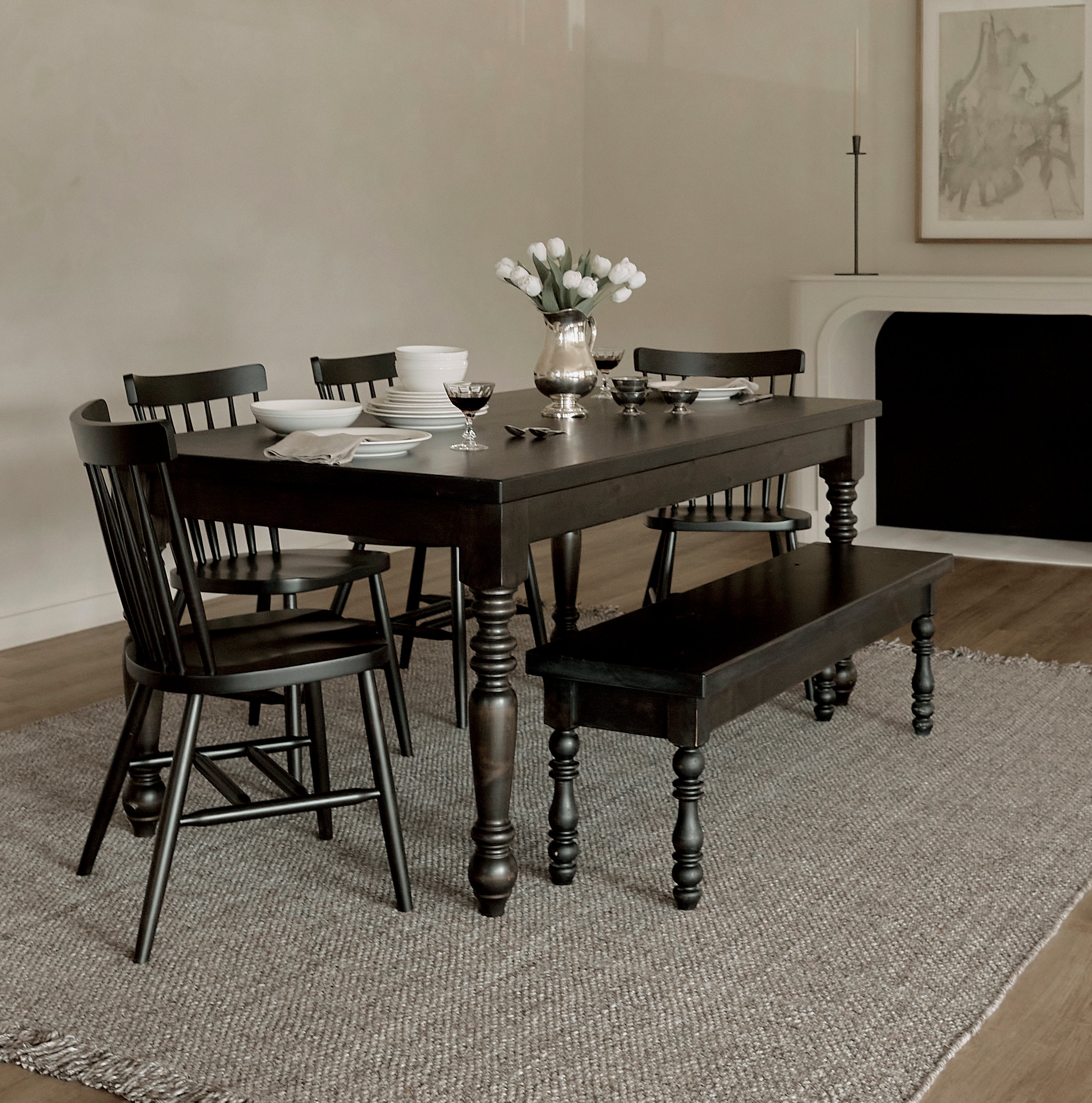
When choosing an extendable dining table, the top gets most of the attention. It is where meals happen, where the wood grain is seen, and where the leaf creates more room for guests. But the base quietly determines much of what the table is like to live with.
A pedestal base and a legged base can both be beautiful, sturdy choices. The difference is not a matter of one being inherently better. It is about how your household uses chairs, how the room flows, how often you host, and whether you want the table to feel more flexible or more structured.
As you compare designs, browse expandable dining tables. Each table should be considered in its closed and expanded forms, with the specific base, dimensions, and chair plan in view.
The Base Changes How Seating Actually Works
It is easy to count the space around a tabletop and assume that every point around the edge can become a chair. In practice, legs, supports, chair arms, and the way guests slide into place all affect usable seating.
The first question is not “How many people can this table seat?” It is “Where will the people in my home sit, and will those seats feel natural when the table is closed and open?”
Pedestal bases keep the perimeter clearer
A pedestal base supports the table from a central structure rather than from four corners. This can give chairs more freedom around the edge, particularly on round and oval tables. It may be easier to adjust a chair slightly for an unexpected guest or to change the arrangement when the table expands.
That freedom can be appealing in a household where seating changes often. Children may bring a friend home, family members may join a casual dinner, or the number of chairs may shift from weekday to weekend. With fewer corner legs competing for space, the perimeter can feel more adaptable.
Legged bases establish a clearer seating rhythm
A four-leg table has a familiar, grounded structure. The legs help define where chairs sit most comfortably, which can make a dining arrangement feel orderly and settled. In a formal dining room or a household with a consistent chair layout, that structure can be part of the appeal.
The practical consideration is planning around the legs—especially when the table is extended. A chair may need to sit between two legs rather than exactly where a person would naturally place it. This is not a flaw; it simply needs to be included in the seating plan before you order.
Consider the Shape Alongside the Base
Base choice and tabletop shape work together. A pedestal that feels ideal beneath a round table may create a different experience beneath a long rectangular top. Likewise, a legged base can bring beautiful proportion to a rectangle while asking for more deliberate chair placement.
Pedestals often complement round and oval tables
Round tables naturally invite people to gather around a shared center. A central base reinforces that feeling and avoids legs at the perimeter, where they can otherwise interrupt chair placement. When the table expands from round to oval, a well-designed pedestal arrangement can preserve a sense of openness while the top gains length.
Still, do not assume that every pedestal offers the same clearances. The structure beneath the table, the chair width, and the expanded configuration all matter. Review the exact product details and test the seating arrangement with your preferred chairs.
Legged bases often suit rectangular tables beautifully
On a rectangular table, legs can emphasize the table’s length and give the piece a classic, architectural presence. They can feel especially at home in a longer dining room or beside chairs with a more traditional silhouette.
When the leaf is inserted, look carefully at the final position of the legs and supports. The expanded table may create new seating zones or change where end chairs work best. Use the actual product dimensions rather than assuming a standard arrangement.
Plan for the Closed Table and the Open Table
An extendable table has two lives. The base must work with both.
Test everyday chair placement first
Map the closed table on the floor with painter’s tape, cardboard, or a sheet. Then place chairs—or objects with similar dimensions—where people will normally sit. Sit down, pull chairs back, and walk around the room.
This test can reveal whether a base will make the everyday setup easier or more constrained. It can also show whether armchairs, deeper upholstered chairs, or a bench are realistic choices for the table you want.
Test the expanded seating plan, not only the expanded top
Next, mark the full extended configuration. Add the extra chairs you would use for a gathering. Check the routes to doors, the kitchen, and any storage furniture that needs to remain accessible.
For a legged table, note whether each extra chair has a clear place between supports. For a pedestal table, confirm that the base does not interfere with feet or chair placement in the particular configuration. Every design is different, so the product page and a full-size room test are more reliable than a general rule.
Think About the Way Your Household Gathers
The right base often becomes obvious when you picture an ordinary meal and a larger gathering side by side.
A pedestal may be a strong fit if you value flexible seating
A pedestal table may be especially worth considering if:
- The number of people at the table changes often.
- You want a round or oval table with fewer obstacles around its edge.
- You use a mix of chairs or sometimes add a chair for an extra guest.
- You want the table to feel open and conversational in everyday use.
These are tendencies, not guarantees. A particular chair can still be too wide or too deep for a particular table, and a particular base can have its own seating considerations. Test the actual pairings whenever possible.
A legged table may be a strong fit if you prefer defined places
A legged table may be especially worth considering if:
- You have a consistent set of chairs and a regular seating arrangement.
- You love the grounded, familiar look of a four-leg dining table.
- Your room’s proportions suit a rectangular or more linear table.
- You are comfortable planning seating positions around the table’s supports.
In the right room, legs provide more than support. They give the table a visual rhythm that can make the whole dining area feel established and enduring.
Do Not Separate Comfort from Style
The base is both a practical and visual decision. A pedestal can feel sculptural and central, especially beneath a round or oval top. A legged table can feel tailored, traditional, modern, or farmhouse-inspired depending on its proportions and joinery. The wood species and finish will influence that impression as much as the base itself.
Start with the practical requirements, then let the design express the home. A table should not feel like a compromise between beauty and usefulness. The best one will make the room look right while quietly supporting the way people sit, move, and linger there.
Look at the table from adjoining spaces
In an open-concept home, you may see the table from the kitchen, living room, or entry. In a dedicated dining room, you may see it through a doorway or from a nearby hall. Consider how the base reads from those angles.
A pedestal may create a cleaner visual center. A legged table may add a stronger sense of length and structure. Neither response is universal, but it can help to stand in the connected spaces and imagine the room with the table closed and fully open.
Choose Chairs with the Base in Mind
The table and chairs are a single system. Before finalizing either, consider the whole arrangement.
Measure chair width, depth, arm height, and the space needed to pull each chair back. Ask whether the chairs will tuck comfortably under the table and whether their legs or arms interfere with the table’s supports. If you plan to use end chairs, include those in both the closed and expanded layout.
Avoid relying on a typical seat count alone. Two households can use the same table differently because their chairs, room dimensions, and gathering patterns are different. A thoughtful chair plan makes the table feel generous; an improvised one can make even a large top feel crowded.
Questions to Settle Before Ordering
Before selecting a base, answer these questions:
- Where do regular chairs sit when the table is closed?
- Where will extra chairs sit when it is expanded?
- Do the table supports interfere with any likely seats?
- Does the base allow enough room for the chairs you love?
- Can people move through the dining area with chairs pulled out?
- Does the base feel right with the table’s shape and the room’s proportions?
- Have you checked the product-specific dimensions and configuration details?
Once you have a clear answer, the choice becomes less about a category label and more about a table that belongs in your home. Browse expandable dining tables to compare designs with your seating plan nearby.
Next, consider reading How to Choose an Extendable Dining Table for an Open-Concept Home.
Frequently Asked Questions
Do pedestal dining tables seat more people than legged tables?
Sometimes a pedestal makes chair placement more flexible because there are no corner legs, but capacity depends on the specific tabletop dimensions, base design, chairs, and room. Plan the actual seating arrangement rather than assuming one base always seats more.
Are pedestal tables better for round extendable tables?
A pedestal can work especially well with a round or oval table because it keeps the perimeter clear. However, the right choice depends on the particular design, chair plan, and expanded configuration. Verify clearances on the product page and in your room.
Can a legged extendable table work for a large family?
Absolutely. A legged table can be an excellent family table when its closed and expanded seating arrangements are planned around the supports. Test the full layout with chairs before ordering.
Should I choose the table or chairs first?
Ideally, plan them together. If you already own chairs you love, measure them and use those dimensions while choosing the table. If you are choosing both, confirm that their widths, depths, arms, and pull-back space work with the base in both table configurations.