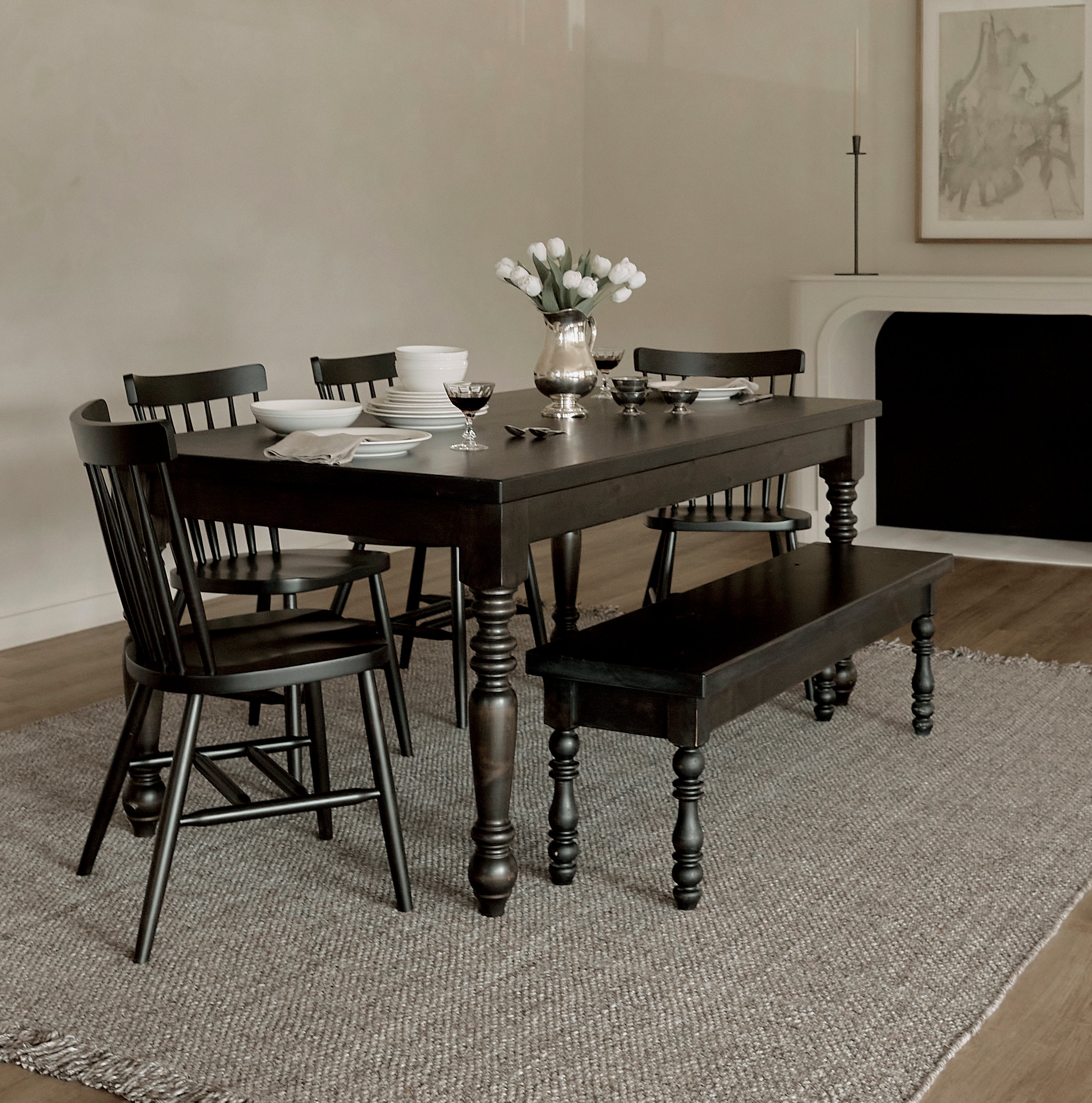
A dining table for a large family has to do more than seat a crowd once or twice a year. It may hold weeknight dinners, homework, birthdays, visiting relatives, and the unplanned moments when one more person stays for coffee.
That does not necessarily mean the table should occupy its largest footprint every day. An extendable dining table gives a busy household the option to choose an everyday size that suits the room, then make more space when more people gather. The important part is choosing with both versions in mind: the table you live with closed and the table you rely on when it is open.
Start by exploring expandable dining tables. Each is made to order in solid hardwood, so it is worth taking time to plan the size, shape, base, and finish around the way your family actually gathers.
Begin with Your Normal Week, Not Your Biggest Holiday
The largest gathering matters, but it should not be the only event driving the decision. If the table is oversized for ordinary meals, it can make the dining room feel crowded and turn a useful family space into a room people move around carefully.
Think first about the people who sit down together most often. Then consider the occasions that call for the extension: grandparents at Sunday dinner, children home from college, a birthday meal, or friends who become part of the family circle. This gives you a much more useful definition of “enough” than choosing a table simply because it is the largest one available.
Make two seating lists
Write down the number of people you need to seat on a typical week and the number you want to accommodate on a busy but realistic gathering day. Treat those as two separate requirements.
The closed configuration should feel generous for daily life. The open configuration should give guests a place without making the meal feel like a logistical exercise. You do not need a chair permanently assigned to every possible guest, but you do need a believable plan for how the table, chairs, and surrounding room will work when everyone arrives.
Consider how the table is used between meals
In many homes, the dining table is also a homework station, a place to sort mail, a surface for projects, or the natural landing point for a long family conversation. A table that is comfortable for daily use earns its place far beyond dinner.
That is one of the quiet benefits of choosing an extension table thoughtfully. It can support the household at its normal rhythm instead of requiring the whole room to be scaled to the rarest occasion.
Choose the Closed Size for Everyday Ease
For a large family, it can be tempting to skip straight to the fully expanded size. Resist that impulse until you have tested how the closed table belongs in the room.
Map the table, chairs, and paths together
Use painter’s tape, cardboard, or a sheet to mark the table’s approximate closed footprint on the floor. Add the depth of the chairs you plan to use. Then walk the routes people use when the house is active: from the kitchen to the dining area, through a doorway, around an island, or past a sideboard.
This is a practical test, not a design exercise. Can someone pull out a chair while another person passes behind them? Can a child get to their seat without everyone standing up? Can you still use the door or cabinet beside the table? The right closed size leaves the room usable even during the busiest part of an ordinary day.
Give each regular seat a real place
Avoid planning the daily table around theoretical capacity alone. The table’s base, the chair width, and the room’s paths determine whether each place setting feels comfortable.
A substantial chair with arms needs a different amount of room than a slim dining chair. Likewise, a bench can increase flexibility for a household with children, but it should be chosen because it suits how the family sits—not simply because it appears to save space. The goal is a meal where people can settle in comfortably, not a count achieved by squeezing seats together.
Plan the Expanded Table Like a Real Event
The extension is not a backup plan. For a large family, it is part of the table’s regular value. Test it with the same seriousness you give the everyday configuration.
Mark the full open footprint
Once the closed size feels right, map the fully extended table on the floor. Include chairs at every anticipated seat, not just the tabletop. Check the path to the kitchen, the nearest door, and any furniture that remains in place during gatherings.
The room does not have to feel spacious when everyone is seated. A full family dinner should feel lively. But guests should be able to sit down, get up, and move through the home without the table making the evening unnecessarily difficult.
Think through the extra chairs before you need them
Where will the additional chairs live when the table is closed? Will they be used elsewhere in the home, stored nearby, or brought in only for larger meals? This is an easy detail to overlook until the first gathering, when a table that expands beautifully is paired with chairs that have nowhere practical to go.
Choose the chair plan alongside the table plan. A consistent set can create a more formal room; a small number of complementary occasional chairs can make hosting easier without overfilling the dining area on ordinary days.
Use the exact dimensions of the design you are considering
Every extendable table has its own closed and expanded dimensions. Review those specifications on the product page, and measure from them—not from a general impression of scale in a photograph.
For example, the James & James Expandable Round Heirloom Dining Table is approximately 48 inches round when closed and approximately 72 inches oval with its leaf inserted. Those proportions may suit one household beautifully and be too large or too small for another. What matters is testing the exact configuration you intend to order in your own room.
Let the Room Guide the Shape
The right shape helps a larger table work with the room instead of against it. It affects circulation, sightlines, and the way family members relate to one another across the table.
Round and oval shapes can feel more conversational
A round table can make it easier for everyone to see and speak with one another at everyday meals. In a room where people pass close to the table, its lack of corners can also soften circulation. When a round design expands to an oval, it can offer extra length while preserving that approachable feel.
The expanded oval still needs its own room plan, especially at each end. Measure it carefully and make sure end seating and passageways remain workable.
Rectangular shapes can serve a longer room
In a long dining room or an open-plan space with a clear linear layout, a rectangular table may make excellent use of the available length. It can provide a natural arrangement for regular family meals and extend along the room’s strongest dimension for larger gatherings.
The crucial question is not which shape seats more people in the abstract. It is which shape allows your particular room to remain comfortable with chairs pulled out and people moving around it.
Choose a Base That Supports Flexible Seating
For a family table, seating rarely stays perfectly fixed. A child may bring a friend home, two relatives may join an ordinary meal, or the end seats may need to work differently from one gathering to the next. The base has a real effect on how easily that flexibility is achieved.
Pedestal bases can open up the perimeter
A pedestal base can allow more freedom around the table’s edge because there are no corner legs to work around. That can be particularly helpful when chair placement changes often or when you want a round or oval table to accommodate different groupings with ease.
Legged tables create a more defined seating rhythm
A four-leg table can bring a classic, grounded presence to a dining room. Its legs also establish natural zones for chairs. That may be exactly right for your household, but it should be considered when planning the expanded seating arrangement. Review the specific design and test chair placement before finalizing your order.
The choice is not about one base being universally better. It is about matching the base to the way your family gathers and the chairs you hope to use.
Make Solid Wood Part of the Long-Term Decision
A large family table sees real life. It will carry dishes, schoolwork, celebrations, and the small marks that come from being used rather than preserved. That is why material and craftsmanship deserve as much attention as seating capacity.
James & James builds its expandable dining tables by hand in solid hardwood. Solid wood brings natural character to the room and can be maintained over time, but it is still a natural material. Learn the product-specific care guidance, choose a finish that suits the home’s light and daily use, and set reasonable expectations for the warmth and variation that make wood feel alive.
Select a finish for your home, not only a sample
Look at surrounding floors, cabinetry, upholstery, and the amount of daylight in the room. A finish should help the table feel at home in the space while still having the character you want to live with for years.
For a household with a lot of activity, it is also helpful to ask how you want the table to age. Some families prefer a finish and species that make the occasional sign of daily life feel less noticeable; others welcome the patina that comes from years of gathering. Neither approach is wrong. A clear expectation is the important thing.
Confirm the Leaf Plan Before Ordering
An extension is only valuable when the household can use it comfortably. Before placing an order, review the product’s leaf details and care guidance carefully.
Ask where the leaf will be stored when it is not in use, whether that location is cool, dry, and protected from direct sun, and who will typically set up the table before a gathering. Avoid assuming all leaf systems work the same way. The product page is the source of truth for the specific table you choose.
If a leaf needs time to acclimate after storage, allow it rather than forcing the fit. Simple habits like this help an extendable solid wood table remain a dependable part of the home over time.
Questions to Ask Before You Choose
Before deciding, make sure you can answer these questions with confidence:
- How many people sit at the table on a normal week?
- How many people do we realistically host at one time?
- Does the closed table leave the room easy to use every day?
- Does the open table allow people to sit, stand, and move through the space comfortably?
- Where will extra chairs and the leaf live when they are not in use?
- Which shape works with the room’s proportions and traffic paths?
- Does the base support the seating flexibility we need?
- Have we reviewed the exact dimensions, configuration, and care guidance for the product we are considering?
When those answers are clear, you are no longer choosing a table merely by its maximum capacity. You are choosing a piece of furniture that can meet your family where it is now and continue to make room for the people who gather around it.
Browse expandable dining tables to compare designs with your room plan in hand.
Next, read Round vs. Rectangular Extendable Dining Tables: Which Shape Is Right for Your Home?
Frequently Asked Questions
What size extendable dining table is best for a large family?
The best size is one that seats your regular household comfortably when closed and your realistic larger gatherings when open. Measure the exact closed and expanded dimensions in your room, with chairs and pathways included, before deciding.
Should I buy an extendable table based on holiday seating?
Holiday seating should inform the decision, but it should not make the room difficult to use every other day. An extendable table is useful because it lets you plan for both needs: everyday comfort and occasional capacity.
Is a round or rectangular extendable table better for a large family?
It depends on the room and how your family gathers. Round and oval tables can support conversation and soften circulation; rectangular tables can use a longer room efficiently. Compare the exact expanded footprint of each shape in your space.
How should I store a solid wood table leaf?
Follow the instructions for the specific table. We advise storing leafs flat in a cool, dry, shaded place. Reconfirm the current guidance for the product you choose.