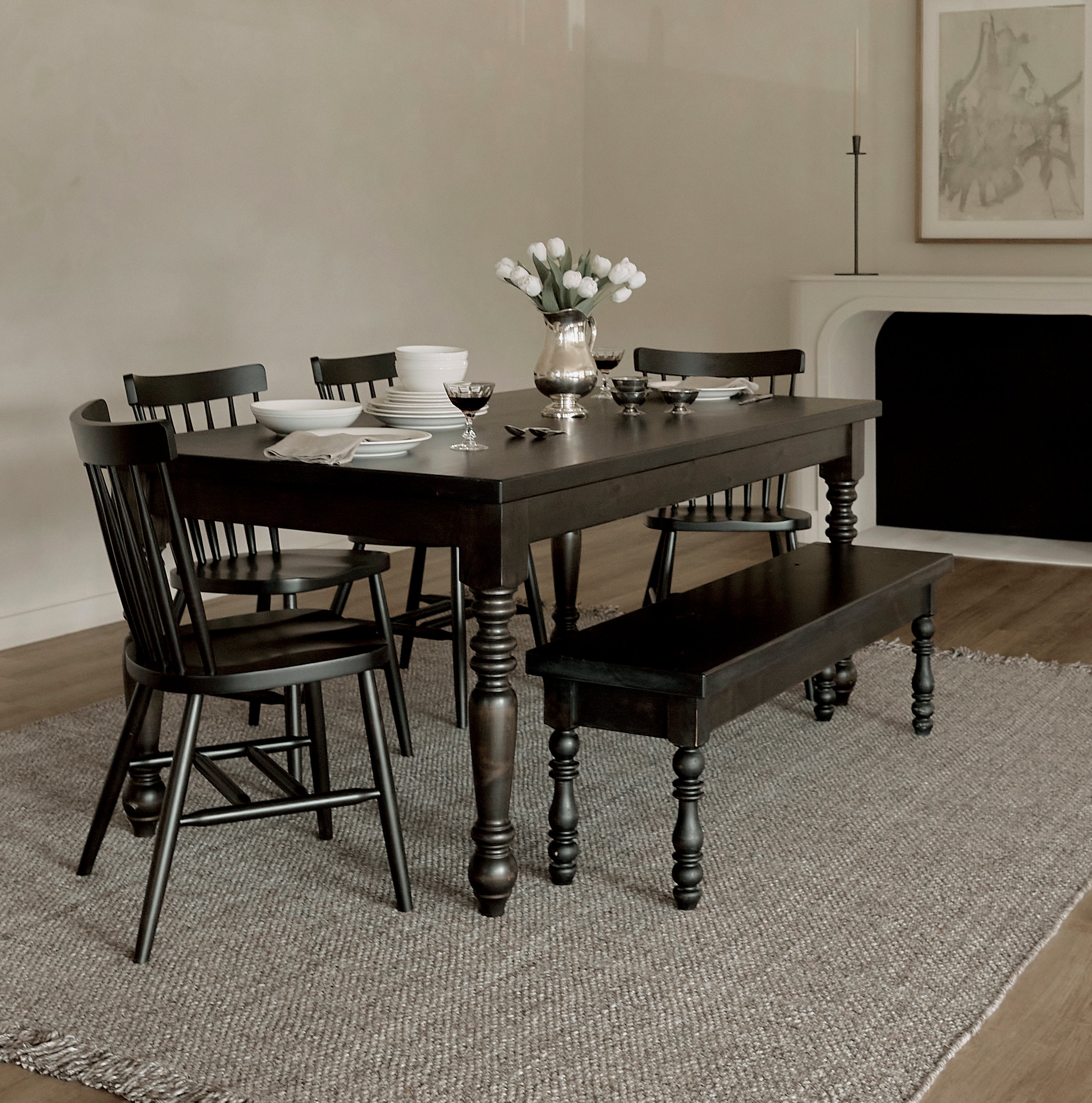
Choosing an extendable dining table size means planning for two versions of the same room. The table should feel beautifully proportioned for an ordinary meal, then provide the additional seating you need when family visits, holidays arrive, or the evening gathers more people than expected.
The mistake is treating only one of those sizes as real. A table that fits perfectly when closed but overwhelms the room when open has not solved the problem. A table that seats a crowd when expanded but feels too large every day has simply made the room work harder than it should.
The right extendable table gives you both: an everyday footprint that feels natural and an expanded configuration that remains comfortable when it matters. Explore our extendable dining tables as you work through the decisions below.
Begin With How Many People You Seat Most Often
Start with ordinary life. How many people use the table on most days? Is the dining room also a place for homework, laptop work, crafts, or a quiet cup of coffee? Does the room need to remain open for a path between the kitchen and living area?
Those questions determine the size that should guide your daily experience. An extendable table is most useful when the closed dimensions are genuinely right for the household—not merely the smallest size that can be expanded later.
Choose an everyday size you will enjoy living with
It is tempting to choose a large closed table because it seems more prepared for company. But a dining room is used far more often between gatherings than during them. The table should allow people to move around it, pull out chairs comfortably, and use the room without feeling that every activity is happening around an obstacle.
Mark the closed dimensions on the floor before you order. Use painter’s tape, boxes, or the chairs you already own. Then walk through the room as you normally would. Open doors. Stand at the counter or kitchen entry. Look at the table from the adjoining living area. The size should feel intentional, not merely possible.
Plan for the household you have, not only the gathering you imagine
The everyday guest count is the foundation. If four people gather around the table most nights, the closed form should be comfortable for four. If six are regularly present, plan for six first. The expanded form then becomes the generous answer for the occasions that need more seats.
This does not mean an extendable table cannot be substantial when closed. In a large dining room, a generous everyday table may be exactly right. The question is simply whether you will value the open footprint often enough to live with it every day.
Then Plan for the Expanded Size
The expanded table needs its own room plan. Do not assume that a leaf creates “extra space” without changing how the dining room works. It changes the table’s footprint, the location of chairs, the paths guests use, and the room available for serving and conversation.
Mark the full expanded footprint
Once you have tested the closed size, mark the expanded dimensions on the floor. Include the chairs, not just the tabletop. Then test the paths around the arrangement while imagining the room at its busiest: guests seated, chairs pulled back, food moving from the kitchen, and someone walking past another guest.
The expanded configuration does not need to feel as open as the closed one. It should still feel usable and welcoming. If the table makes doorways difficult to use or leaves no realistic path through the room, consider a smaller expansion, a different shape, or a room arrangement that better supports the larger size.
Use product-specific dimensions—not generic assumptions
Every extendable table works differently. Some gain length, some change shape, and the amount of expansion varies by design. The exact dimensions on the product page should guide the final decision.
For example, James & James’ Expandable Round Heirloom Dining Table is approximately 48 inches round when closed and expands to approximately 72 inches oval with its leaf inserted. That example shows why planning both forms matters: the same table creates a very different dining arrangement once it is open. Other designs have their own closed and expanded dimensions, so always review the specifications for the table you are considering.
Measure the Whole Dining Area, Not Only the Open Floor
A table is never the only thing in the room. Chairs, doors, sideboards, cabinetry, rugs, and pathways all affect what size will feel right.
Make space for chairs in use
The dining experience happens around the table as much as at it. Chairs need room to pull back, people need space to sit and stand, and guests need a reasonable path behind one another. Measure and test for the full chair footprint, especially with armchairs or deeper upholstered seating.
The shape and base of the table also matter. A pedestal can create more flexibility around the perimeter because there are no corner legs to navigate. A legged table may offer the classic structure you prefer, but the leg placement and apron can influence where chairs sit most comfortably.
Account for doors, cabinets, and natural paths
Look at how the room connects to the rest of the home. Is there a door that must swing open near the table? A cabinet that needs access? A hallway route from the kitchen to the living room? The table should support those movements, not turn them into a daily negotiation.
This is especially important in open-plan homes. An extendable table can be an excellent choice because it preserves a smaller everyday footprint. But the expanded size still needs to work within the larger flow of the home—not only within the boundaries of the dining area.
Choose the Shape With Both Sizes in Mind
Shape influences how an extendable dining table occupies the room in its closed and open forms. The right shape should make sense in both configurations.
Round extendable tables
A round table can create a warm, conversational center for everyday meals. It often feels at home in a balanced room or a dining area where people move around several sides of the table. When a round table expands, the resulting shape may become longer, which can provide more seating while changing the way the room’s circulation works.
If you are considering a round expandable table, compare its closed diameter with the open dimensions and shape. The everyday circle may be ideal for the room, but the open form needs to have a clear place too.
Rectangular extendable tables
Rectangular extendable tables are often a natural fit for longer rooms. They follow the room’s direction when closed and can add useful length for larger gatherings. The important consideration is the space at both ends, as well as the side aisles where chairs and guests need to move.
An expanded rectangular table can be wonderfully practical for a large dinner. It simply needs a room that can welcome the extra length without making the table feel like it has taken over the space.
Let the room decide, not seat count alone
Two tables may seat a similar number of people and still ask very different things of the room. A large round table uses width in every direction. A long rectangular table uses length and needs clear side paths. Choose the shape that keeps the room most useful at both sizes.
Think About the Base and the Chairs Together
Size is not only length and width. It is also the usable space beneath and around the table.
A pedestal may offer more flexibility
Pedestal bases can make chair placement more adaptable, particularly around a round table. With no corner legs, guests may have more freedom to shift seats as the table expands or as a larger group gathers.
That does not make a pedestal the right answer for every room. The table’s visual weight, proportions, and expanded form still need to suit the space. But if you expect seating to change often, base style is worth considering early.
Legged tables need deliberate chair planning
A four-leg table can bring a grounded, traditional presence to the dining room. It may also define the positions where chairs fit most comfortably. Before choosing, review the product specifications for the exact table—particularly the distance between legs and the clearance created by the apron or support structure.
Those details help you understand how the table will feel when every place is occupied. A seating plan that works only in theory is not enough; the table should feel comfortable when the room is full.
Do Not Forget the Leaf’s Practical Role
The leaf is part of the size decision because it is what changes the table. Before ordering, understand where it will live when it is not in use and how the table’s extended form will become part of your hosting routine.
Plan leaf storage before the table arrives
If the leaf stores separately, choose a place for it that is clean, flat, dry, and shaded. James & James recommends storing a wooden leaf flat rather than standing it upright. This protects the piece and makes it easier to use when the next gathering arrives.
You do not need a complicated storage solution. You need a practical one that fits the way you live. If the leaf is easy to access and cared for properly, the table’s flexibility is much more likely to be used and enjoyed.
Confirm the extension details for the exact design
Do not assume all leaves function the same way. Confirm the table’s closed and open sizes, the resulting shape, its product-specific configuration, and any care guidance before you make the final choice. A knowledgeable decision at this stage prevents the most common surprise: realizing the expanded table needs more room than the dining area can comfortably give it.
Use Custom Sizing to Solve a Real Room Problem
Made-to-order furniture is most valuable when it answers a clear question from the room. Perhaps the space has the length for a generous table but needs a narrower width. Perhaps the family needs a certain everyday capacity, but a slightly different expanded dimension would preserve a doorway. Perhaps the table needs to work around a built-in, bay window, or open kitchen path.
James & James expandable tables are made to order, and available size, finish, and material options vary by design. If you are deciding between dimensions, bring the room measurements, photographs, and any floor-plan information into a conversation with the design team. The goal is not to customize for its own sake. It is to choose a table that belongs in the room at both of its sizes.
Questions to Ask Before You Choose a Size
Before finalizing an extendable dining table, ask:
- How many people will use the table most days?
- How many people do we host regularly enough to plan for them?
- Does the closed size leave the room comfortable and easy to move through?
- Does the expanded size still allow chairs, serving, and natural traffic flow?
- Have we checked the exact product dimensions in both configurations?
- Does the shape work with the room when the table is open as well as closed?
- Does the base support the chair placement we need?
- If the leaf stores separately, do we have an appropriate place to keep it?
When the answer to each is clear, the right size usually becomes clear too.
Find an Extendable Table That Fits Every Version of the Room
The right extendable dining table does not ask you to choose between everyday comfort and generous hosting. It gives the room a measured, useful footprint when life is quiet and more space when people gather.
Explore our extendable dining tables to compare shapes, sizes, bases, finishes, and made-to-order options for your home.
Consider reading Extendable Dining Tables for Small Dining Rooms.
Frequently Asked Questions
Should I choose the table size for everyday use or large gatherings?
Start with everyday use. The closed size should feel right for the people who use the room most often. Then choose an expanded size that can accommodate the gatherings you host regularly without making the room unusable when the table is open.
How do I know whether an expanded dining table will fit?
Mark the full expanded footprint on the floor, include chairs, and test the routes around it. Use the exact product dimensions for the table you are considering rather than relying on a general rule.
Does a pedestal or legged base change the usable size of a table?
Yes. A pedestal can offer more flexible chair placement around the perimeter, while legs and an apron can define where seats fit most comfortably. Review the specifications of the exact table before choosing chairs and dimensions.