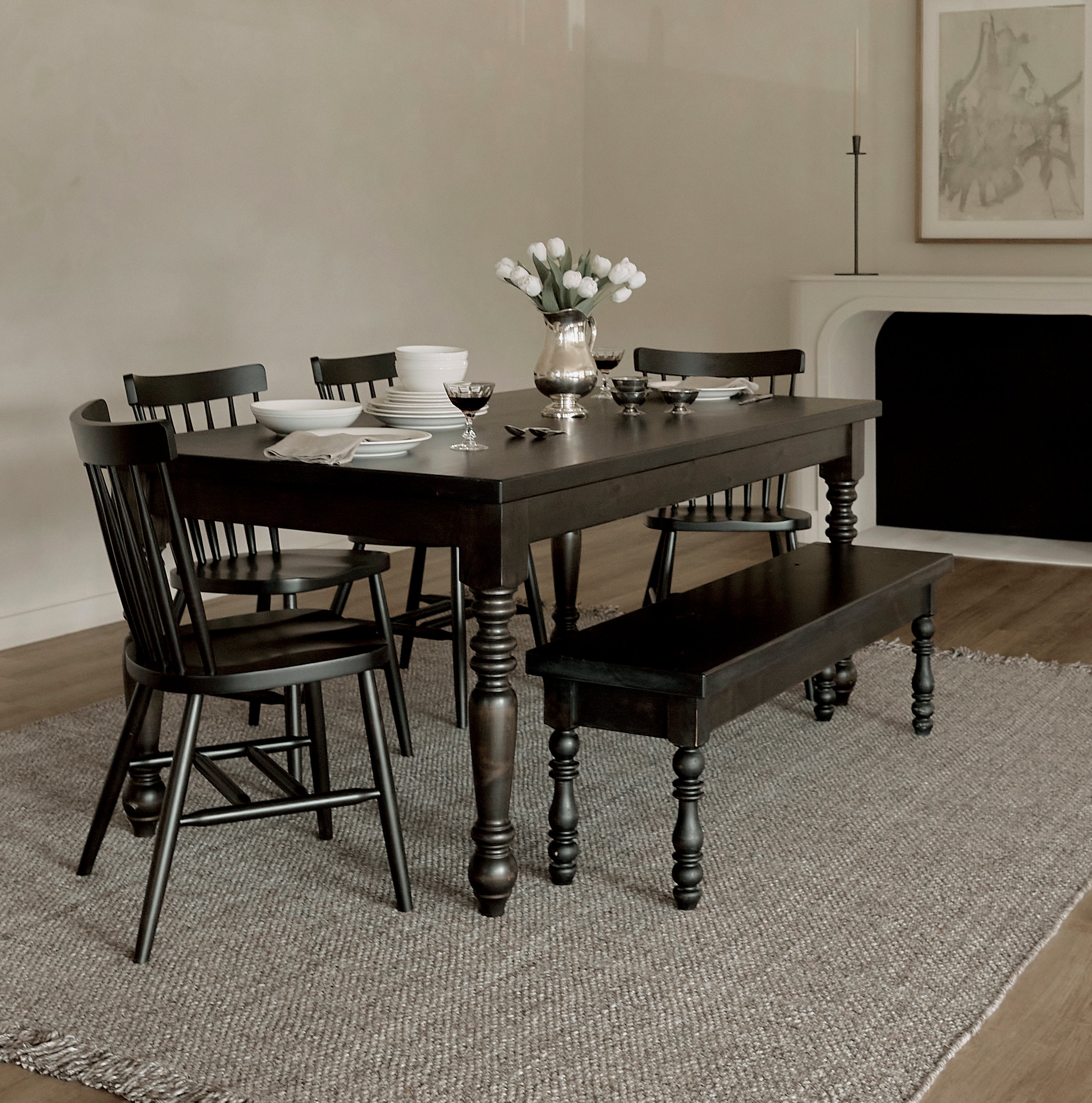
A small dining room does not need a small life. It simply needs furniture that understands the difference between everyday space and the occasions when more people gather.
That is where an extendable dining table can be especially valuable. It allows the room to feel open, easy to move through, and right for the household most days. Then, when family visits or dinner grows beyond the usual number of place settings, the table can offer more room without requiring the dining area to carry that larger footprint year-round.
The key is choosing an expandable table that genuinely fits in both forms. Explore our extendable dining tables as you plan for a dining room that feels generous without becoming crowded.
Small Does Not Mean You Should Buy the Smallest Table
In a compact room, the instinct is often to choose the smallest table that will fit. That can leave the dining area feeling underscaled or limit how comfortably the household can use it. The better goal is a table with the right everyday footprint—one that gives people a comfortable place to sit while preserving the room’s natural movement.
An extendable table makes that balance possible. Instead of permanently sizing the room for the largest gathering, you can choose a table that belongs in the space most of the time and grows only when the occasion asks for it.
Begin with the room’s real paths
Look at how people actually move through the dining area. Is it between the kitchen and living room? Near a door, hallway, or cabinet? Does the table sit in a dedicated dining room, a breakfast nook, or an open-plan zone that needs to stay visually calm?
Those paths are as important as the table dimensions. A table that fits within the open floor area may still be wrong if chairs block a doorway or turn the route through the home into a narrow passage. Before ordering, mark the likely footprint on the floor and walk through the room at the times it is busiest.
Plan for chairs, not only the tabletop
The tabletop is only the starting point. Chairs need room to pull back; guests need space to sit and stand; and the dining area needs a workable route around the full arrangement. In a small room, the difference between a table that fits and a table that works is often the chair plan.
Use the chairs you have, or the approximate dimensions of the chairs you intend to buy, when you test the layout. Armchairs and deeper upholstered chairs can need more room than a slim side chair. The base of the table matters too: a pedestal may offer more flexible seating around the perimeter, while a legged table can define where chairs sit most comfortably.
Choose the Right Everyday Footprint First
The closed size of an extendable table should make the room feel comfortable on an ordinary day. It should not be chosen only because it can become larger later.
Mark the closed configuration on the floor
Use painter’s tape, boxes, a sheet, or the chairs you already own to create the table’s approximate closed footprint. Then live with it for a few minutes. Open the door. Walk from the kitchen. Sit down in each place. Look at the table from the adjoining room.
If the closed form already makes the space feel tight, the expanded form is unlikely to solve the problem. Consider a smaller closed size, a different shape, or a more flexible seating arrangement.
Let the table earn its place every day
A well-chosen table should make the small room feel more useful, not more filled. It may become the place for a quiet breakfast, a work surface during the day, or the center of a compact kitchen-dining area. The more naturally it supports those everyday moments, the more valuable the extension will feel when guests arrive.
This is why a table that is modest when closed can be a better choice than a larger fixed table. The room retains its ease, and the extra capacity remains available when it matters.
Test the Expanded Size Just as Carefully
The expanded configuration is the promise of an extendable table, but it must be a promise your room can keep.
Mark the full open footprint
After testing the closed size, mark the table at its full expanded dimensions. Include chairs. Then test the routes through the room again. Can guests sit comfortably? Can someone move behind a chair? Can the kitchen, doorway, or sideboard still be used?
The room does not need to feel empty when the table is open. It should still feel possible to host with comfort and good humor. If the expanded form blocks a door or leaves no useful path, consider whether a smaller expansion or a different shape would serve the room better.
Use exact product specifications
Every expandable table has its own dimensions and configuration. Some add length, some change shape, and the amount of expansion varies by design. Do not rely on a general image or a guess about how much room a leaf will add.
For example, our Expandable Round Heirloom Dining Table is approximately 48 inches round when closed and expands to approximately 72 inches oval when its leaf is inserted. That may be a wonderful transformation in one small dining room and too much for another. The point is not that every room should accommodate those dimensions; it is that the open form needs its own plan.
Choose a Shape That Helps the Room Breathe
In a small dining room, shape can make a noticeable difference in how the room feels. It cannot replace proper dimensions, but it can refine traffic flow and visual weight once the size is right.
Round tables can soften circulation
A round table has no corners to navigate, which can make movement feel easier in a compact dining area or an open-plan home. It also creates a conversational center for everyday meals, which can make a smaller room feel welcoming rather than limited.
When a round table expands, pay close attention to the resulting shape and dimensions. The closed circle may feel effortless in the room; the expanded form needs to have enough length and surrounding space to work just as well when guests are present.
Rectangular tables can use a longer room well
If the dining room is longer than it is wide, a narrow rectangular table may make better use of the available length. It can follow the room’s natural direction while preserving useful side paths, provided the table’s width and chair arrangement are carefully planned.
An expandable rectangular table can be a practical choice when the room has length to spare but not width. Just test the full extended length and the space at both ends before making the final decision.
Keep the visual weight in proportion
In a small room, the table is highly visible. A substantial base, dark finish, or large top can be beautiful, but all three together may make the dining area feel heavier than you want. A lighter finish, a more open base, or a softer shape can help the room feel balanced while still giving the table real presence.
There is no rule that a compact room must use light wood or minimal furniture. The right choice is simply the one that gives the room enough visual and physical breathing space.
Make Seating More Flexible
The seating plan can determine whether a small dining room works. The table may be the anchor, but the chairs are where the space is gained or lost.
Choose chairs with the table’s base in mind
Review the product-specific clearances and base style before choosing chairs. A pedestal can make seating more flexible around a round table because there are no corner legs. A four-leg table may be the look you love, but its supports influence where chairs fit and how easily guests can slide into place.
Chairs do not need to match the table exactly, but they need to work with it physically. Consider their depth, arms, visual weight, and how they will move when the table is closed and open.
Consider a bench only when it solves a real problem
A bench can tuck beneath a table when not in use, which may help a compact room feel more open. It can also offer flexible seating for family meals or casual gatherings. But it is not automatically the best choice for every household. Some people prefer the back support and individual access of chairs.
If a bench would make the room more useful, confirm that the table’s base and clearance allow people to sit comfortably. It should improve the room’s flexibility, not introduce a cramped compromise.
Avoid overfurnishing around the table
In a small dining room, every surrounding piece needs a purpose. A sideboard, rug, bar cart, or large statement light can be beautiful, but too many pieces can make the table feel trapped. Give the dining area enough open space that the table can expand when needed without asking the rest of the room to disappear.
Use Finish and Light to Make the Room Feel More Open
The right finish can help a small dining room feel more balanced. This is not about choosing a pale color by default. It is about deciding how much visual weight you want the table to carry.
Lighter finishes can preserve openness
A lighter finish may keep a compact room feeling airy, especially when it is paired with pale walls, natural light, or light-to-medium flooring. It can let the grain of the wood show while allowing the table to feel warm rather than dominant.
Deeper finishes can still work beautifully
A darker finish can give a small dining area richness and depth, particularly when the room has enough light or contrast through upholstery, a rug, walls, or cabinetry. The key is to balance the table with the rest of the room so it feels like an anchor rather than a visual wall.
James & James offers wood and upholstery samples so you can compare real materials in the room before committing. View them at different times of day and beside the flooring, cabinetry, and chair fabrics that will surround the table.
Make the Table Work for Hosting, Not Just Seating
Hosting in a small dining room does not need to mean creating a formal banquet layout. It means making people feel welcome within the space you have.
An extendable table helps by giving you more surface area and seating when you need it. The rest comes from thoughtful planning: chairs that fit, a serving arrangement that does not block the only path, and a room that has enough flexibility to shift slightly for the evening.
If hosting is a regular part of your life, choose a table whose expanded size you will genuinely use. If the table only works when every other piece of furniture is moved out of the room, it may not be the right expansion for the home.
Questions to Ask Before You Choose
Before choosing an extendable table for a small dining room, ask:
- Does the closed size leave room for everyday movement and chair use?
- Does the expanded size still allow guests to sit and move comfortably?
- Where do doors, cabinets, and main paths sit in relation to the table?
- Which shape uses the room’s length and width most naturally?
- Does the base support the chair placement we need?
- Would a bench or a slimmer chair make the seating more flexible?
- Have we tested both configurations on the floor with chairs included?
- Have we reviewed the exact product dimensions and extension details?
The right table will not make a small room feel larger through a trick. It will make the room feel more capable because every inch has been considered.
Find an Extendable Table Made for a Smaller Room
A small dining room can still be a place for everyday meals, celebrations, and the people you love to gather. The right extendable table preserves the room’s ease when it is closed and gives it more generosity when it is open.
Explore our extendable dining tables to compare solid hardwood designs, shapes, dimensions, and made-to-order options for your home.
Next, read How to Choose an Extendable Dining Table for a Large Family.
Frequently Asked Questions
Is an extendable dining table good for a small dining room?
It can be an excellent choice when the closed size fits the room comfortably and the expanded size is planned carefully for occasional hosting. Test both configurations with chairs and circulation before choosing.
What shape extendable table is best for a small room?
It depends on the room. A round table can soften circulation in a balanced space, while a narrow rectangular table may use a longer room more effectively. Compare the exact closed and expanded footprints before deciding.
How can I make a small dining room work when the table is extended?
Plan the expanded layout in advance. Include chairs, test doors and pathways, reduce unnecessary surrounding furniture, and choose a table whose full open size still leaves the room usable for the gathering you want to host.