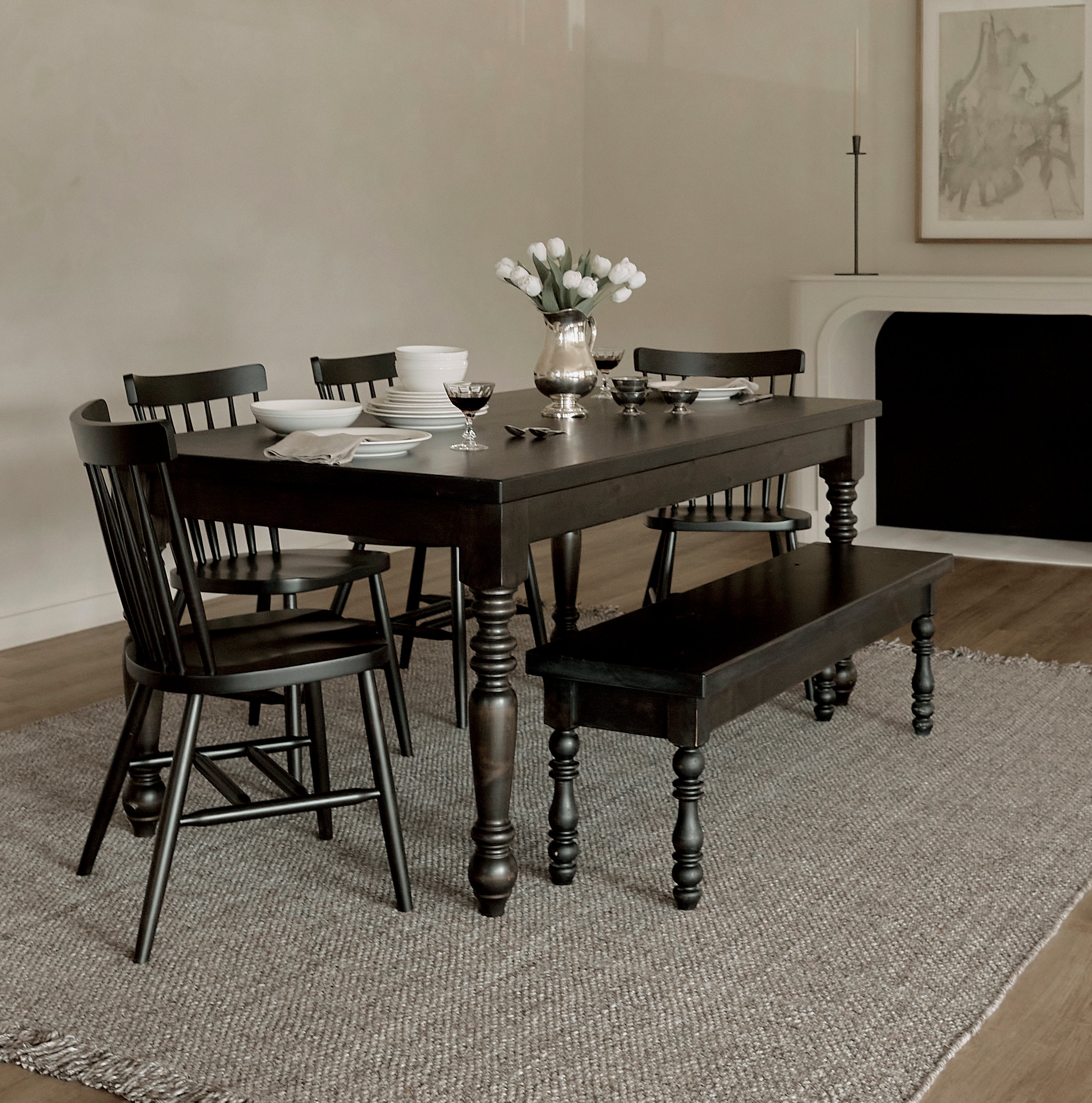
A lasting dining room is not assembled in one afternoon. It takes shape through a series of decisions that work together: the scale of the table, the comfort of the seating, the materials that will age gracefully, and the room left open for people to move, gather, and stay a little longer.
The goal is not a perfectly matched set. It is a room that feels coherent because every piece has a purpose. The table should suit the household. The chairs should make people want to sit through a long dinner. The rug, lighting, finish, and surrounding furniture should support the gathering rather than compete with it.
Begin with the piece that sets the room’s rhythm: the dining table. Explore our solid wood dining tables as you plan a dining room made not just to look beautiful, but to become part of daily life.
Start With How the Room Will Be Used
Before choosing furniture, think about the life you want the room to hold. Is it a formal dining room used for holidays and special dinners? An open kitchen-dining space where every meal happens? A flexible room that also holds homework, laptop work, flowers, and long Sunday lunches?
There is no ideal dining room apart from the people who use it. A family that gathers every night may need a substantial table and durable, comfortable seating. A couple who hosts occasionally may value a more open everyday layout with an extendable table ready for guests. A home with a small dining area may need each piece to work harder without making the room feel crowded.
The best decisions begin there. When the function is clear, style becomes easier to choose because it has something real to serve.
Plan for the ordinary day first
It is easy to design around the biggest holiday meal of the year. Start instead with an ordinary weeknight. How many people sit down? Does someone need room for schoolwork? Do chairs need to be moved often? Is there a path from the kitchen through the room? Does the table need to remain open for another purpose during the day?
A dining room that works beautifully on an ordinary Tuesday is more likely to be used on the occasions that matter too. If large gatherings are important but infrequent, choose flexibility deliberately rather than making the room permanently oversized for a few dates on the calendar.
Choose the Table Before You Choose the Rest
The table is the anchor of the dining room. Its shape, size, wood, finish, and base influence everything that follows: the chairs that fit around it, the rug beneath it, the light above it, and the visual mood of the entire space.
Let the room determine the table’s footprint
Choose a size that allows chairs to be used comfortably and leaves a natural path through the room. The tabletop alone is not the full footprint. Plan for seats pulled back, people passing behind them, nearby doors, cabinets, and sideboards.
Mark the dimensions on the floor before buying. Use tape, boxes, or chairs to see how the table will occupy the room. This simple test can reveal whether you need a narrower table, a different shape, or a base that gives guests more flexibility.
Choose a shape that supports the way you gather
A rectangular table can give a longer room structure and make planning for larger groups feel straightforward. A round table can create a more conversational center and soften movement in a balanced or circulation-heavy space. Oval tables bring length with gentler ends; square tables can feel especially right in rooms with balanced proportions.
The best shape is the one that makes the room easier to live in. Review the dimensions and details of the Dining Tables collection as you compare the form that suits your home.
Consider an extendable table when the room needs two sizes
An extendable dining table can be a thoughtful choice when the household is small most days but gathering is important. It keeps the room open for everyday life, then creates more seating for family visits and celebrations.
If that flexibility would help, explore expandable dining tables. Confirm the exact product dimensions in both configurations before choosing. The table should feel right when it is closed and still leave the room usable when it is open.
Build Seating Around Comfort, Scale, and Use
Chairs should not be an afterthought. They determine how long people will comfortably stay at the table and how the room feels when it is empty. Their height, depth, arms, upholstery, and visual weight all matter.
Choose chairs that work with the table’s proportions
The chairs should feel related to the table, but they do not need to match it exactly. A substantial table may need chairs with enough presence to hold their own. A lighter, cleaner table may pair beautifully with more delicate seating. The important thing is scale: a chair that is too small can make the table feel oversized, while a bulky chair can crowd the room even when the tabletop dimensions are right.
Review the under-table clearance and base style of the specific table before choosing chairs. Armchairs, for example, need enough room to slide beneath the apron or edge when pushed in. A pedestal base may allow more flexible seating around the perimeter than a four-leg design. These details determine how comfortable the dining room is in practice.
Explore dining chairs once the table’s dimensions and base are clear. The best pairings are made with the whole room in view.
Use armchairs with purpose
Armchairs can add comfort and presence at the ends of a rectangular table or around a larger dining arrangement. They can also make a room feel more formal or more relaxed depending on their shape and upholstery.
But they require space. Before choosing them, check the table’s clearances and the room’s pathways. If armchairs make it difficult to move around the table, consider using them only where the room can support their footprint or choose a slimmer profile.
Mix chairs without making the room feel random
Matching chairs create an easy sense of order, but they are not the only way to make a dining room feel complete. Mixing upholstered and wood chairs, using armchairs at the ends, or introducing a bench on one side can bring comfort and personality when the materials and proportions are considered.
Give the combination a shared thread: a compatible wood tone, a repeated fabric color, a similar visual weight, or a relationship between the lines of the table and chairs. The goal is not identical pieces. It is a conversation between them.
Use Benches and Stools Where They Make the Room More Flexible
Benches and stools can make a dining room more adaptable, but they should answer a practical need rather than simply add another type of seating.
Benches can keep a dining room feeling open
A bench can tuck beneath a table when it is not in use, which may be helpful in a compact room or along a wall. It can also make it easier to accommodate children or casual gatherings without adding the visual repetition of another row of chairs.
The trade-off is comfort and access. A bench is lovely for some households and less appealing for others who prefer every guest to have an individual chair with back support. Consider who will use it most often and whether the table’s base and dimensions leave enough room to sit comfortably.
If a bench would serve the room, explore solid wood benches after confirming the table’s dimensions and clearances.
Stools can extend the gathering beyond the table
In an open kitchen-dining space, stools often help connect the table to an island or counter. They are not a replacement for dining chairs, but they can support the way people naturally gather: someone sitting at the island while dinner is prepared, children doing homework nearby, or guests staying close to the conversation.
Choose stools with the same attention to scale and material. Their height should suit the counter, their finish should relate to the table and cabinetry, and their visual weight should not overwhelm the room. Browse stools when that extra layer of gathering space would be useful.
Create Cohesion With Materials, Not Exact Matching
A lasting dining room feels collected, not copied. Table, chairs, bench, sideboard, and lighting do not need to come from one collection or share the exact same finish. In fact, rooms often gain depth when materials relate without repeating one another.
Let wood tones speak to one another
If the table is a lighter oak, chairs or a bench can introduce another compatible wood tone rather than a perfect match. If the table has a deep, warm finish, lighter upholstery or a textured rug can give the room contrast. Look for shared warmth, a repeated undertone, or a common visual quality rather than uniform color.
The same principle applies to floors and cabinetry. A dining table should belong with them, but it does not need to disappear into them. A slightly different wood tone can make the room feel more layered and intentional.
Use fabric to soften the table’s visual weight
Upholstered chairs, curtains, and a rug can soften a substantial wood table and make the dining room more comfortable. They also give you a way to add color, pattern, and texture without asking the table itself to do everything.
If the table is dark or visually bold, lighter fabric can keep the room balanced. If the table is light and understated, a deeper fabric or patterned rug can give the arrangement definition. The aim is a room where every material has a role.
Choose a finish in the room’s actual light
Finish choices should be made with the real room in view. James & James offers wood and upholstery samples so you can compare materials beside your flooring, paint, cabinetry, and fabrics before you finalize a piece.
Place samples near the table location and look at them in daylight and evening light. Hold them next to a chair fabric or rug. This is one of the simplest ways to make a room feel cohesive before any furniture arrives.
Give the Table Room to Be the Center
The most comfortable dining rooms are not crowded with furniture. They give the table enough breathing room to be useful and visually clear. That does not mean the space needs to be minimal. It means every piece around the table should earn its place.
Choose a rug that supports the full seating arrangement
A rug can define the dining area and add warmth beneath the table, especially in an open-plan home. If you use one, plan for it to support the table and chairs when they are pulled out—not only the tabletop. A rug that is too small can make the room feel unsettled and cause chair legs to catch at its edge.
Use the rug as a way to connect materials. A neutral woven rug may soften a dark table; a more richly colored rug may add depth under a lighter finish. The right one should frame the dining area without competing with the table’s grain and character.
Let lighting serve the table
Lighting should help the table feel like the center of the room. A fixture above it can define the dining area, make evening meals feel warmer, and reinforce the table’s shape. A long light may relate naturally to a rectangular table; a centered pendant may work beautifully above a round or square form. The scale and height should be planned in relation to the tabletop, not chosen independently.
You do not need lighting that makes a dramatic statement. You need light that makes the people at the table feel seen and the room feel welcoming.
Choose Pieces You Will Still Want to Live With
Furniture lasts best when it is not only physically durable, but emotionally durable. A dining room built around a passing trend may need to be replaced long before the materials have worn out. A room built around proportion, comfort, honest materials, and pieces that genuinely fit the household has a better chance of becoming more loved over time.
Choose a table you can imagine seeing through different paint colors and chairs. Choose seating you will be happy to use for a long meal. Choose materials that feel good in the hand and right in the light of the home. Then leave enough room for the things that cannot be planned: the extra chair pulled up, the centerpiece made by a child, the conversation that keeps everyone at the table.
Questions to Ask Before You Finish the Room
Before finalizing a dining room, ask:
- Does the table fit the room with chairs pulled out and people moving around it?
- Does the table’s shape support the way we gather most often?
- Are the chairs comfortable, appropriately scaled, and compatible with the table’s base and clearance?
- Would a bench or stool make the room more flexible, or simply more crowded?
- Do the wood tones, finishes, fabrics, and rug relate without matching exactly?
- Have we viewed finish and fabric samples in the actual room?
- Does each piece serve the everyday life of the household, not only the room’s first impression?
The best dining room will answer those questions quietly. It will feel ready for ordinary meals and capable of becoming something more when people gather.
Build a Dining Room Made for Life
A lasting dining room is built around more than furniture. It is built around the ease of sitting down, the pleasure of staying longer, and the confidence that the pieces in the room will keep serving the life around them.
Start with a solid wood dining table, then choose the seating, materials, and details that make the room feel complete in your home.
Frequently Asked Questions
Do all dining room furniture pieces need to match?
No. A dining room often feels more considered when the table, chairs, and surrounding pieces relate through scale, warmth, or material rather than matching exactly. Look for a shared sense of proportion and a palette that feels intentional.
Should I buy dining chairs before or after choosing the table?
Choose the table first, or choose them together. The table’s height, apron, base, and dimensions affect which chairs will fit and feel comfortable. Product-specific specifications are important before you finalize the seating.
Is a bench practical for a dining table?
It can be, especially in a compact room or for casual family use. A bench can tuck beneath the table and make seating flexible, but it should be chosen with comfort, access, table clearance, and the people who will use it in mind.