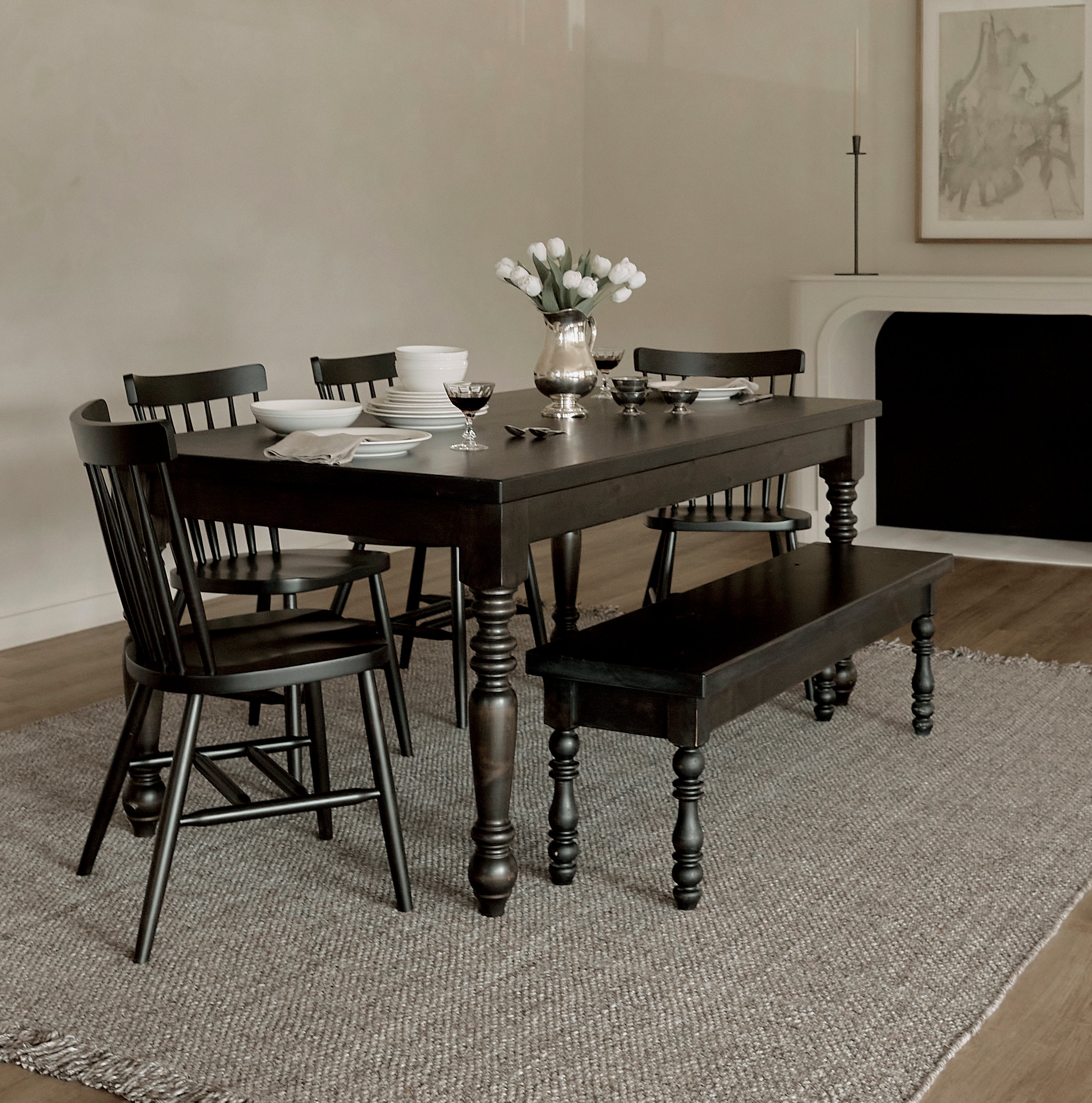
Choosing between alder and oak is not only a material decision. It is a decision about how you want the dining room to feel. Each wood brings its own grain, tone, variation, and visual weight to a table. The right choice is the one that belongs with your home—its light, flooring, cabinetry, furnishings, and the life that will happen around the table.
Oak often appeals to homeowners who want a textured, enduring material with a clear grain pattern and a wide range of finish directions. Alder often appeals to those who want warmth, natural variation, and a more relaxed character. Neither is a shortcut to one fixed style. The table’s shape, base, finish, and proportions will influence the final mood just as much as the species itself.
James & James builds dining tables in solid hardwood, with material and finish options varying by design. Begin by exploring our solid wood dining tables, then confirm the available wood choices for the exact table you want.
Start With the Character You Want to See Every Day
Solid wood becomes a visible part of the room. Unlike a uniform manufactured surface, it carries grain, color shifts, and natural variation. Alder and oak express those qualities differently, which is why the choice should begin with the feeling you want from the table rather than a simple list of technical differences.
Ask yourself: should the table feel light and textured, warm and relaxed, refined and architectural, or substantial and familiar? Does the dining room need a quiet material that lets other elements stand out, or a table with enough character to become the center of the room?
The answers will make the wood choice much clearer.
Choose Oak When You Want Visible Grain and Versatility
Oak is a classic furniture material for good reason. Its grain gives a table texture and presence, and it can work across a wide range of interiors. In the James & James dining-table collection, white oak is offered on select designs; review the specific product page to confirm the options available for the table you are considering.
Oak brings texture without needing ornament
The character of oak is often visible even in a simple table shape. That makes it a strong choice for homeowners who like the material itself to do some of the design work. A clean-lined oak table can feel warm and substantial without extra detail; a traditional base in oak can feel refined rather than overly formal.
Oak can be especially appealing in rooms with natural stone, linen, plaster, woven textures, or light-to-medium flooring. Its grain gives the space a sense of depth while still allowing the larger palette to feel calm.
Oak can support light or deeper finish directions
Finish changes the way oak reads. A lighter finish can reveal the grain and keep the room feeling open. A deeper finish can bring warmth and more visual weight while preserving the underlying texture of the material. This flexibility makes oak useful in homes that are traditional, transitional, contemporary, or a thoughtful mix of all three.
The best finish is the one that works in your actual light. View a sample beside the flooring, cabinetry, and upholstery you plan to keep. A tone that looks perfect online may read differently under your dining-room lighting, which is why an in-home comparison is worth the time.
Choose Alder When You Want Warmth and Natural Variation
Knotty alder has a different visual language. Its natural variation and distinctive character can make a dining table feel welcoming from the first day. It is often a lovely choice for homes that want warmth, visible material life, and a table that does not feel overly polished or uniform.
Alder can make a room feel more lived in
For many homeowners, alder’s appeal is its ease. It can bring a sense of warmth to a newer home, add softness to a clean-lined kitchen, or make a large dining room feel more inviting. The natural variation is part of the point: it gives the table individual presence and helps it feel like a real piece of wood furniture rather than a surface designed to look identical from edge to edge.
That character does not limit alder to rustic spaces. With a more restrained silhouette and a considered finish, alder can sit comfortably in a transitional or tailored dining room. The room’s surrounding materials determine whether the result feels farmhouse, traditional, relaxed, or refined.
Finish can emphasize alder’s warmth in different ways
On alder, finish can bring out different aspects of the wood’s character. Lighter, wheat-like directions may keep the table feeling open and approachable, while deeper tones can create more contrast and visual depth. James & James product pages show alder finishes on select dining-table designs; confirm the exact choices for the product and wood option you select.
Do not choose a finish only by its name. Compare the real sample in the room where the table will live. Look at it in natural and artificial light, and place it beside the floor and cabinetry. You are choosing the relationship between the table and the room, not a color in isolation.
Compare Alder and Oak in the Context of the Room
The difference becomes clearest when you bring the rest of the home into the decision.
In a light, open room
Both woods can work beautifully in a light room. Oak may emphasize texture and a more architectural sense of calm, particularly in a pale or neutral palette. Alder may add warmth and a more relaxed counterpoint to clean walls, simple cabinetry, and abundant daylight.
If the room risks feeling too spare, alder may bring the softness you want. If the room already has warmth through textiles, rugs, or cabinetry and you want the table to feel more restrained, oak may be the stronger choice.
In a room with darker floors or cabinetry
With darker floors, a lighter oak or alder finish can create useful contrast and prevent the dining area from becoming visually heavy. With dark cabinetry, either species can work if the finish has enough distinction from the cabinets and the room has other elements—upholstery, a rug, wall color, lighting—to create balance.
The goal is not exact matching. A room often feels more layered when its woods share a compatible warmth but retain their own identities. Place samples directly beside the floor and cabinetry, then step back. The combination should feel chosen, not accidental.
In an open-plan home
In an open-plan kitchen, dining, and living area, the table is visible from several directions. That makes the species and finish especially important. Oak can offer a quiet, textured presence that connects with a broad range of materials. Alder can bring a more pronounced warmth that helps define the dining area within a larger room.
Consider what the table needs to do visually. Should it recede slightly and allow the architecture to lead? Or should it create a welcoming center where the dining area begins? There is no wrong answer, but the question will steer you toward the wood that fits best.
Let Shape and Base Influence the Decision
The same wood can feel different on a round pedestal table than on a long rectangular table with turned legs. The larger the tabletop, the more surface area there is for grain and finish to become part of the room’s visual story.
On a rectangular dining table, oak can emphasize line and length, while alder can bring a warmer, more relaxed character to a substantial form. On a round dining table, oak can feel calm and considered, while alder can make the center of the room feel especially inviting.
Do not reduce the choice to a rule. Look at the whole piece: the shape, base, scale, finish, chairs, and room around it. The wood should support the table’s overall presence, not compete with it.
Samples Turn a Good Decision Into a Confident One
Screens are useful for exploring options, but they cannot show exactly how a material will look in your home. Light, flooring, cabinetry, and nearby textiles all change the way a finish reads. Seeing real samples in the room is one of the simplest ways to remove uncertainty before ordering.
James & James offers wood and upholstery samples for this purpose. Place the samples where the table will sit. Look at them at different times of day. Set them beside a chair fabric or rug. Photograph them next to the floor if you are comparing the options with someone else.
The right choice is usually the one that remains convincing after you have stopped trying to imagine it. It simply looks at home.
Next, consider reading How to Build a Dining Room That Lasts?
Questions to Ask Before You Choose
Before deciding between alder and oak, ask:
- Do I want a lighter, more textured feel or a warmer, more varied character?
- Which wood relates best to the floor, cabinetry, and light in this room?
- Does the table need to be a quiet material presence or a more noticeable visual anchor?
- How will the shape and base of the table change the way the grain and finish read?
- Have I seen the finish samples in the actual room?
- Is this wood species available for the exact table, size, and finish I want?
- Have I reviewed the care guidance for the finished piece?
Those questions turn a material comparison into a choice you can feel confident living with for years.
Find the Wood That Belongs in Your Home
Oak can bring textured calm, versatility, and a clear sense of natural material. Alder can bring warmth, variation, and a more relaxed invitation to gather. The right one is the wood that makes the table feel like it belongs in the room before anyone has even taken a seat.
Explore our solid wood dining tables to compare made-to-order designs, materials, and finish options for your home.
Frequently Asked Questions
Is oak or alder better for a dining table?
Both can be excellent choices for a solid wood dining table. Choose based on the material character you prefer, the finish direction that suits the room, and the options available for the exact design you are considering.
Does alder look more rustic than oak?
Alder often has more visible natural variation, which can make it feel warmer or more relaxed. But the table’s shape, finish, base, and surrounding room have just as much influence. Alder can work beautifully in traditional, transitional, and refined spaces as well as rustic ones.
Should my dining table wood match my floor?
It should relate to the floor, but it does not need to match it exactly. A lighter finish can lift darker flooring, while a deeper or warmer finish can give a pale room a focal point. View real samples together before deciding.