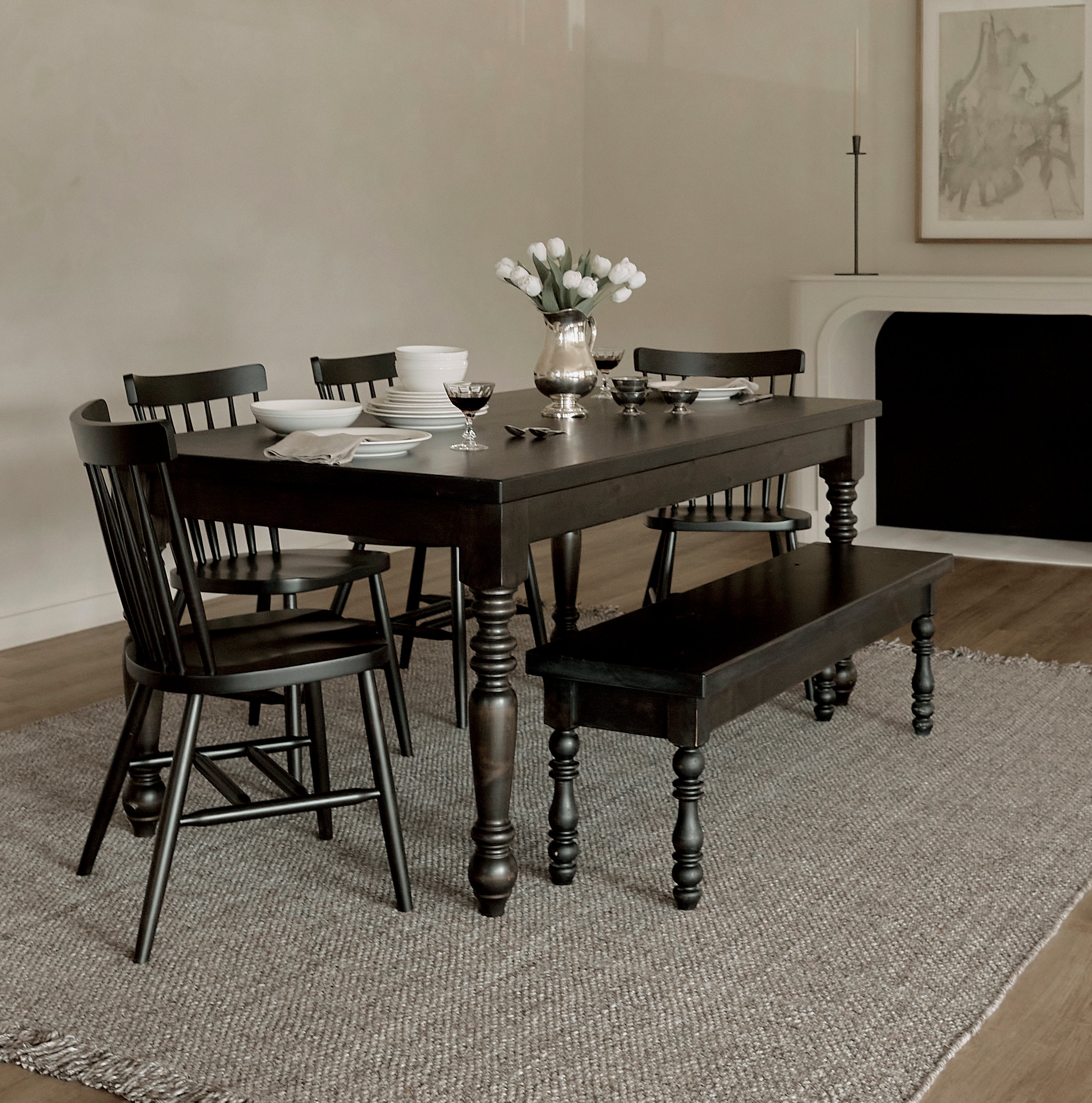
Farmhouse and modern dining tables are often presented as opposite choices: one warm and traditional, the other clean and contemporary. In a real home, the decision is rarely that simple. A dining table is not a style label placed in isolation. It is a daily gathering place whose proportion, material, finish, and construction need to relate to the room around it.
The better question is not, “Am I a farmhouse person or a modern person?” It is, “What kind of presence does this room need?” Some homes ask for the warmth and familiarity of a table with a more expressive base or visible wood character. Others want clean lines that let the material, light, and architecture speak. Many want a table that sits comfortably between those two directions.
Explore our solid wood dining tables as you compare the qualities that will help the right style reveal itself.
Start With the Home, Not the Trend
A dining table should feel connected to the home before it feels connected to a trend. Look at the architecture, cabinetry, flooring, light, and pieces you already intend to keep. Is the room full of warmth and texture? Does it have clean-lined windows, simple millwork, and a calm palette? Does it combine older details with newer finishes?
Those clues are more useful than a design quiz. A farmhouse table can look perfectly at home in a newly built house when the materials and proportions are right. A modern table can bring welcome clarity to an older home without making it feel stripped of character. The aim is a room that feels considered, not a room that follows a single style rule.
Look at the table’s silhouette first
Silhouette is often the clearest distinction. A farmhouse table may have turned legs, a substantial apron, a trestle, or a silhouette that emphasizes craft and familiar forms. A modern table may have a cleaner base, simpler lines, and a more restrained profile that lets the wood and proportion do the work.
Neither needs to be extreme. A table with a traditional shape can feel fresh in a lighter finish. A clean-lined table can still feel warm when it is made from solid hardwood with visible grain. Before deciding, look at the form from across the room. Ask whether it gives the space the character it needs without overwhelming everything around it.
When a Farmhouse Dining Table Is the Better Choice
A farmhouse table is often right for homeowners who want the dining room to feel warm, grounded, and inviting. It can bring a sense of familiarity to an open kitchen, create an anchor in a family-centered dining room, or give a newer home a little more depth and texture.
Farmhouse style is about warmth, not decoration
The strongest farmhouse rooms do not rely on novelty signs or overly literal rustic details. They use honest materials, welcoming proportions, and pieces that look as though they are meant to be used. A solid wood tabletop, a generous base, and a finish with natural depth can create that feeling without asking the room to become themed.
This is why a farmhouse table can work beyond a traditional farmhouse setting. It may sit beautifully beside painted cabinetry, natural stone, linen upholstery, or a more contemporary pendant light. The table brings warmth; the rest of the room determines how rustic, refined, or transitional the result feels.
Choose farmhouse when the room wants a stronger center
In a large kitchen-dining area or a room with high ceilings, a substantial farmhouse-style table can give the space an important visual anchor. Its presence can keep an open plan from feeling too spare and make the dining area feel like a true destination rather than a pass-through zone.
The key is proportion. A heavy-looking table in a compact room can make the space feel crowded, while the same form in a larger room may feel perfectly balanced. Mark the footprint, include the chairs, and look at the visual weight from the kitchen and living area before you decide.
Finish changes the farmhouse feeling
Finish can make the same farmhouse silhouette feel very different. A lighter oak direction can make it feel more relaxed and current. A deeper tone can emphasize warmth and create a more traditional or formal mood. On knotty alder, natural variation can become part of the table’s character, giving the surface the kind of warmth many homeowners associate with farmhouse style.
See real wood samples in the room before choosing. The finish should relate to the floor and cabinetry, but it does not need to match either exactly.
When a Modern Dining Table Is the Better Choice
A modern dining table is often right for a home that benefits from clarity. It may have a simpler silhouette, cleaner transitions, and less ornament, allowing proportion, material, and light to become the visual focus.
Modern does not mean cold. In solid wood, a clean-lined table can feel deeply warm because the natural material provides texture and life. The absence of extra detail gives the grain, finish, and craftsmanship more room to be noticed.
Modern tables let architecture and materials breathe
In a home with large windows, clean cabinetry, simple trim, or an open plan, a modern table can preserve the sense of space. It does not compete with the architecture or make the room feel overly furnished. Instead, it gives the dining area a calm, confident center.
This can be especially useful when the room already has strong elements: a statement light fixture, a stone island, dramatic views, or textured floors. A restrained table shape can allow those elements to work together instead of competing for attention.
Choose modern when you value quiet proportion
The appeal of a modern table is often not that it demands attention. It is that it feels right every time you enter the room. The lines are clean, the scale is considered, and the material carries the warmth.
For homeowners who prefer fewer, more intentional pieces, this can be a lasting choice. A simple silhouette can adapt easily as chairs, rugs, lighting, and wall colors change around it. The table remains relevant because it was never dependent on a passing detail.
Wood keeps modern from feeling stark
Modern design can be softened with natural material. A solid hardwood table brings grain, color variation, and tactile warmth to a room with clean lines. A lighter finish can keep the result open and architectural; a deeper finish can create a more dramatic contrast against pale walls and upholstery.
The right modern table does not remove personality from the room. It gives the materials already present a clearer way to speak.
Most Homes Benefit From a Thoughtful Middle Ground
Many homes are neither strictly farmhouse nor strictly modern. They have an older dining room with a renovated kitchen, a traditional exterior with contemporary interiors, or a mix of inherited pieces and new furniture. In those spaces, the best table often sits somewhere between the labels.
Transitional choices are often the most enduring
A table with a familiar silhouette but cleaner details can relate to both old and new. A traditional base in a lighter finish can feel less formal. A simple top in a warm wood can keep a contemporary room from becoming austere. These combinations are not compromises; they are often what makes a home feel personal rather than prescribed.
James & James offers dining table designs across traditional, transitional, rustic, and modern directions. Use those labels to begin exploring, not to limit yourself. The piece that fits your home may borrow warmth from one style and restraint from another.
Let the chairs and lighting refine the direction
The table does not carry the entire style decision alone. Chairs can soften or sharpen its presence. Upholstered chairs can make a substantial farmhouse table feel more tailored; slim wood chairs can give it a more relaxed, current edge. A simple pendant can make a traditional table feel fresh, while a more expressive fixture can add character above a cleaner modern form.
Think of the table as the anchor and the surrounding pieces as the conversation around it. The goal is not perfect matching. It is a room where every element feels like it was invited.
Choose Style That Supports Daily Life
Style should never distract from how the table needs to work. Before you choose farmhouse, modern, or somewhere in between, return to the practical questions.
Does the table need to accommodate a large family? Will it sit in an open passage between rooms? Does the room want a fixed table with a strong everyday presence, or would an extendable design give the household more flexibility? Does the base leave the chair placement and under-table clearance you need?
A farmhouse table with the wrong footprint will not become practical because the style feels warm. A modern table that is too small for the room will not feel balanced because its lines are clean. Start with scale, seating, and circulation; let the style be the expression of a choice that already works.
For households that need a dining room to change with the occasion, explore expandable dining tables. An extendable option can provide the everyday proportion you want while still allowing room for the gatherings that matter.
Questions to Ask Before You Choose
Before deciding between farmhouse and modern, ask:
- Does the room need warmth and visual presence, or more clarity and restraint?
- What architectural details and materials should the table relate to?
- Would a substantial base feel grounded in the room or too heavy?
- Would a cleaner silhouette feel calm or too minimal beside the rest of the home?
- How will the table look with the chairs, rug, lighting, and cabinetry I plan to keep?
- Does the finish bring the right degree of lightness or depth to the room?
- Does the table’s size and shape support the way we gather every day?
The right answer is usually the one that makes the room feel more like itself. It should not ask you to redecorate everything around it in order to belong.
Find a Dining Table That Feels Like Home
A farmhouse table can bring a room warmth, familiarity, and a generous sense of gathering. A modern table can bring calm, proportion, and a clear view of the material itself. The best choice may sit somewhere between them—timeless enough to remain while the rest of the home changes around it.
Explore our solid wood dining tables to compare handcrafted designs, finishes, and made-to-order options for your home.
Consider reading Alder vs. Oak Dining Tables: Which Wood Is Right for Your Home?
Frequently Asked Questions
Can a farmhouse dining table work in a modern home?
Yes. A farmhouse table can bring welcome warmth to a modern room when the proportions, finish, chairs, and lighting are considered. Choose a silhouette and finish that relate to the home rather than treating the table as a separate theme.
Will a modern dining table feel cold?
Not when natural materials and comfortable surrounding pieces are part of the room. A solid wood modern table can feel warm and inviting because the grain and finish provide texture, even when the silhouette is clean.
Which style is more timeless?
Both can last when the proportions, material, and craftsmanship are right. Timelessness comes less from a label than from choosing a table that fits the room and reflects the way you want to live.