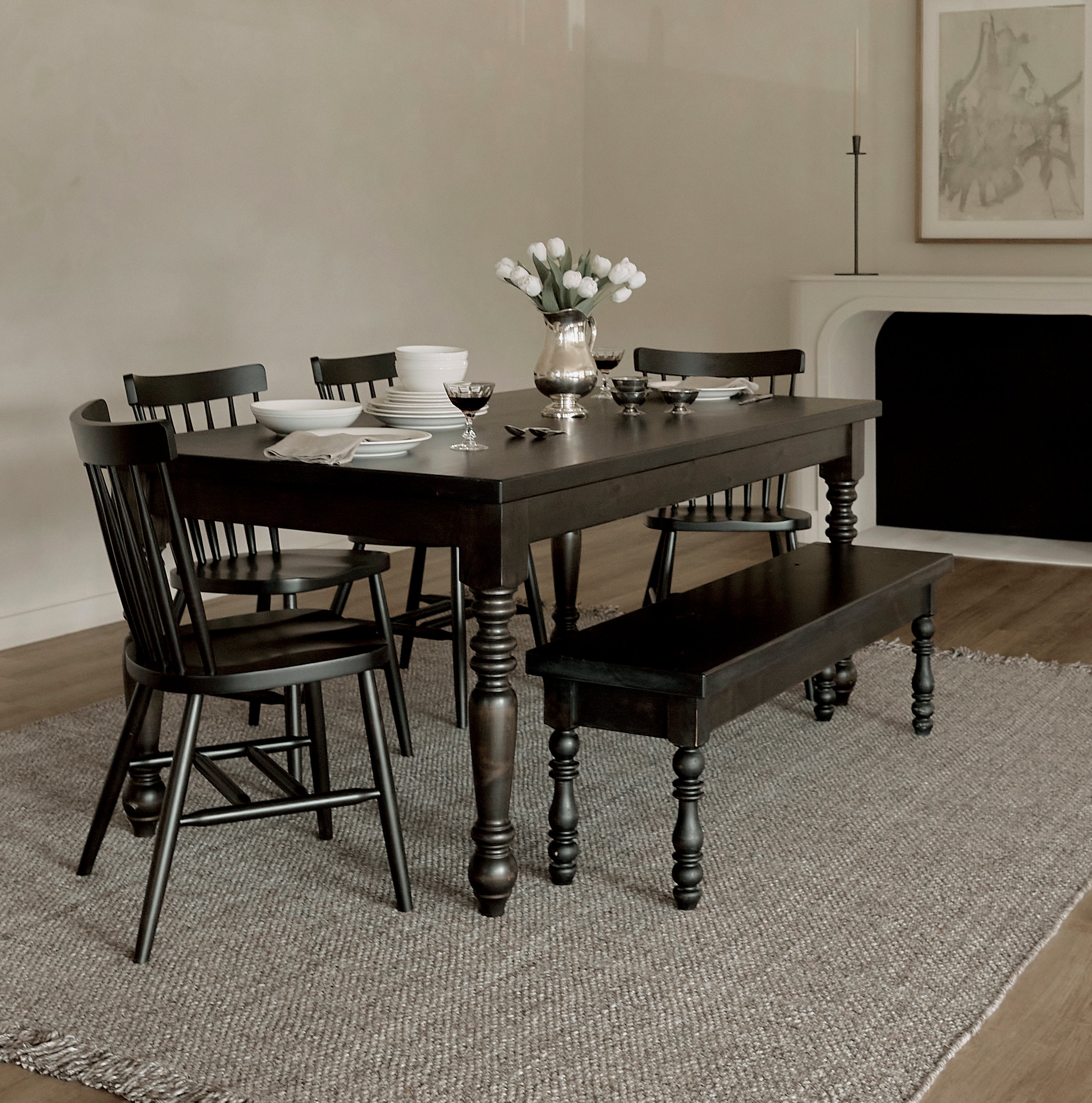
A coffee table finish does more than change the color of the wood. It changes how the table sits with the sofa, rug, flooring, light, and other furniture in the room.
The best choice is rarely the one that matches every wood tone exactly. It is the finish that creates a relationship with the room that feels intentional: warm enough to belong, distinct enough to give the seating area character, and versatile enough to live with as the room changes around it.
As you compare solid wood coffee tables, think about the finish as part of the complete room rather than a decision made from a product image alone.
Start With What Is Already in the Room
Before narrowing the finish options, take in the room as a whole.
Look at the flooring, upholstery, rug, wall color, window treatments, nearby tables, and any other wood furniture in the space. Notice the overall temperature of the room. Does it feel warm and layered? Light and relaxed? Tailored and formal? The coffee table should support that existing character.
A finish does not need to duplicate the floor or match every other wood surface. In fact, exact matching can make a room feel overly coordinated. A better approach is to look for compatibility in undertone, depth, and visual weight.
For example, a room with pale flooring and soft upholstery may benefit from a table with enough depth to give the seating area definition. A room with darker floors, patterned textiles, or substantial existing furniture may call for a lighter finish that keeps the center of the room from feeling heavy.
The question is not, “What matches?” It is, “What makes this room feel more complete?”
Choose Continuity or Contrast Deliberately
A coffee table can settle quietly into the room or become a stronger visual anchor. Both approaches can work beautifully when they are chosen on purpose.
Choose continuity when the room needs calm
A finish that relates closely to the room's existing wood tones or color palette can create a quiet, composed foundation. This may be especially useful in a smaller living room, a room with patterned upholstery, or a space where the table already has a detailed silhouette.
Continuity does not require a perfect match. Similar warmth or undertones are often enough. A light oak table can sit comfortably with medium-toned flooring when both bring a natural, warm character to the room. A deeper table can work with darker furniture when it contributes to the same sense of richness without disappearing into it.
Choose contrast when the seating area needs definition
A more distinct finish can give the coffee table a clearer role in the room. It may help ground a large sectional, bring depth to pale upholstery, or create a visual center in an otherwise open space.
Contrast works best when it has company. A deeper table finish might relate to a picture frame, lamp base, hardware detail, or woven textile elsewhere in the room. The goal is not to make the table feel isolated or dramatic for its own sake. It is to give the room a focal point that feels naturally connected to everything around it.
A living room should feel collected over time, not purchased as a perfectly matching set.
Consider How the Table's Profile Changes the Finish
Finish and form should be chosen together.
A table with a clean, architectural profile may make a deeper finish feel more tailored and contemporary. A table with turned legs or stronger detailing can make the same finish feel softer, more traditional, or more layered. The wood tone is not separate from the table's silhouette; the two work together to determine how much presence the piece has in the room.
This is why it helps to consider the table from more than one view. A coffee table is seen from the sofa, from an adjacent chair, while entering the room, and sometimes from nearby rooms. The finish should support the way the profile reads from each of those angles.
If the room already contains strong lines, patterned textiles, or several meaningful objects, a quieter finish may create welcome balance. If the seating area feels visually light or undefined, a finish with more depth may help it feel settled.
For help choosing the table shape before deciding on finish, see Rectangular vs. Square Coffee Table.
View Finish Samples in the Actual Room
A screen is useful for narrowing a few possibilities. It should not make the final decision.
If samples are available, bring them into the living room and place them near the intended table location. View them beside the rug, upholstery, flooring, and nearby wood furniture. Look at them in daylight, then again in the evening when lamps and overhead lighting change the room's character.
This step often clarifies the decision quickly. A finish that appears warm on a screen may feel cooler beside a particular floor. A deep tone that seems formal online may feel perfectly balanced against light upholstery and natural daylight.
Pay attention to the room's changing light as well. Morning, afternoon, and evening can each reveal different qualities in the wood. The right finish should feel appropriate through the rhythms of the day, not only at one particular hour.
Let Natural Wood Be Natural
Real wood has grain, tonal variation, and movement. Those qualities are part of what give a solid wood coffee table its depth and character.
A finish can shape the overall tone of the piece, but it should not be expected to make every board look identical. Variation is not a flaw to correct. It is evidence of a material with a life beyond a flat, printed surface.
Think about how much natural character you want to see. Some rooms benefit from a quieter, more even appearance. Others become more interesting when the coffee table brings visible grain and tonal variation into the center of the seating area.
The right choice is personal, but it should be made with realistic expectations about the material. A table that feels distinctive in the beginning is often the one that continues to give the room character over time.
Consider the Finish as Part of Daily Ownership
A coffee table is not only a visual piece. It is where drinks are set down, books collect, games are played, feet occasionally rest, and evenings unfold.
That daily use should influence the finish decision. Consider how the room is actually lived in. A formal sitting room may ask different things of the table than a family room used for movie nights, entertaining, and everyday activity.
Before ordering, review the care guidance for the exact table and finish you are considering. Ask what makes sense for the way your household uses the room, and use the recommended protection for hot, wet, or abrasive items.
A finish should feel beautiful in the room, but it should also suit the life that will happen around it.
Confirm the Final Choice Before Ordering
Before committing to a coffee table finish, confirm:
- The current wood and finish options available for the selected design
- How the finish looks beside the flooring, upholstery, rug, and nearby furniture
- Whether the table's profile feels quiet or substantial enough for the room
- How daylight and evening lighting affect the finish
- The current care guidance for the selected table
- Any available samples or customization options
- Whether the finish gives the seating area the right level of warmth, contrast, and visual weight
A well-chosen finish does not simply make the coffee table stand out. It makes the table feel as though it has always belonged in the room.
Choose the Finish With the Room in View
Gather a few photographs of the room, note the materials already at work, and compare solid wood coffee tables with the full living space in mind. The right finish will help the table carry the room rather than compete with it.
Continue Planning Your Living Room
- How to Choose a Solid Wood Coffee Table
- Coffee Table vs. Cocktail Table
- Rectangular vs. Square Coffee Table
- How to Choose a Coffee Table for a Sectional
- What to Look for in a Solid Wood Coffee Table
Frequently Asked Questions
Should my coffee table finish match my floor?
Not exactly. The coffee table should relate to the flooring in a deliberate way, but matching every wood tone can make a room feel overly coordinated. Look for compatible warmth, undertones, and visual weight instead.
Is a light or dark coffee table better?
Neither is universally better. A lighter finish can keep a compact or lower-light room feeling open, while a deeper finish can give a larger seating area more contrast and presence. Choose based on the complete room.
Why should I view finish samples in the room?
Screens cannot fully show how a finish will look beside flooring, upholstery, rugs, and changing light. Seeing samples in the intended room makes it easier to choose a finish that will feel right in daily life.