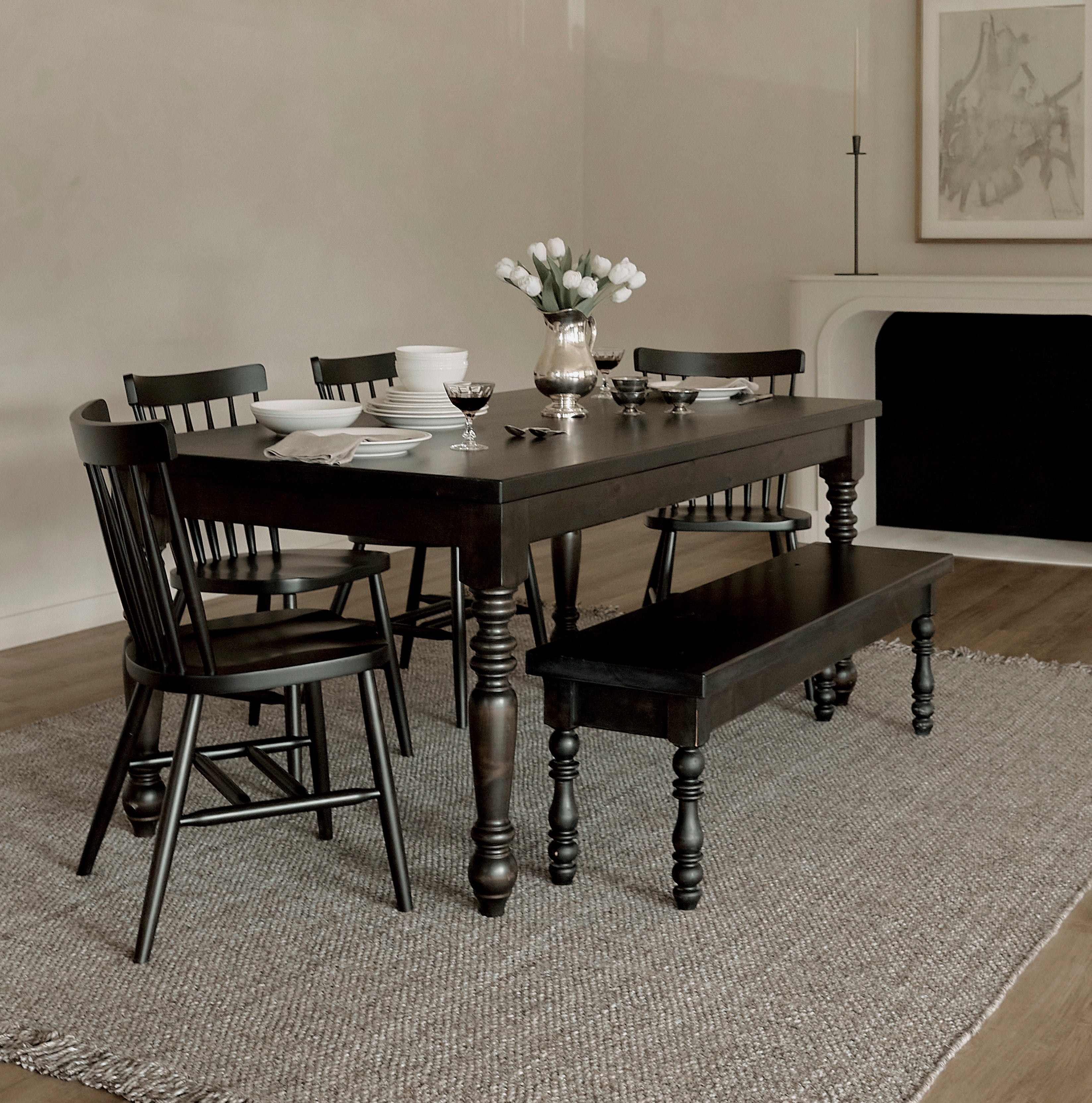
Bar and counter stools are easy to underestimate because each piece occupies relatively little space. But stools are usually purchased in multiples, used frequently, climbed into, pushed against counters, and asked to remain stable at a higher seating position than a dining chair. When you're comparing our bar and counter stools, quality should be judged by how well the stool handles that daily use—not simply by how it looks around an empty island. When choosing seating for an island or counter, a wooden bar stool should match the height, comfort, and everyday use the room requires.
A higher price should be supported by meaningful differences in:
- material
- stability
- construction
- comfort
- footrest design
- finish
- long-term usefulness
That is where value comes from.
Start With Stability
A stool needs to feel secure.
That sounds basic, but it matters more at counter and bar height because the seat is farther from the floor.
During normal use, people:
- climb onto the stool
- shift their weight
- push against the footrest
- lean against the back
- move the stool in and out
A high-quality stool should handle those motions confidently.
Stability Comes From the Entire Structure
Do not judge stability by weight alone.
Look at the relationship between:
- leg placement
- base width
- seat height
- footrest
- joinery
- overall proportions
A heavy stool can still feel poorly balanced.
A thoughtfully designed stool can feel secure without being unnecessarily bulky.
The Footrest Is Structural as Well as Functional
A footrest does more than give your feet somewhere to go.
It becomes part of how people use the stool.
People may:
- push against it while sitting
- step on it while climbing up
- rest considerable weight on it
That means it needs to feel integrated into the stool rather than decorative.
A weak footrest can become one of the first places a poorly built stool shows wear.
Material Quality Matters
Stools experience repeated stress.
That makes the frame material important.
Solid hardwood provides:
- structural substance
- natural grain
- material depth
- long-term repair potential
when used in a well-built stool.
Our made-to-order hardwood stools are crafted through a trusted U.S.-based artisan partner, giving buyers access to real wood seating designed for regular use around kitchen counters and bars.
Solid Wood Alone Does Not Guarantee Quality
Material is only one part of the stool.
A solid wood stool still needs:
- good proportions
- secure construction
- proper finish
- comfortable seat geometry
A premium purchase should bring these elements together.
The material label should not be doing all the work.
Joinery and Construction Matter Because Stools Move
A dining table often remains largely stationary.
A stool is constantly:
- pulled out
- pushed in
- turned
- climbed onto
That movement places repeated stress on the frame.
Construction quality becomes more important over time because small weaknesses can be amplified by daily use.
Look at How the Legs Relate to the Seat
A well-proportioned stool should feel visually and structurally balanced.
The legs should not appear:
- excessively narrow
- awkwardly splayed
- underbuilt for the seat
The design should look capable of supporting the sitter naturally.
Good furniture usually communicates stability before you ever sit down.
Seat Height Must Be Correct
Quality cannot compensate for the wrong size.
A beautifully made stool will still be uncomfortable if it is too tall or too short for the surface.
Our current stools are available in:
- 24-inch counter-height configurations
- 30-inch bar-height configurations
Measure your counter or bar before ordering.
Fit comes first.
Comfort Is Part of Quality
A stool may be structurally excellent and still be unpleasant to sit in.
That matters more if the island is used for:
- meals
- homework
- work
- entertaining
A high-quality stool should balance durability with the type of comfort appropriate to its design.
Seat Shape Can Matter as Much as Padding
Comfort does not always require upholstery.
A thoughtfully shaped wood seat may provide:
- support
- better weight distribution
than a completely flat surface.
When comparing stools, look beyond whether the seat is soft.
Consider how it is shaped.
Upholstery Should Add More Than Appearance
If a stool is upholstered, the cushioning should contribute meaningfully to comfort.
The upholstery also becomes another component that must hold up to:
- repeated sitting
- food
- spills
- cleaning
A premium upholstered stool should justify the added material through both comfort and execution.
Back Support Should Match the Intended Use
A stool with a back can make longer sitting more comfortable.
But simply adding a back does not make a stool high quality.
Consider:
- back angle
- back height
- relationship to the seat
- structural stability
The back should support the seated position naturally.
Backless Stools Still Need Good Ergonomics
Without a back, the design relies more heavily on:
- seat shape
- footrest
- correct height
to create a comfortable position.
A simple stool still deserves careful proportions.
Minimal design should not mean minimal thought.
The Footrest Should Feel Natural
Sit on the stool and notice where your feet land.
You should not need to:
- stretch downward
- pull your knees unusually high
to use the footrest.
A comfortable position allows the legs to relax.
This becomes particularly important at bar height, where the floor is farther away.
Finish Quality Matters in a Kitchen
Stools live in an active environment.
They are exposed to:
- shoes
- hands
- food
- cleaning
- repeated contact with the counter
A good finish should protect the wood appropriately for normal household use while preserving its natural character.
Pay Attention to the Footrest Finish
The footrest often receives more direct abuse than almost any other part of the stool.
Shoes repeatedly:
- rub
- kick
- scrape
against it.
This is a good place to think about long-term durability rather than showroom appearance alone.
Natural Wood Will Show Variation
Solid hardwood contains real variation in:
- grain
- tone
- figuring
That means a set of stools should coordinate without looking like identical printed copies.
For buyers who value natural materials, that variation is part of the appeal.
Matching Stools Should Still Feel Consistent
Natural variation does not mean the set should feel random.
A quality group of stools should share:
- design
- finish direction
- proportions
while allowing the wood itself to show individual character.
That balance is part of furnishing with real hardwood.
Quality Becomes More Important When Buying Four or Five Stools
A weakness that seems small in one piece becomes much more noticeable when repeated across an island.
Imagine purchasing four stools that all:
- wobble
- have uncomfortable footrests
- feel cramped
- show premature wear
The total purchase becomes far more significant than evaluating one stool in isolation.
Think About the Total Investment
A stool priced at several hundred dollars becomes a meaningful furniture purchase when you need:
- three
- four
- five
of them.
That makes quality evaluation especially important.
Do not compare only the unit price.
Compare what the entire seating arrangement will cost and how long you expect to use it.
Cost Per Year Is a Better Long-Term Question
If one set of stools costs less initially but needs replacement sooner, the lower upfront price may not create better long-term value.
Think about:
total purchase price ÷ expected years of use
Then consider:
- repairability
- design longevity
- whether the stools can move to another home or room
Durable furniture earns value over time.
Repairability Matters
Solid hardwood may provide more options for addressing certain forms of:
- scratches
- finish wear
- surface damage
depending on the construction and finish.
That can matter if you plan to own the stools for many years.
Furniture does not need to remain flawless to remain useful.
Timeless Design Adds Value
A stool can remain structurally sound and still feel dated.
Look for designs that rely on:
- good proportion
- authentic material
- restrained detail
rather than one short-lived trend.
Stools are highly visible when repeated across an island, so design longevity matters.
Quality Does Not Require Excessive Detail
A premium stool does not need to look elaborate.
In fact, simple furniture often reveals quality more clearly because there is less decoration to hide behind.
Look for strength in:
- material
- construction
- proportion
- finish
rather than ornament for its own sake.
Consider How the Stool Looks From Every Angle
Kitchen stools are often visible from:
- living room
- dining room
- entry
- kitchen
That means the rear and side profiles matter.
A high-quality stool should look resolved from all of those views.
This is especially important with backed designs.
Visual Weight Should Suit the Island
A substantial island may support stools with:
- broader frames
- upholstered seats
- taller backs
A smaller island may benefit from more restrained furniture.
Quality includes choosing the right scale for the architecture.
The most expensive stool is not automatically the most appropriate one.
A Good Stool Should Fit Under the Counter Properly
Check:
- knee clearance
- seat depth
- back projection
A stool that blocks the walkway when pushed in or sits awkwardly far from the counter may not be properly suited to the space.
Good furniture works in the room, not just in isolation.
Everyday Movement Should Feel Easy
A stool should be practical enough to:
- pull out
- reposition
- clean around
without turning every use into work.
Extremely heavy furniture may feel substantial but can become frustrating if it is constantly moved.
Quality should support daily life.
Think About Children and Guests
A frequently used stool may need to accommodate people of:
- different heights
- different ages
No single stool fits everyone perfectly, but good proportions, stability, and foot support make the seating more broadly usable.
This matters when the island is the social center of the kitchen.
High Price Does Not Automatically Mean High Quality
Premium pricing should be supported by specifics.
Look for clear information about:
- material
- manufacturing
- seat height
- dimensions
- finish
- design features
Vague marketing language is not enough.
Words Like “Luxury” Do Not Explain the Stool
Terms such as:
- luxury
- premium
- heirloom
can describe positioning.
They do not tell you:
- what the stool is made from
- how it is built
- whether it will be comfortable
- whether it will remain stable
Specific information is more useful than adjectives.
Manufacturing Transparency Builds Confidence
When investing in multiple stools, you should understand where the value comes from.
Our hardwood stools are made to order through a trusted U.S.-based artisan partner.
That distinction allows us to offer coordinating hardwood seating while keeping the manufacturing story accurate and transparent.
Finish Coordination Can Add Long-Term Value
A stool that works naturally with:
- kitchen island
- dining furniture
- flooring
has a better chance of remaining useful if the surrounding decor changes.
Our wood finishes are intended to coordinate with the broader James & James furniture palette, which can be particularly useful in open kitchen and dining areas.
Matching Is Not the Same as Quality
A matching set of stools can look beautiful.
So can stools that contrast with the island or dining furniture.
Quality should be judged independently from whether everything matches.
First evaluate the furniture.
Then decide how it belongs in the room.
What Should You Inspect Before Buying?
Correct height
Does it fit the surface?
Stability
Does the frame feel secure?
Footrest
Is it comfortable and structurally sound?
Seat
Is the shape appropriate for the way you sit?
Back
If included, does it actually provide support?
Material
What is the frame and seat made from?
Finish
Is it appropriate for repeated kitchen use?
Dimensions
Does the stool fit the island and spacing?
Manufacturing
Is the construction story clear?
Red Flags When Comparing Premium Stools
Be cautious when:
- material descriptions are vague
- seat height is difficult to find
- dimensions are incomplete
- the frame appears underbuilt
- footrest construction looks secondary
- marketing focuses entirely on appearance
- manufacturing information is unclear
A stool worth investing in should withstand practical questions.
When Is a Higher-Quality Stool Worth It?
Premium stools make the strongest case when:
- the island is used every day
- you are buying several
- you plan to keep them long term
- stability and comfort matter
- the stools are highly visible
- authentic materials matter to you
Frequent use gives better furniture more opportunities to justify its cost.
What Are You Really Paying For?
A high-quality bar or counter stool should justify its price through the combination of:
- authentic materials
- stable construction
- thoughtful proportions
- comfortable seating
- useful foot support
- quality finish
- long-term durability
You are not buying a decorative object that happens to sit beside the island.
You are buying one of the most frequently used seats in the home—often several of them at once.
That makes quality worth evaluating carefully.
Explore our bar and counter stools to compare hardwood and upholstered designs, counter-height and bar-height configurations, backs, finishes, and seating options for kitchens and bars. For the next step in this guide, read How Much Space Should You Leave Between Counter Stools?